Join Us for Our Open House! Sept 25 • 2–6 PM. Meet Nurse Lauren + Event-Only Perks! RSVP Today!

Newport Beach

Will Skin Tighten Naturally After Liposuction?

Share This Post

Will Skin Tighten Naturally After Liposuction?

Does Skin Naturally Tighten After Liposuction?

The American Society of Plastic Surgeons explains that liposuction removes unwanted fat, but it does not remove loose skin. After the procedure, the skin may gradually settle around the new contour. How much tightening occurs depends largely on the quality and elasticity of the skin before surgery.

Patients with firm, elastic skin are more likely to see a smooth result after a modest amount of fat is removed. Skin that has been stretched by weight changes, pregnancy, sun exposure, or aging may not tighten as much on its own.

A consultation is the best way to evaluate whether liposuction alone is likely to meet your goals. Your surgeon can assess skin tone, the treatment area, and the amount of fat being considered to help set realistic expectations.

How Long Does Skin Take to Settle After Liposuction?

Skin tightening after liposuction takes time. Swelling and firmness are common early in recovery, so the treated area may not show its final shape right away. Most patients see gradual improvement over several months as the area heals and the skin adapts.

The First Few Weeks

Early recovery focuses on rest, gentle movement, and following your surgeon’s aftercare instructions. Swelling can temporarily make the area look uneven or fuller than expected.

The Next Few Months

As swelling continues to improve, the treated area usually begins to look more defined. Skin with good elasticity may continue to settle during this period.

Longer-Term Results

Final results can take several months to become clear. The timeline varies based on the treatment area, the amount of fat removed, and each patient’s natural skin quality.

Recovery Stage General Timing What Patients May Notice
Early healing First few weeks Swelling, bruising, and temporary firmness
Gradual settling Following months A more defined contour as swelling improves
Final refinement Several months after surgery The most accurate view of the treated area’s shape

What Affects How Well Skin Tightens After Liposuction?

Skin anatomy showing collagen and elastin fiber networks in skin layers

Skin tightening varies from person to person. During a consultation, your surgeon can evaluate the features that may influence whether liposuction alone is a good fit for your goals.

Skin Elasticity

Skin with good natural firmness is better able to settle over a newly contoured area. Less elastic skin may remain looser after fat removal.

Age and Skin Quality

Age is only one part of the picture. Sun exposure, genetics, overall skin condition, and lifestyle can also affect how the skin responds.

Weight Changes and Pregnancy

Major weight changes and pregnancy can stretch the skin. In some cases, that stretching can make it harder for skin to tighten after liposuction.

Amount of Fat Removed

A smaller, focused treatment area usually places fewer demands on the skin than a larger-volume procedure. Your surgeon can recommend an approach that balances contouring goals with your skin’s ability to adapt.

Treatment Area

Some areas tend to have firmer skin than others. The neck, chin, upper back, waist, and outer thighs may respond differently than the upper arms, inner thighs, or lower abdomen. Individual anatomy matters most.

How Can Aftercare Support Skin Settling After Liposuction?

Your surgical plan and aftercare instructions both influence a smooth recovery. After liposuction, the body needs time to heal and the skin needs time to settle over the treated area.

Compression garments are often recommended to support the area during early healing. Your surgeon will tell you how to wear them and for how long based on your procedure and recovery.

Helpful Recovery Habits

  • Follow your surgeon’s instructions: Personalized guidance should take priority over general advice.
  • Wear compression as directed: If recommended, a garment can provide support while the area heals.
  • Stay hydrated and eat balanced meals: Good nutrition supports normal healing.
  • Avoid nicotine: Nicotine can interfere with the body’s healing process.
  • Resume activity gradually: Light walking may be encouraged early, while more strenuous activity should wait until your surgeon clears it.

If you have questions about swelling, firmness, or garment use, contact your surgical team for guidance tailored to your recovery.

When Might Liposuction Be Combined With Another Procedure?

Plastic surgeon and fully clothed patient discussing body-contouring options during a consultation

Liposuction is designed to reduce unwanted fat, not remove a large amount of loose skin or repair separated abdominal muscles. When skin laxity is significant, liposuction alone may not create the smooth contour a patient wants.

Signs That Skin Removal May Be Considered

Loose hanging skin, pronounced skin folds, or skin that has lost much of its elasticity may point to a procedure that removes and tightens excess skin.

For mild skin laxity, nonsurgical treatments such as radiofrequency microneedling, including Morpheus8, may be discussed during a consultation. These treatments may improve skin texture and provide subtle tightening for appropriate candidates, but they do not remove excess skin or replace surgery when laxity is more significant.

When a Tummy Tuck or Body Lift May Help

For some patients, a tummy tuck or body lift may be a better match for their goals, especially after pregnancy or substantial weight loss. These procedures address excess skin and, when appropriate, can be combined with liposuction as part of a personalized surgical plan.

Learning about the benefits of liposuction can help you prepare for a consultation and determine which approach best fits your anatomy, recovery preferences, and desired result.

Frequently Asked Questions About Skin Tightening After Liposuction

Can exercise tighten loose skin after liposuction?

Exercise supports overall health and can strengthen the muscles beneath the skin. However, it cannot reliably remove significant loose skin. If loose skin remains after healing, a consultation can help you explore the options that may be appropriate.

Does age prevent skin from tightening after liposuction?

No. Age can affect skin elasticity, but it does not determine results on its own. Skin quality, the treatment area, and the amount of fat removed are also important considerations.

Will wearing a compression garment longer make skin tighter?

Compression garments can be helpful during the period your surgeon recommends. Wearing one longer than advised does not necessarily create additional tightening, so follow your surgeon’s personalized instructions.

How Can Tenley K. Lawton, MD Help You Achieve Your Body Contouring Goals?

Achieving a sculpted, smooth body contour requires balancing precise fat removal with an expert assessment of skin behavior. Because no two bodies share the exact same tissue elasticity, fat distribution, or healing response, your surgical plan should be as unique as you are.

At our Newport Beach practice, Dr. Tenley K. Lawton provides personalized, compassionate care focused on delivering natural-looking, harmonious results. With over two decades of dedicated surgical experience, Dr. Lawton evaluates your skin quality, body shape, and aesthetic goals to design a tailored contouring strategy—whether that means standalone liposuction or a combined excision procedure.

If you are ready to explore your options and discover what is biologically possible for your physique, we invite you to schedule a private consultation. Learn more about our approach to personalized body transformation through Tenley K. Lawton, M.D. liposuction body contouring and take the first confident step toward your aesthetic goals.


photo gallery

*Individual Results May Vary

CONSULTATIONS AVAILABLE NOW

The first step is to schedule an in-person consultation with Dr. Lawton or one of our trusted providers at Tenley K Lawton M.D. in Neport Beach, CA. Simply fill out the form on this page and we will reach out to you promptly to schedule your appointment.

Testimonials

*Individual Results May Vary

Rated 5 out of 5

Dr. Lawton strives to provide the best experience for everyone who chooses her practice for their aesthetic needs. Read why our patients love their results & experience with Dr. Lawton and her team of expert providers.

More To Explore

How to Customize the Best Mommy Makeover Plan

How to Find the Right Mommy Makeover for You

The best mommy makeover is a plan that fits your body, goals, and health, not a set number of procedures. Start with a board-certified plastic surgeon at an accredited facility. Ask which changes a tummy tuck, breast lift or augmentation, and liposuction could address for you. Then discuss whether combining procedures or doing them in stages is the safer choice.

Pregnancy can leave loose skin, separated abdominal muscles, or changes in breast shape. A thoughtful plan aims for natural-looking results while accounting for cost, recovery time, and help you may need at home.

Dr. Tenley K. Lawton is a board-certified plastic surgeon in Newport Beach with over 22 years of experience in aesthetic, plastic, and reconstructive surgery. Patients receive personalized guidance when exploring the best mommy makeover for their goals with a focus on personal care and natural-looking results.

Mommy makeover choices: procedures, safety, recovery, and cost infographic

What Is Included in the Best Mommy Makeover?

A mommy makeover is not a one-size-fits-all package. It is a customized surgical plan tailored to address the physical changes that linger after pregnancy, childbirth, and nursing. While diet and targeted exercise build muscle tone and support health, they cannot tighten stretched skin, reposition separated abdominal muscles, or restore lost upper-pole breast volume.

The goal of a well-designed procedure plan is comprehensive body contouring that harmonizes your natural proportions, restores physical comfort, and helps you feel at home in your body again.

Customizing Your Best Mommy Makeover Menu

Because every woman’s postpartum experience is unique, each surgical plan is approached as an individualized menu. When deciding what procedures make up a mommy makeover for your specific anatomy, the consultation assesses skin elasticity, abdominal wall separation, breast tissue volume, and localized fat deposits.

According to an evidence-based mommy makeover procedure guide, customizing your surgery around distinct anatomical goals yields higher patient satisfaction and safer outcomes. In addition to core procedures, optional adjuncts can be incorporated, including:

  • Labiaplasty: Redraping or reducing enlarged or stretched labial tissue caused by vaginal childbirth to relieve friction and discomfort.
  • Thigh Lift: Removing loose, sagging skin from the inner thighs following postpartum weight fluctuations.
  • Arm Lift (Brachioplasty): Contouring excess tissue along the upper arms.

Target surgical areas for body rejuvenation

The Core Surgical Procedures

Most combination plans focus on the midsection and breasts, as these areas undergo the most pronounced physical shifts during pregnancy.

1. Abdominoplasty (Tummy Tuck)

Pregnancy frequently causes diastasis recti, a condition where the left and right rectus abdominis muscles separate to accommodate fetal growth. When exploring abdominoplasty techniques and muscle tightening, the underlying abdominal wall is repaired with internal internal sutures, excess skin is excised, and the navel is repositioned for a firm, contoured midsection. In some cases with minimal skin laxity, patients benefit from a modified mini-tummy tuck, which helps clarify if a full tummy tuck is necessary.

2. Breast Rejuvenation

Post-nursing involution often leaves breasts deflated, asymmetric, or sagging (ptosis). Your surgical plan may incorporate:

  • Mastopexy (Breast Lift): Elevates sagging breast tissue, removes excess skin, and repositions the nipple-areolar complex higher on the chest wall.
  • Breast Augmentation: Restores lost upper-pole fullness using silicone or saline implants.
  • Augmentation-Mastopexy: Combines a lift and an implant for patients who want both elevated positioning and increased volume.
  • Breast Reduction: Alleviates neck, back, and shoulder strain by removing excess glandular tissue.

3. Liposuction and Lipo 360

Liposuction refines areas that resist diet and exercise, such as the flanks, upper abdomen, back, and hips. Performing circumferential liposuction (Lipo 360) alongside abdominal tightening shapes the waistline and enhances curves.

These procedures remain among the most popular aesthetic surgeries in the country. In 2023, national data reported:

  • 347,782 liposuction procedures (a 7% increase from 2022)
  • 304,181 breast augmentations (a 2% increase)
  • 170,110 tummy tucks (a 5% increase)
  • 153,600 breast lifts (a 7% increase)

Candidate Selection: Who Is the Best Fit and When to Schedule?

Surgical safety and long-term aesthetic success depend on proper candidate selection. A comprehensive medical evaluation helps determine whether surgery is appropriate and supports a smooth recovery.

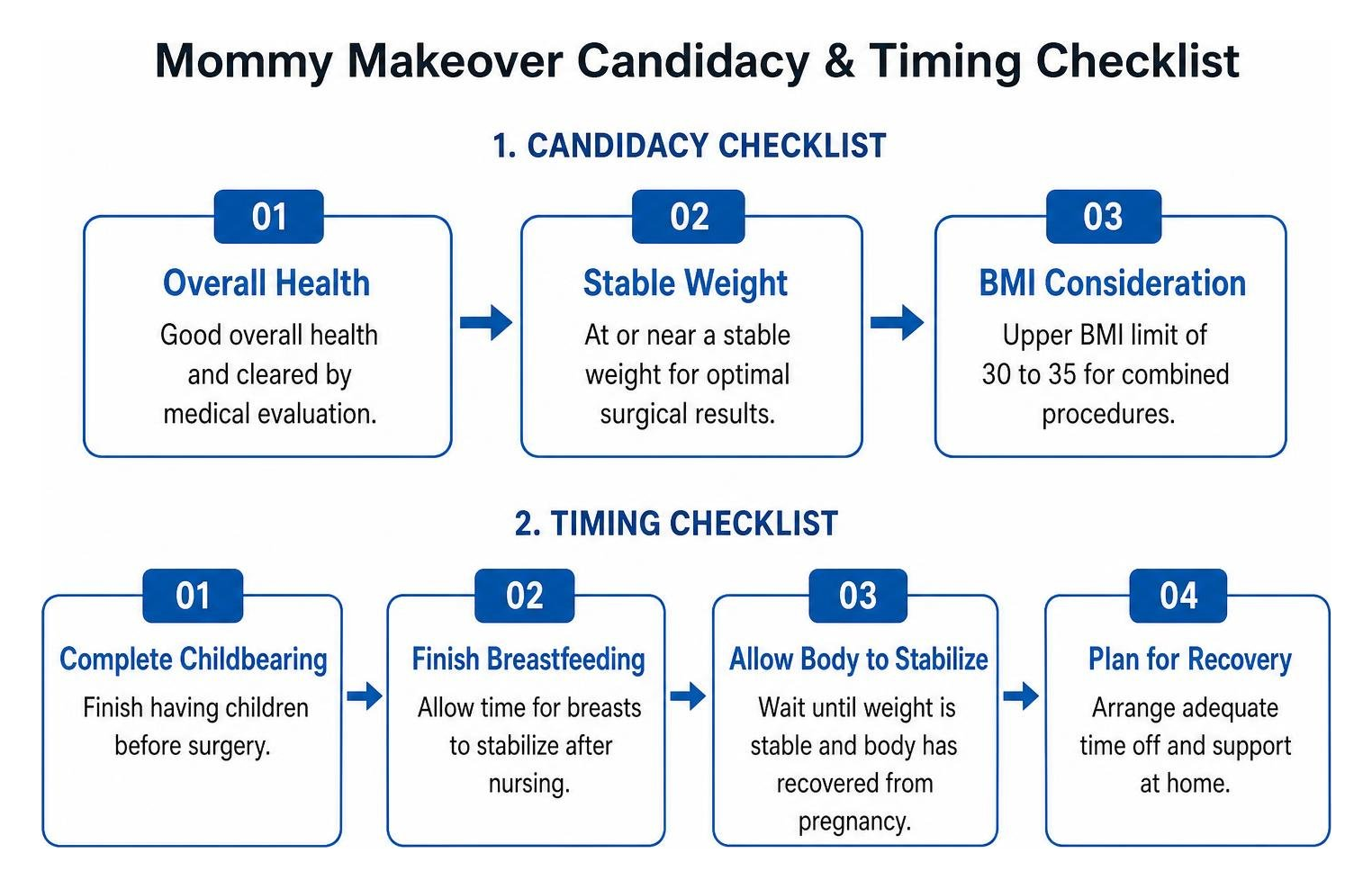
Mommy makeover candidacy and timing checklist

Key Health and Candidacy Criteria for the Best Mommy Makeover

To qualify for combined body contouring, candidates must meet clear physiological criteria:

  • Body Mass Index (BMI): Obesity is the primary risk factor associated with surgical complications. Most plastic surgeons set an upper BMI limit of 30 to 35 for combined procedures to minimize risks such as wound healing complications, seromas, and deep vein thrombosis.
  • Weight Stability: Patients should be within 10 to 15 pounds of their goal weight for at least three to six months. Significant weight loss after surgery can cause new skin laxity, while weight gain can stretch repaired tissues.
  • Age and Health Stage: Evaluating your overall medical health, physiological baseline, and life stage is essential when assessing the ideal timing for surgery.
  • Non-Smoking Status: Nicotine constricts blood vessels, compromising tissue perfusion and increasing the risk of wound separation and infection. Patients must be completely nicotine-free for at least four to six weeks before and after surgery.
  • GLP-1 Medication Management: Patients using GLP-1 receptor agonists, such as semaglutide or tirzepatide, should follow their surgical team’s medication instructions before surgery.

Ideal Postpartum Timing and Family Planning

Rushing into surgery too soon after childbirth can compromise your results and safety. When determining when to consider surgery after having a baby, two main factors guide the decision:

  1. Postpartum and Nursing Milestones: A safe timeline for waiting after childbirth requires waiting at least six months after delivery, and at least six months after completely stopping breastfeeding. This allows hormone levels to stabilize, breast tissue to settle into its baseline volume, and the abdominal wall to recover naturally.
  2. Completion of Childbearing: While getting pregnant after surgery is medically safe, future pregnancies will restretch the repaired abdominal muscles and skin, reversing your aesthetic investments. Completing family planning before undergoing a mommy makeover is strongly recommended.

Surgical Safety: Single-Session Combination vs. Staging

Combining several procedures into a single operation provides the convenience of one surgery date and a consolidated recovery period. However, patient safety requires strict adherence to surgical limits.

Combined vs. Staged Procedure Matrix

For patients requiring extensive tissue removal, higher surgical durations, or those with elevated baseline risk factors, staging procedures into two separate operations spaced three to six months apart is often the safest path.

Factor Single-Session Combined Surgery Staged Multi-Procedure Surgery
Cumulative Recovery Time One consolidated recovery window (4–6 weeks) Two separate recovery periods (4–6 weeks each)
Overall Cost Efficiency Often lower with one facility stay and recovery period Often higher with separate surgical dates and recovery periods
Ideal Candidate Generally healthy patients with modest treatment needs Patients who need more extensive treatment or have health factors that call for a slower approach

Mommy Makeover Recovery Timeline and Healing Stages

Understanding the recovery process helps you arrange proper support at home and protects your surgical repairs.

Comfortable at-home recovery setup after a mommy makeover

Week-by-Week Recovery Milestones

While exact timelines vary based on your surgical duration and procedural plan, most patients experience a consistent healing trajectory:

  • Days 1–3 (Peak Discomfort): You will experience surgical soreness, swelling, and tightness. Walking slightly bent at the waist helps protect abdominal sutures. Pain medications and muscle relaxants manage discomfort effectively.
  • Weeks 1–2 (Initial Healing): Surgical drains (if used) are typically removed. Light walking around the house is encouraged to support healthy circulation. Most patients transition off prescription narcotics to over-the-counter pain relief.
  • Weeks 2–3 (Returning to Routine): Discomfort decreases and mobility improves. Desk-bound professionals often return to remote or light work.
  • Weeks 4–6 (Resuming Activity): Lifting restrictions ease and patients are cleared for light cardiovascular exercise. Tissue tightness continues to soften.
  • Months 3–6 (Final Contours): Residual swelling resolves, revealing your defined waistline and settled breast contours. Scars continue to fade and mature over 12 to 18 months.

Practical Postoperative Care and Support

Setting up thoughtful postoperative support ensures a smooth recovery. Implementing proven recovery tips and practical guidance safeguards your health and outcomes:

  1. Arrange Dedicated Caregiving: Plan for 24-hour adult assistance for at least the first 5 to 7 days. You will need help getting out of bed, managing medications, and caring for young children.
  2. Wear Medical Compression Garments: High-grade compression garments control swelling, support healing tissues, and reduce seroma formation. Wear them as directed, often 23 hours a day for the first month.
  3. Strictly Observe Lifting Restrictions: Avoid lifting anything over 10 pounds (including toddlers, car seats, and groceries) for 4 to 6 weeks to protect internal abdominal wall repairs.

Total Cost and Financial Planning

A mommy makeover is an investment in your well-being. Understanding the financial components ensures clarity with no hidden fees.

Key Pricing Factors and National Averages

The total cost of a mommy makeover varies based on the procedures included, the complexity of the surgical plan, facility and clinical-support fees, and the surgeon’s experience. Reviewing a detailed cost breakdown for combination procedures can help patients prepare for a personalized consultation.

Several key variables drive the final cost:

  • Surgeon’s Fee: Reflects the surgeon’s training, experience, and surgical precision.
  • Operating Room and Facility Fees: Accredited surgical suites equipped with hospital-grade safety technology.
  • Clinical Support Fees: Professional support and monitoring provided during the procedure.
  • Implant Selection: Saline versus anatomical cohesive silicone gel implants.
  • Geographic Location: Metropolitan coastal areas often reflect higher facility and overhead expenses.

Many practices offer financing options, such as CareCredit or Alphaeon Credit, which may allow patients to choose a monthly payment plan.

Selecting an Accredited Facility and Surgeon

Your safety and results depend directly on the credentials of your surgical team. When vetting providers:

  • Verify Board Certification: Ensure your surgeon is certified by the American Board of Plastic Surgery (ABPS).
  • Confirm Facility Accreditation: Surgery should only be performed in state-licensed, accredited facilities, such as those certified by the AAAASF, AAAHC, or The Joint Commission.
  • Review Real Patient Results: Study extensive before and after mommy makeover galleries to ensure the surgeon consistently produces natural-looking contours that match your aesthetic goals.

Frequently Asked Questions About Mommy Makeovers

Can pregnancy occur after a mommy makeover?

Yes, a mommy makeover does not affect fertility or your ability to carry a child safely to term. However, pregnancy stretches the repaired abdominal muscles and skin, while nursing alters breast volume, potentially compromising your surgical results and requiring revision surgery later. Completing family planning before surgery is strongly recommended.

How long do the aesthetic results typically last?

The physical results of a mommy makeover are long-lasting. Excised skin and removed fat cells do not return, and repaired muscle walls remain intact. However, natural aging, gravity, and substantial weight changes will continue to affect your tissues over time. Maintaining a stable weight and healthy lifestyle ensures your refreshed contours last for decades. More information about long-term results and revisions is available in this educational guide.

When is it safe to lift and hold children again?

Patients must strictly avoid lifting more than 10 pounds for the first 4 to 6 weeks post-surgery. Lifting toddlers puts direct intra-abdominal strain on internal sutures, increasing the risk of wound separation, hernias, and bleeding. Starting in week two, patients may sit on a sofa or floor and cuddle children in their lap when an adult caregiver places the child gently in their arms.

Conclusion

A mommy makeover is about more than restoring your pre-pregnancy shape—it is about renewing physical comfort, repairing functional muscle separation, and building postpartum confidence. By partnering with a board-certified plastic surgeon, prioritizing surgical safety, and committing to an honest recovery plan, you can achieve beautiful, natural-looking results tailored to your lifestyle.

At Tenley K Lawton MD in Newport Beach, CA, the practice specializes in delivering personalized, compassionate care focused on empowering mothers to look and feel their best. When you are ready to take the next step, request a consultation and review the average price for a mommy makeover to begin designing your customized surgical plan.

Gynecomastia Surgery: Options, Benefits, and Recovery

Gynecomastia Surgery: A Personalized Approach to Chest Contouring

Gynecomastia surgery can create a flatter, more masculine chest for appropriately selected patients through careful tissue removal, contouring, and individualized aftercare. The best plan depends on the amount of glandular tissue and fat, skin quality, chest anatomy, and overall health.

Gynecomastia is a common condition involving excess breast tissue in males. It may develop during puberty, with weight changes, from certain medications, or for other medical reasons. A consultation helps determine whether surgery is appropriate and which approach is most likely to produce a natural-looking contour.

Recovery also plays an important role in the final result. Compression, temporary activity limits, and follow-up visits help support healing and allow the surgical team to monitor progress.

Gynecomastia recovery essentials: careful surgery, compression, activity limits, follow-up infographic

How Gynecomastia Surgery Has Evolved

Gynecomastia surgery has become more precise as surgeons have refined liposuction, glandular excision, incision placement, and bleeding control. The goal is to remove excess tissue while preserving a smooth chest contour and minimizing visible scarring.

Today, treatment can be tailored to the patient. Some procedures focus primarily on fatty tissue, while others combine liposuction with direct removal of firm glandular tissue beneath the nipple. Patients with more extensive skin laxity may need a different approach to achieve a proportionate result.

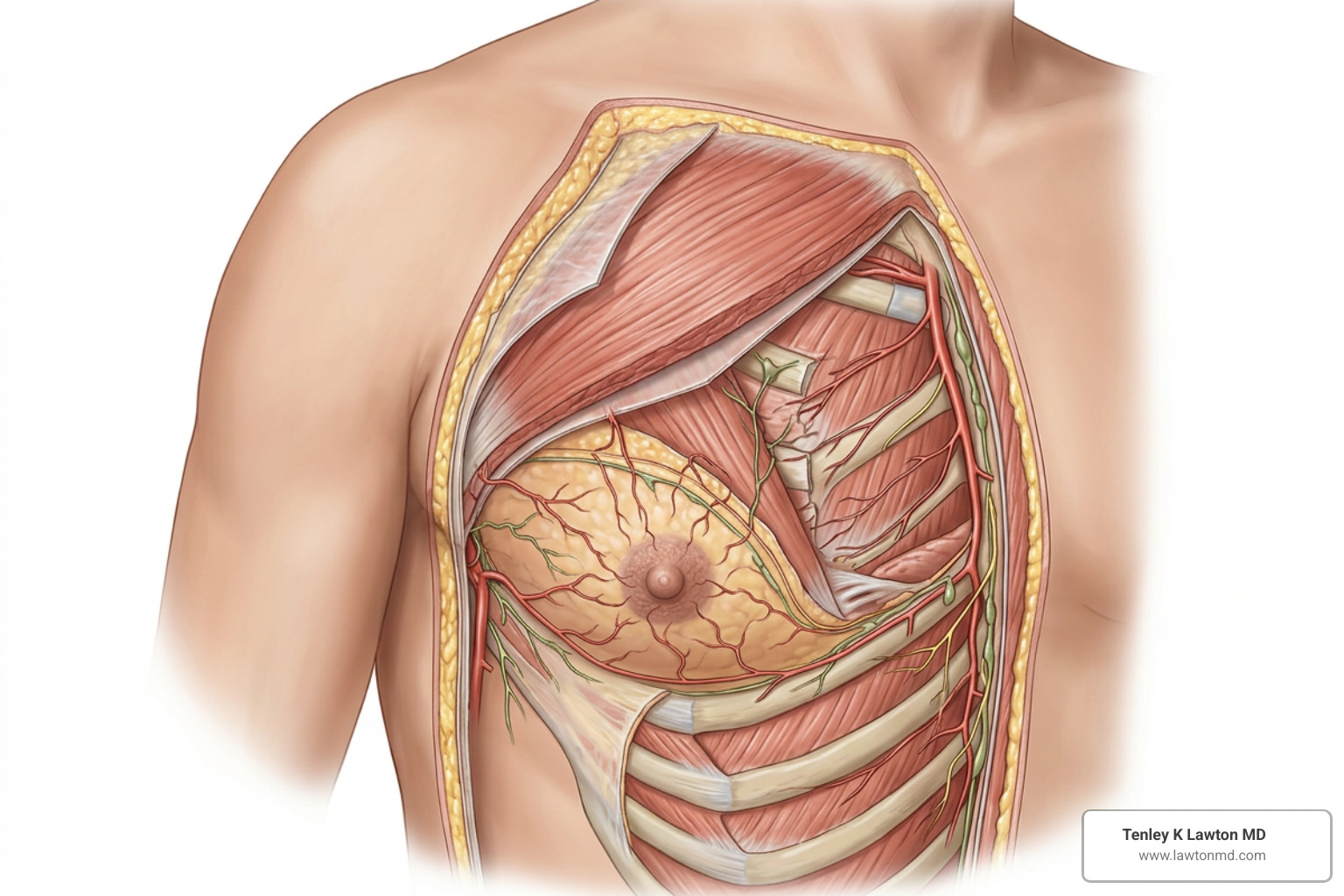
Patients exploring male breast reduction options benefit from a plan that protects the blood supply and sensation of the nipple-areolar complex. Careful dissection and conservative tissue removal can help balance contour improvement with tissue preservation.

Anatomical dual plane dissection preserving superficial fascial layers and blood supply

Techniques Used in Gynecomastia Surgery: Clinical Evidence and Patient Outcomes

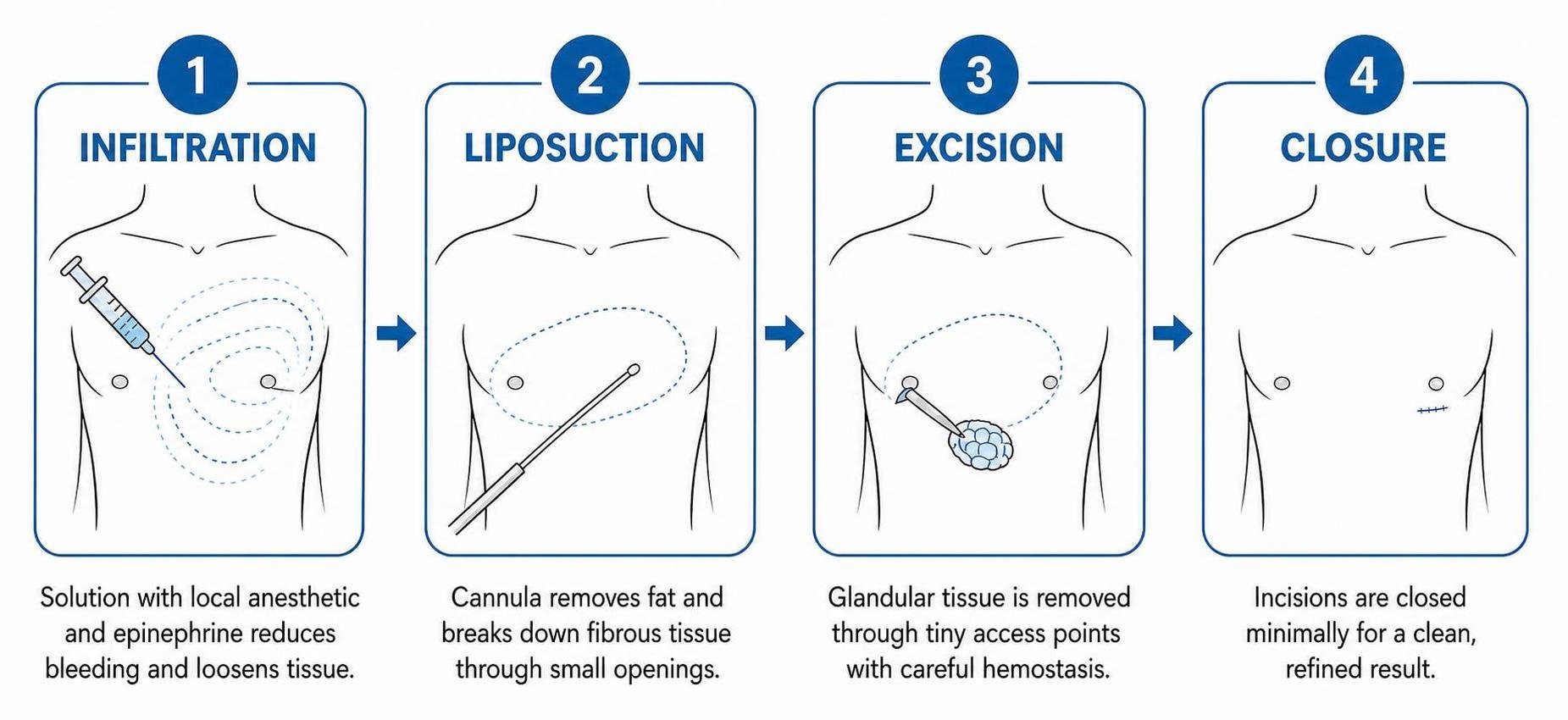
A surgical plan may include one or more of the following techniques:

  • Tumescent infiltration: A solution containing saline, local anesthetic, and epinephrine is used to prepare the treatment area and reduce bleeding.
  • Liposuction: Specialized cannulas remove excess fatty tissue and help blend the chest contour.
  • Direct glandular excision: Firm breast tissue can be removed through a carefully placed incision when liposuction alone is unlikely to achieve an adequate contour. A single-incision gland resection study of 30 patients used a 1-cm inferolateral areolar incision; Abdelmaksoud et al., 2025 reported a mean operative time of 35.7 minutes and a 3.3% hematoma rate.
  • Skin management: When excess skin is significant, skin-tightening or excisional techniques may be considered.

Step-by-step gynecomastia surgical sequence: infiltration, liposuction, excision, closure

Minimally Invasive and Endoscopic Innovations

Smaller-incision and endoscopic approaches may be appropriate for selected patients. A refined anatomy endoscopic research series included 786 patients and described endoscopic access designed to support visualization and contour symmetry. These techniques can improve visualization and allow surgeons to work through strategically placed access points while focusing on contour symmetry.

The right technique is not the same for every patient. Gynecomastia grade, skin elasticity, tissue density, prior weight changes, and aesthetic goals should all be reviewed during a consultation.

Benefits of Gynecomastia Surgery

Gynecomastia surgery can address chest fullness that does not improve with exercise or weight management alone. For many patients, the benefits of male chest surgery extend beyond a flatter chest contour and may include greater comfort in fitted clothing and improved confidence in social settings.

  • A more defined chest contour: Removing excess fatty and glandular tissue can help create a firmer, more proportionate chest.
  • Improved clothing fit: Patients often find that T-shirts, dress shirts, and swimwear fit more comfortably after healing.
  • A tailored surgical plan: The procedure can be adapted to the amount and type of tissue present, skin quality, and desired contour.
  • Long-lasting results: When the factors contributing to gynecomastia are stable, surgical results can be durable.
Treatment Consideration What It Means for Your Plan
Amount of fatty tissue May influence whether liposuction is recommended.
Amount of firm glandular tissue May require direct excision for a smoother result.
Skin elasticity Helps determine whether the skin can redrape after tissue removal.
Chest asymmetry May require individualized contouring on each side.
Health history and medications Helps the surgeon identify potential causes and plan safely.

Who Is a Candidate for Gynecomastia Surgery?

Candidates often have persistent chest fullness caused by glandular tissue, excess fat, or a combination of both. A consultation can help distinguish gynecomastia from isolated chest fat and identify any medical factors that should be addressed before surgery.

Patients are commonly evaluated for several factors. In one pediatric outpatient study, 21 boys with a median age of 14.5 years had surgery and were discharged the same day; two developed mild seromas that resolved with external compression.

  1. Stable weight: Significant future weight changes can affect the chest contour.
  2. Good skin elasticity: Skin that can redrape smoothly may support a more refined result.
  3. Realistic expectations: Surgery can improve the chest contour, but it cannot create perfect symmetry.
  4. A commitment to recovery instructions: Following activity restrictions and follow-up guidance supports safe healing.

Patients with more severe skin laxity or substantial chest enlargement may need a more extensive procedure. The appropriate approach is determined individually during consultation.

Gynecomastia Surgery Recovery

Recovery after gynecomastia surgery varies with the extent of treatment, the techniques used, and the patient’s overall health. Your surgeon will provide a personalized plan for compression, wound care, activity, and follow-up appointments. Understanding how long recovery takes after gynecomastia can help set realistic expectations.

Properly fitted male medical compression vest for chest contouring recovery

The Compression Garment

A medical compression vest can provide gentle, continuous pressure over the chest during early healing. It helps support the treated area and is typically worn according to the surgeon’s instructions.

Activity Milestones

  • Days 1–3: Light walking around the house is generally encouraged. Avoid heavy lifting and strenuous upper-body activity.
  • Weeks 1–2: Many patients can return to desk-based work and routine daily activities, depending on comfort and the surgical plan.
  • Weeks 3–4: Light cardiovascular exercise may be reintroduced with the surgeon’s approval.
  • Weeks 4–6: Upper-body strength training, running, and contact sports may be resumed only after clearance at a follow-up visit.

Frequently Asked Questions About Gynecomastia Surgery

Is gynecomastia surgery safe?

Gynecomastia surgery is generally safe when performed by a qualified plastic surgeon for an appropriate candidate. Every procedure carries risks, including bleeding, infection, contour irregularity, changes in sensation, scarring, and the possibility of revision surgery. A consultation is the right time to review personal risk factors and expected benefits.

Will gynecomastia return after surgery?

Results are often long-lasting when the underlying cause is stable. However, chest fullness can recur if hormonal factors, medications, significant weight changes, or other contributors are not addressed. Your surgeon may recommend discussing persistent or unexplained gynecomastia with a primary care physician or specialist.

When can I return to normal workouts after surgery?

Most patients begin light walking shortly after surgery. Light cardio may be possible after several weeks, while chest-focused exercise and heavy lifting usually require clearance at a follow-up appointment. The exact timeline depends on the extent of surgery and how healing is progressing.

Conclusion

Gynecomastia surgery can be an effective option for men who want a flatter, more defined chest after non-surgical efforts have not addressed persistent tissue fullness. Careful evaluation, an individualized surgical plan, and attentive recovery guidance are central to achieving a natural-looking result.

At Tenley K Lawton MD in Newport Beach, CA, we provide personalized male chest contouring based on each patient’s anatomy and goals. To discuss your options, schedule a male chest contouring consultation with our board-certified team.

References

Abdelmaksoud SM, Omran A, Elagamy KMM, Elhendawy MA, Mahmoud BA. “Cross-chest liposuction plus gland resection through single minimal incision for management of grade I/II gynecomastia.” BMC Surgery, 2025. PMCID PMC12224700. Read the BMC Surgery article.

Adhikari S. “Minimal Incision Technique for Gynecomastia.” Journal of Cutaneous and Aesthetic Surgery, 2021. PMCID PMC8611696.

Carlos Delgado-Miguel, Ennio Fuentes, Pablo Aguado, Ricardo Díez. Children, 2025. Related gynecomastia study.

Request a Consultation