
What Does a Mommy Makeover Truly Look Like at the One-Year Mark?
When you reach the 12-month post-operative mark, your body has completed the vast majority of its structural and dermal healing. At one year, what you see in the mirror is no longer a surgical work in progress—it is your mature, lasting aesthetic outcome.
The primary difference between early recovery and the one-year milestone lies in four physiological factors:
- Full resolution of lymphatic edema: Deep tissue swelling that persists in the lower abdomen and lateral flanks throughout the first 6 to 9 months has finally dissipated.
- Complete tissue compliance and softening: Surgical tightness in the skin, abdominal fascia, and breast parenchyma yields to a supple, natural dynamic movement.
- Stabilized implant positioning: Breast implants have fully transitioned into their anatomical lower-pole resting positions (“dropped and fluffed”), filling out the lower breast contour seamlessly.
- Scar maturation: Incision lines have shifted from raised, erythematous (red or pink) marks to flat, pale, and softened scars that blend into surrounding skin tones.
A customized surgical plan addresses multiple areas affected by pregnancy and nursing. When considering what procedures make up a mommy makeover, the core foundation typically pairs abdominal restoration (such as a full or extended abdominoplasty) with breast rejuvenation (breast augmentation, a mastopexy, or both). Combining these procedures creates a balanced silhouette where the proportions of the upper torso, waistline, and hips complement each other.
By month 12, the initial stiffness of surgical repair is replaced by natural elasticity. You can twist, stretch, bend, and engage in high-intensity exercise without the tight pulling sensation common in the first few months.
Realistic expectations at one year also account for normal human anatomy: subtle natural asymmetries between breasts or across the hips often remain, as no body is perfectly symmetrical. However, the overall contour is firmer, proportionate, and aligned with your body frame.
How Do 6-Week Milestones Compare to Final 1-Year Results?
Many clinical before-and-after photo galleries show patients at the 6-week mark. While these photos capture significant improvements in contour and skin removal, they represent only the beginning of tissue remodeling.
To illustrate the evolutionary gap between 6 weeks and 12 months, consider a representative case of a woman in the 41–50 age range who underwent a comprehensive transformation:
- Procedures performed: Submuscular breast augmentation with 355cc high-profile silicone gel implants, bilateral mastopexy (breast lift), and an extended tummy tuck (abdominoplasty).
- 6-Week post-op status: Marked reduction in excess skin and immediate restoration of upper pole breast fullness. However, her implants remained positioned relatively high on the chest wall due to pectoral muscle tightness, the lower abdominal tissues retained dependent lymphatic fluid (giving a firmer, slightly rounded lower belly profile), and the extended hip-to-hip incision line exhibited bright pink hyperpigmentation.
- 1-Year mature outcome: Over the subsequent 10 months, the 355cc implants settled into the relaxed subpectoral pockets, expanding the lower pole of the breasts to create a natural teardrop slope. The lower abdominal swelling cleared completely to reveal a flat, defined abdominal wall, and the long incision line matured into a soft, silvery line concealed beneath low-cut undergarments.
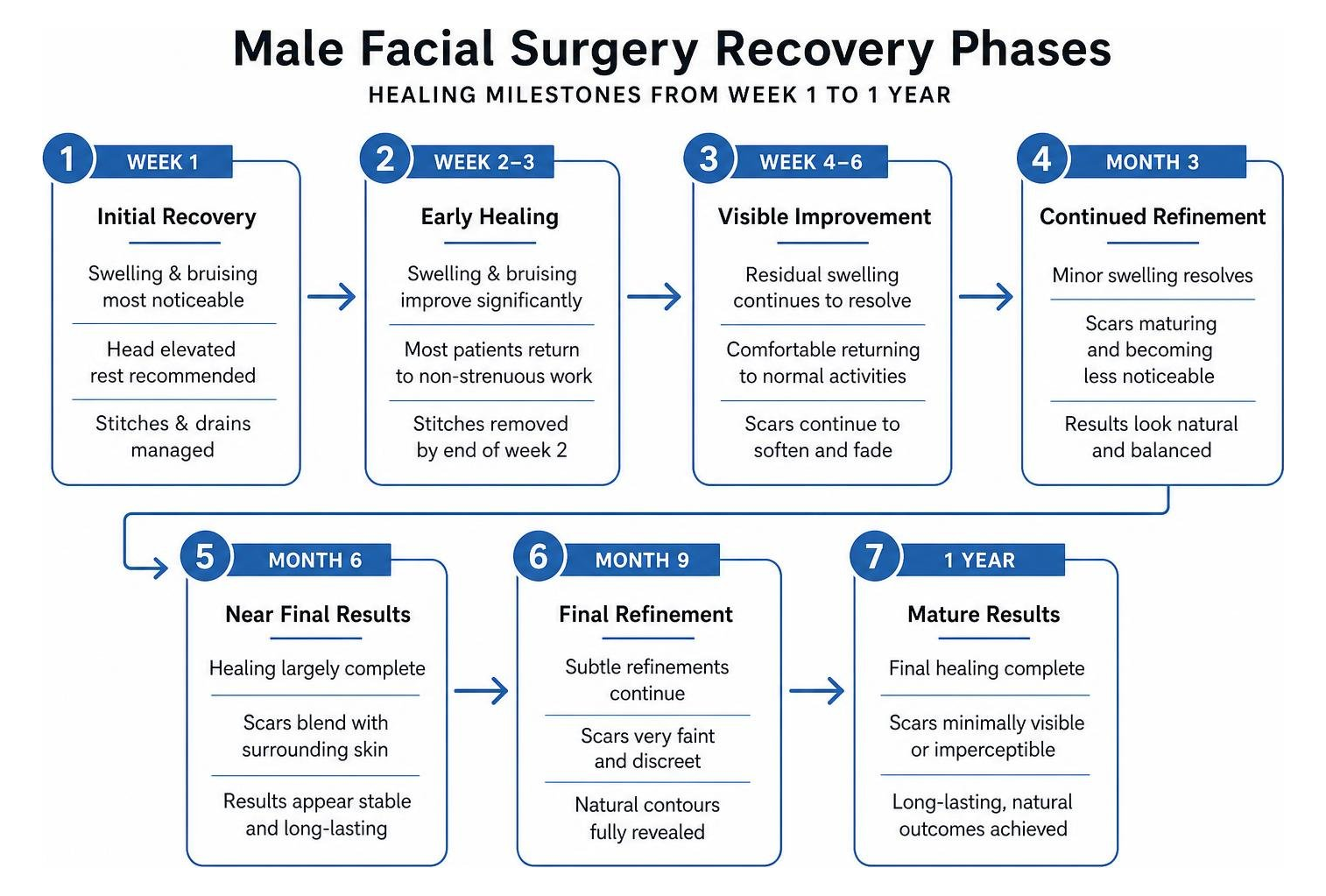
Understanding the timeline of recovering from a tummy tuck helps prevent premature anxiety during the first 6 months.
| Healing Indicator | 6 Weeks Post-Operative | 1 Year Post-Operative (Final Result) |
|---|---|---|
| Breast Implant Position | High on chest wall; upper-pole fullness appears exaggerated | Settled (“dropped and fluffed”) with natural slope and soft lower pole |
| Breast Tissue Pliability | Firm, tight, resists natural lateral movement | Soft, pliable, moves and shifts naturally with body posture |
| Abdominal Swelling (Edema) | Moderate fluid retention, especially in lower abdomen above incision | 100% resolved; skin lies flat against the repaired muscle wall |
| Core Sensation & Mobility | Hypoesthesia (numbness), tightness during backward extension | Nerve sensation largely regenerated; full abdominal flexibility |
| Incision Appearance | Pink, red, or purple; slightly raised or firm to touch | Flat, pale, soft, and flush with surrounding skin |
| Muscular Strength | Modified light duty; limited core engagement | Fully restored core stability; unrestricted weightlifting and athletics |
Understanding the Progression of Abdominal Contouring and Muscle Repair
The extended abdominoplasty addresses two distinct anatomical layers: the superficial skin/fat envelope and the deep rectus abdominis muscle sheath. During pregnancy, the connective tissue line between these muscles stretches, creating diastasis recti. We repair this separation with internal permanent sutures (plication), acting as an internal corset.
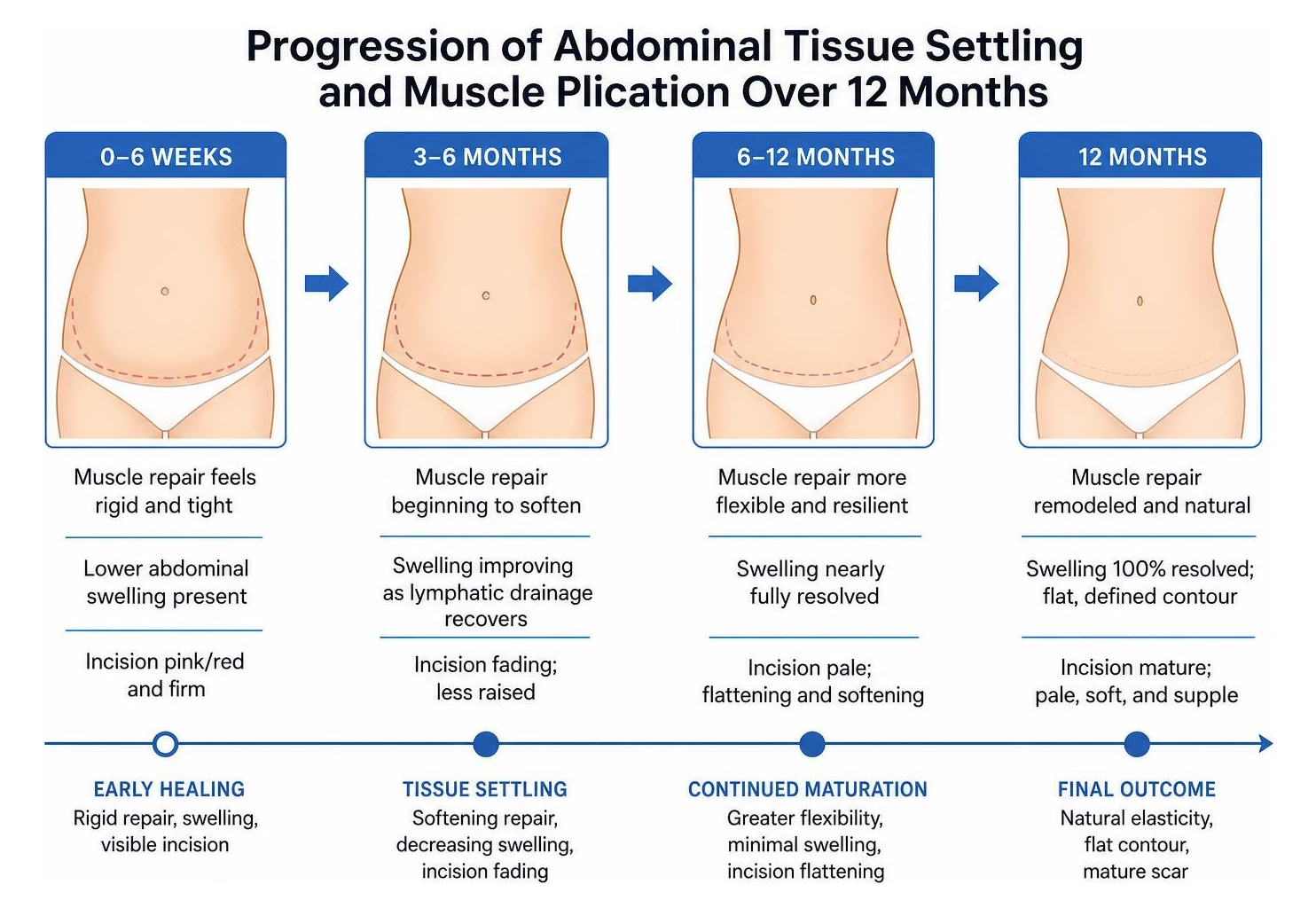
During the first 3 to 6 months, this muscle repair feels rigid. By month 12, the internal collagen matrix has remodeled around the plication sutures. The abdominal wall regains dynamic elasticity, allowing for effortless deep breathing, core engagement, and torso rotation.
Furthermore, lower abdominal swelling resolves at an uneven rate because the surgery temporarily disrupts superficial lymphatic channels. These microscopic vessels rebuild their drainage pathways across the scar line between months 6 and 12.
When targeted liposuction is included in a mommy makeover, it removes stubborn fat deposits from the flanks, love handles, and back. At one year, the skin over these liposuctioned zones contracts over the newly sculpted muscular contours, creating an hourglass waistline taper that is not visible during the early, swollen phases.
What Happens to Breast Implants and Lift Scars After 12 Months?
Combining an implant placement with a mastopexy (breast lift) requires dual-plane tissue remodeling. When high-profile cohesive silicone gel implants (such as the 355cc implants in the case study) are placed under the pectoralis major muscle, the muscle exerts continuous downward tension on the top of the implant.
Over the first 3 to 9 months, the lower breast skin stretches slightly to accommodate the implant volume, while the tight pectoralis muscle gradually relaxes. This dual action is clinically referred to as “drop and fluff”:
- Drop: The implant shifts downward from the clavicle area into the true inframammary fold.
- Fluff: The lower pole of the breast expands, allowing the silicone gel to fill the bottom curve of the breast while the nipple-areola complex settles centered on the breast mound.
Modern cohesive silicone implants mimic the tactile feel of natural glandular tissue once internal capsular contracture risks are minimized through proper surgical technique and pocket dissection. At one year, your breasts feel soft to the touch and compress naturally when sleeping or wearing support garments, which is a key advantage of modern breast augmentation.
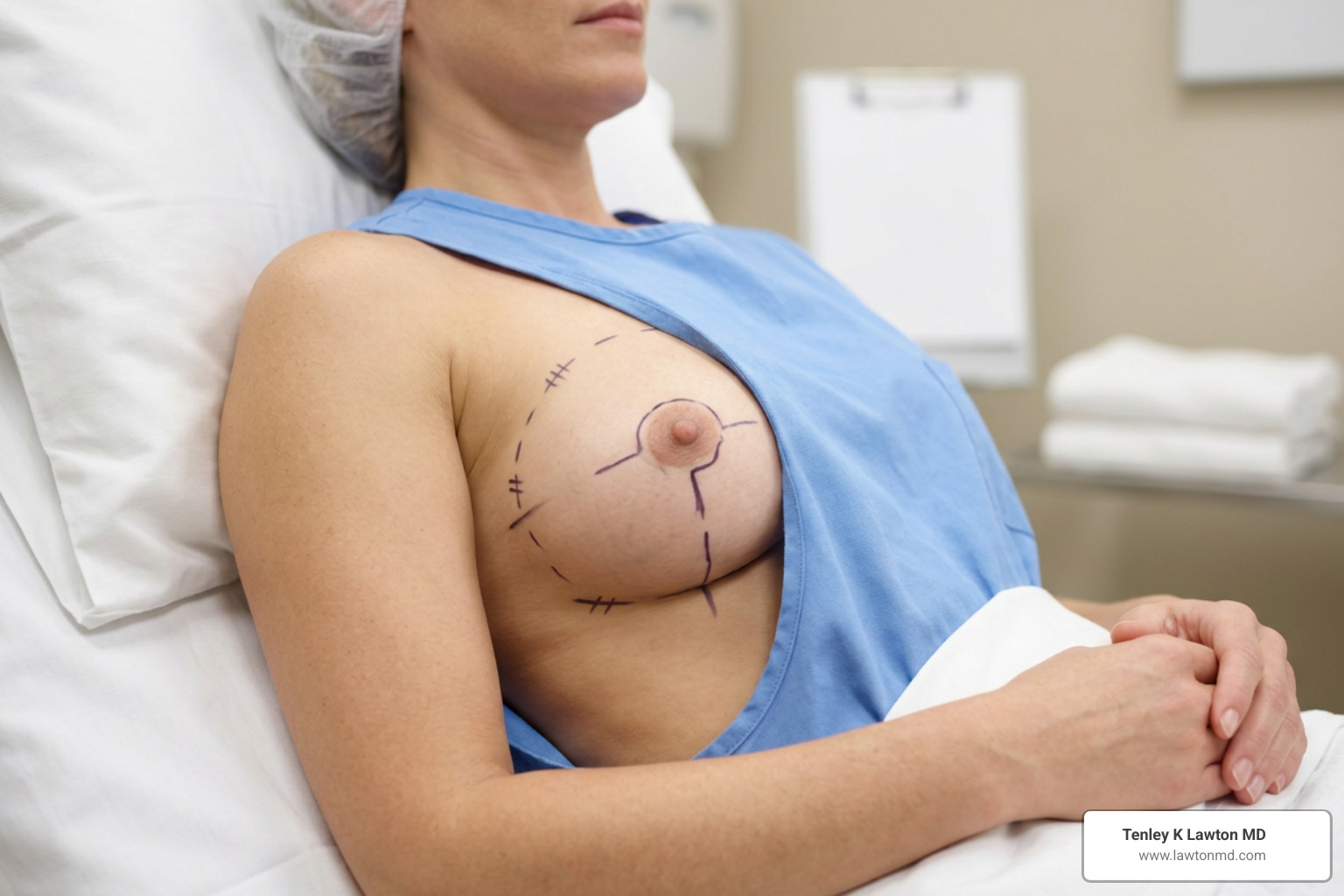
For patients who also undergo a breast lift, incisions placed around the areola (periareolar), vertically down the lower pole (lollipop), or along the inframammary crease (anchor pattern) undergo significant sensory and aesthetic maturation.
Microscopic sensory nerve endings (cutaneous branches of the intercostal nerves) regenerate at a rate of roughly 1 millimeter per day. By month 12, temporary numbness or hypersensitivity in the nipple-areola complex resolves for most patients, returning to baseline sensation.
The Timeline of Scar Maturation and Pigmentation
Surgical scars progress through defined biological phases:
- Proliferation Phase (Weeks 2 to 12): The body floods the incision with blood vessels (angiogenesis) to deliver restorative fibroblasts. Scars appear pink, dark red, or purple, and feel slightly raised or firm.
- Remodeling Phase (Months 3 to 6): Disorganized Type III collagen is gradually replaced by structured Type I collagen. The scar begins to flatten, though residual redness remains.
- Maturation Phase (Months 6 to 12+): Excess micro-capillaries regress and close. The vascular redness disappears, leaving a flat, hypopigmented (pale, white, or silvery) linear scar.
In mature skin (particularly in patients aged 40 and older), melanin production can sometimes react irregularly to inflammation, creating a risk of post-inflammatory hyperpigmentation. Consistent scar care—including daily application of medical-grade silicone gel sheets, light scar massage, and strict avoidance of UV light—ensures that by 12 months, incisions remain flat and discreet.
What Patient-Specific Factors Influence Longevity and Aesthetic Stability?
While surgical execution establishes the structural foundation, individual patient factors dictate how well your one-year results are preserved over the following decade.
Age and Skin Elasticity
In patients aged 41 to 50, the skin’s dermal layer naturally contains lower concentrations of elastin and active collagen compared to younger patients. While an extended abdominoplasty excises loose, stretched skin, the remaining skin’s ability to stay taut depends on baseline elasticity. Mature skin benefits from focused hydration, medical-grade skin care, and sun protection to maintain its snap and avoid premature crepey-ness.
Weight Stability and BMI
Significant weight fluctuations after surgery directly compromise your outcome:
- Weight Gain (+10 to 20+ lbs): Expands remaining subcutaneous fat cells across the abdomen and back, stretching the tightened skin and widening scar lines. It can also cause visceral fat (fat beneath the abdominal muscle wall) to push outward against the diastasis recti plication.
- Weight Loss: May lead to secondary skin laxity around the breasts and lower stomach.
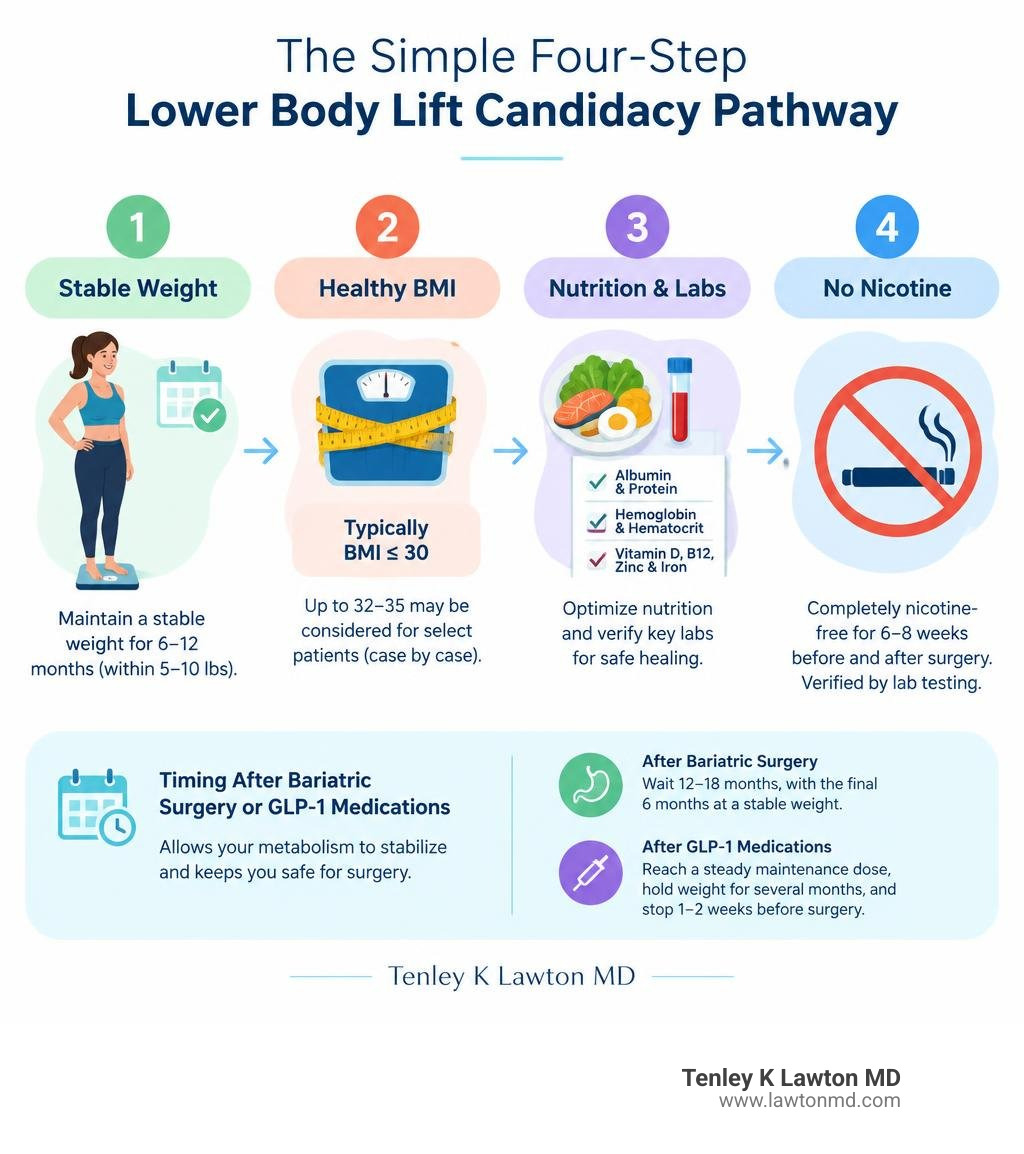
Maintaining a stable weight within 5 to 10 pounds of your surgery-day weight preserves the precise contours achieved in the operating room. An in-depth medical evaluation helps confirm whether you are a candidate for a mommy makeover or should first stabilize your weight before scheduling surgery.
Subsequent Pregnancies
A mommy makeover is best performed when your family planning is complete. While carrying a pregnancy after a tummy tuck is physically safe, the expanding uterus will re-stretch the repaired rectus muscles and the redraped skin, undoing the structural tightening.
Protecting Your One-Year Investment
To keep your results looking their best beyond month 12:
- Incorporate resistance and core conditioning: Maintain the integrity of your abdominal wall by strengthening the transverse abdominis, obliques, and pelvic floor.
- Prioritize micronutrient and protein intake: Support ongoing collagen synthesis with adequate dietary protein, vitamin C, and zinc.
- Practice rigorous sun defense: Protect all breast and abdominal scars from UV exposure using broad-spectrum SPF 30+ or UPF clothing, as ultraviolet rays can permanently darken remodeling scar tissue.
- Maintain internal hydration: Keep skin cells plump and resilient by drinking sufficient water daily and avoiding chronic systemic dehydration.
How Can Non-Surgical Treatments Enhance and Maintain Your Results?
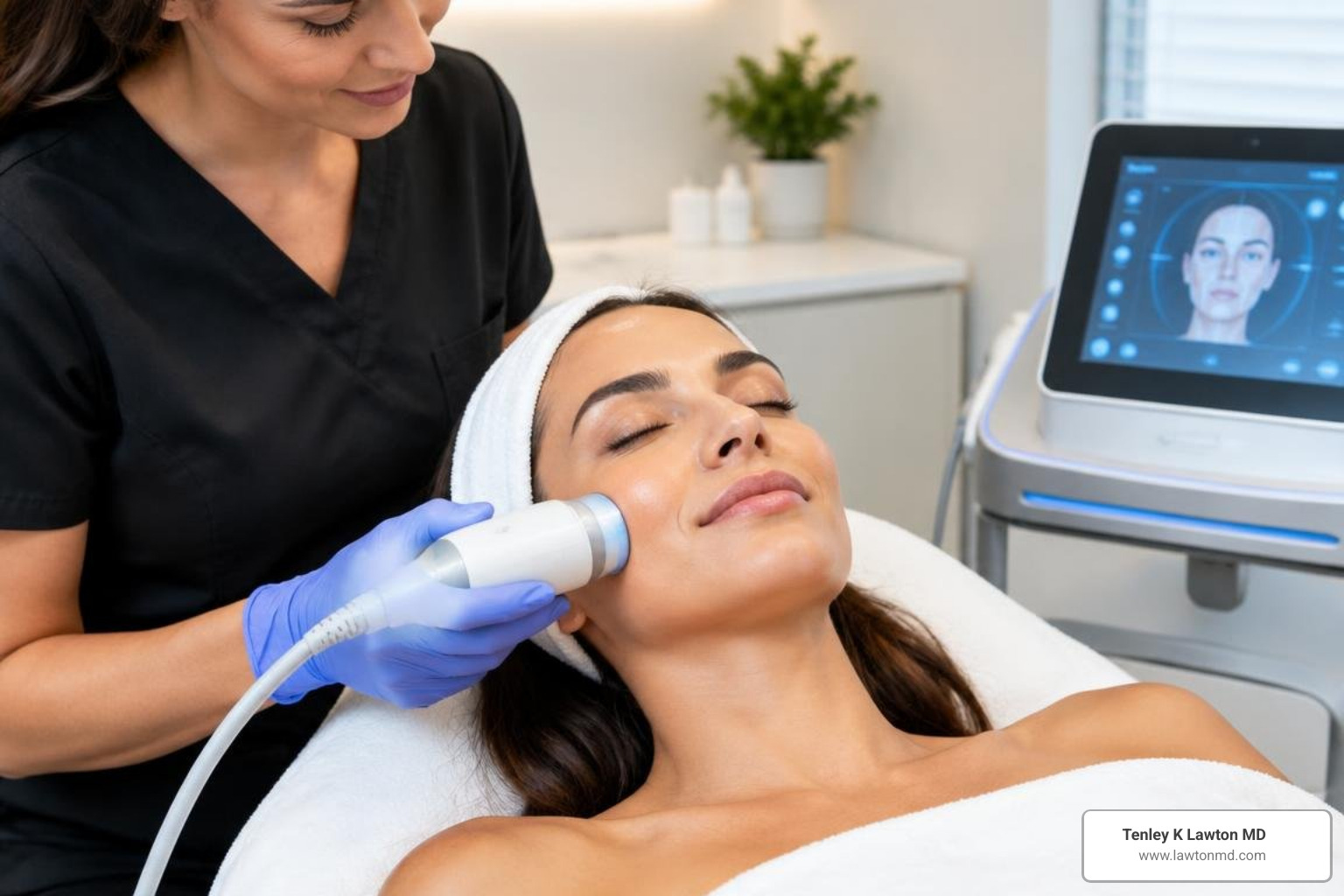
At the one-year mark, your surgical foundation is stable. This is the ideal time to incorporate targeted, non-surgical medical aesthetic treatments to refine superficial skin texture, address minor pigment variations, and maximize scar blending.
Fractional CO2 and MOXI Laser Resurfacing
While surgery repositions underlying tissue and removes excess volume, it does not change the cellular quality of sun-damaged or stretched superficial skin. Non-ablative or fractional CO2 laser treatments applied to mature scars vaporize microscopic columns of scar tissue, stimulating fresh collagen production that smooths uneven textures and blends the scar seamlessly with the adjacent skin.
PRP and PRF Microneedling
Platelet-rich plasma (PRP) and platelet-rich fibrin (PRF) harness your body’s concentrated growth factors. When combined with microneedling over mature abdominoplasty or mastopexy scars, PRF promotes rapid cellular renewal, reduces trace hyperpigmentation, and restores suppleness to mature dermal tissue.
The Long-Term Psychological Impact
Physical restoration often brings a meaningful mental shift. Seeing your body restored at the one-year mark—free from the physical discomfort of separated abdominal muscles, back strain, and deflated breast tissue—often renews personal confidence.
Patients frequently note a renewed enthusiasm for fitness, greater comfort in clothing, and enhanced self-assurance in everyday life. For many women, learning how a mommy makeover gives mothers more confidence reflects this emotional and physical milestone.
Frequently Asked Questions About One-Year Mommy Makeover Results
Are Mommy Makeover Scars Still Visible After One Year?
Yes, surgical incisions create permanent scars, but by month 12 they should be mature, thin, flat, and faded to a pale white or light skin tone.
We place incisions carefully within anatomical boundaries—positioning the lower abdominoplasty scar well below the hip bones so it remains hidden beneath low-rise bikini bottoms and underwear, and aligning breast lift incisions along the natural inframammary fold and areolar borders.
In some patients with darker skin tones or specific genetic predispositions, complete scar fading can take 18 months.
Why Do My Breast Implants Feel Softer at 12 Months Than at 3 Months?
At 3 months post-op, the surrounding pectoralis muscle fibers are still tight, and the biological capsule forming around the implant is actively remodeling, which creates a firmer feel.
By 12 months, the pectoralis muscle has adapted to the implant’s presence, post-surgical inflammation inside the breast pocket has resolved, and the natural collagen capsule has settled into a soft, flexible envelope. This allows cohesive silicone gel implants to move freely and mimic natural breast softness.
What Should I Do If I Notice Minor Asymmetry at One Year?
First, consult with your plastic surgeon to assess the nature of the asymmetry. Every person possesses natural baseline asymmetries prior to surgery, including subtle variations in rib cage projection, shoulder height, nipple position, and hip width.
At one year, all post-operative swelling has cleared, allowing us to determine whether what you see is your natural anatomical asymmetry or an issue that could benefit from a minor in-office refinement, such as localized micro-liposuction or non-surgical skin tightening.
Why Choose Dr. Tenley Lawton for Your Mommy Makeover Transformation?
Achieving natural, long-lasting results from a mommy makeover requires surgical precision, a deep understanding of female anatomy, and an artistic eye for proportion. Rushing the process or expecting final results at 6 weeks can lead to unnecessary worry during what is naturally a 12-month healing journey.
At Tenley K Lawton MD in Newport Beach, CA, we specialize in delivering personalized, natural-looking breast and body transformations. We partner with you through every step of your recovery, providing compassionate, patient-empowered care from your initial consultation through your one-year post-operative evaluation and beyond.
Schedule a consultation with Dr. Tenley Lawton to design a customized mommy makeover tailored to your lifestyle and long-term aesthetic goals.