
Why Is the “Ballerina Breast” Becoming the Defining Aesthetic of 2026?
The “ballerina breast” is a refined, natural-looking breast enhancement defined by anatomical balance, a gentle upper-pole slope, and subtle, proportionate volume that harmonizes with a lean or athletic frame. Women are choosing this aesthetic because it prioritizes effortless mobility, long-term tissue health, and understated elegance over heavy projection or dramatic upper-pole fullness.
Aesthetic medicine is experiencing a profound cultural correction. For decades, breast augmentation was frequently equated with dramatic volume, pronounced upper-pole fullness, and unmistakable projection. Today, that paradigm has shifted entirely. Women are increasingly seeking an understated, sculpted contour that prioritizes anatomical harmony, soft slopes, and effortless mobility over sheer size.
At our Newport Beach practice, we see this transformation every day. Patients are no longer walking through our doors asking for maximum cup size; they are asking for balance. The ballerina breast aesthetic is inspired by the lithe, toned physique of classical dancers: athletic, graceful, and proportioned so seamlessly that enhancement remains an undetectable secret.
This movement aligns directly with the broader cultural embrace of “quiet luxury” and wellness-focused beauty. Rather than viewing breast surgery as an overt fashion statement, women now approach it as a structural refinement. They want an enhancement that complements tailored blazers, sits comfortably under athletic wear without requiring high-impact compression bras, and ages gracefully alongside their natural tissues. By trading heavy projection for anatomical restraint, patients achieve a silhouette that enhances their natural frame without dominating it.
What Is the “Ballerina Breast” Aesthetic and Why Is It Gaining Popularity?
The ballerina breast is defined by specific anatomical characteristics rather than a single cup size or implant volume. It is an aesthetic philosophy rooted in anatomical proportion, subtle transitions, and tissue preservation.
Key Anatomical Hallmarks
- A Gentle Upper Pole Slope: Unlike high-profile augmentations that create a rounded shelf at the top of the breast, the ballerina aesthetic emphasizes a smooth, continuous taper from the collarbone down to the nipple-areola complex.
- Proportionate Volume (Typically A to Full B or Modest C): Sizing is calculated strictly relative to the patient’s chest wall width (transverse diameter), shoulder breadth, and torso length rather than an arbitrary cup target.
- Anatomical Lower Pole Fullness: The majority of the volume resides in the lower half of the breast, producing a natural teardrop silhouette that mimics youthful, unaugmented breast tissue.
- Minimal Soft Tissue Stress: Smaller volumes exert minimal mechanical tension on the overlying skin envelope, pectoral musculature, and supporting ligaments.
This aesthetic evolution is clearly supported by industry data. While breast augmentation remained the #1 most requested cosmetic surgical procedure according to plastic surgery trend reports on in-demand procedures, average implant volumes have fallen significantly from historical averages of 300–400cc down to a refined range of 185–285cc.
When you explore our breast augmentation before and after photos, the difference is immediately noticeable. The results do not draw immediate attention to the surgery itself; instead, they bring the entire body into visual equilibrium, accentuating a narrow waistline and framing athletic shoulders.
What Factors Are Driving the Shift Toward Smaller Implants and Subtle Volume?
The widespread adoption of the ballerina breast is not an accident—it is the direct outcome of evolving lifestyle demands, clinical safety considerations, and shifting body standards.
1. The Demands of an Active, Athletic Lifestyle
Today’s aesthetic patient often maintains a rigorous fitness regimen—incorporating Pilates, distance running, weight training, swimming, or yoga. Heavy, oversized breast implants can quickly become a physical hindrance during high-impact exercise. Larger devices bounce excessively, place strain on sports bras, restrict range of motion during chest and shoulder exercises, and can cause chronic chafing or muscle discomfort. A modest, low-to-moderate profile implant allows women to train, run, and move completely uninhibited.
2. Long-Term Medical and Tissue Health
From a surgical standpoint, the laws of physics are absolute: greater implant mass exerts sustained downward gravitational force on the chest wall. Over five, ten, or fifteen years, heavy implants can cause:
- Tissue Thinning (Atrophy): Prolonged pressure from large devices thins natural breast parenchyma and subcutaneous fat, making implant edges, rippling, and palpability far more prominent over time.
- Bottoming Out and Ptosis: Heavy implants stretch the lower pole skin and inframammary fold, causing premature sagging.
- Symmastia: Overly wide implants can drift toward the midline, creating a bridge of tissue across the sternum.
- Musculoskeletal Strain: Carrying disproportionate anterior chest weight can lead to chronic neck, upper back, and shoulder tension.
Smaller volumes safeguard the health of your native breast tissue, ensuring your results maintain their integrity and position decades after surgery.
3. The Impact of GLP-1 Medications and Post-Weight-Loss Contouring
The recent rise in metabolic and medical weight-loss solutions has completely changed patient anatomy. According to recent RealSelf trend reports on evolving surgical preferences, traffic to GLP-1 related aesthetic content surged by over 2,080%, driving massive demand for targeted body contouring and skin tightening.
Rapid weight reduction often deflates glandular breast tissue while leaving behind loose skin. However, patients who have worked hard to achieve a lean, sculpted frame rarely want to replace lost body fat with oversized implants. Instead, they seek tailored procedures that restore youthful firmness, reposition the nipple-areola complex, and add modest, proportionate volume. When considering surgery, understanding what cup size can be achieved based on your post-weight-loss frame is essential for maintaining natural body harmony.
Traditional Augmentation vs. The Ballerina Breast
| Factor | Traditional High-Volume Augmentation (325cc – 500cc+) | The Ballerina Breast Approach (185cc – 285cc) |
|---|---|---|
| Aesthetic Goal | Obvious projection, high upper-pole fullness, cleavagedominant | Balanced upper slope, anatomical teardrop shape, frame-enhancing |
| Physical Activity | May require heavy compression; limits high-impact sports | Seamless integration with running, yoga, and athletic training |
| Tissue Stress | Accelerated skin stretching, tissue thinning, earlier revision | Minimal tissue atrophy; preserves skin elasticity and fold support |
| Musculoskeletal Impact | Potential neck, shoulder, and middle-back strain | Negligible strain on postural muscles and spine |
| Post-Op Recovery | Slower; greater muscle and tissue pocket stretching | Faster; minimal tissue dissection and reduced muscular trauma |
| Longevity | Higher likelihood of secondary lift/downsizing within 10 years | Enhanced structural stability and enduring natural shape |
How Are Surgical Techniques Adapting for Natural, Proportionate Results?
Creating a subtle, elegant breast shape requires exceptional surgical precision. When placing a large implant, the implant itself dictates the shape of the breast. When creating a ballerina breast, however, the surgeon must masterfully shape, position, and blend the device with the patient’s existing anatomy.
1. Modern Cohesive Gel Technologies
The development of modern smooth-surface cohesive silicone gels has revolutionized subtle augmentation. Advanced devices like Motiva breast implants are engineered with responsive rheology. When a patient stands upright, the gel shifts naturally into an anatomical teardrop contour; when she lies flat, it disperses gently across the chest wall, mimicking the fluid dynamics of natural breast tissue. Because these gels maintain uniform internal cohesion without requiring aggressive projection, we can use lower-profile implants that blend invisibly beneath the skin.
2. Refined Placement Planes: Subfascial and Dual-Plane
The anatomical pocket selected for the implant determines how seamlessly the upper pole transitions:
- Subfascial Placement: Positioning the implant beneath the deep pectoral fascia (the tough fibrous sheath overlying the pectoralis major) provides adequate soft tissue coverage to camouflage implant edges while avoiding any disruption or cutting of the pectoral muscle itself. This is particularly advantageous for athletic patients who rely heavily on chest strength.
- Dual-Plane Technique: By releasing specific inferior attachments of the pectoralis major muscle while keeping the upper portion covered, we create a soft, gradual slope in the upper pole while allowing the lower pole to expand naturally.
3. Hybrid Breast Augmentation (Composite Grafting)
For petite or lean patients with thin subcutaneous fat covering the upper chest, even a small implant might present visible transitions along the medial cleavage or upper edge. In these instances, we frequently utilize hybrid breast augmentation.
During this procedure, we combine a modest cohesive gel implant with autologous fat transfer. We harvest a small amount of fat via gentle liposuction from the abdomen, flanks, or inner thighs, purify the fat cells, and strategically inject micro-droplets into the subcutaneous layer overlying the implant. This creates an organic cushion that completely conceals implant margins, smooths the transition, and refines cleavage symmetry.
Every customized surgical plan begins with the foundational principles detailed in our comprehensive guide to breast augmentation fundamentals.
Why Is Breast Implant Downsizing Often More Complex Than a Simple Swap?
A significant portion of the demand for the ballerina aesthetic comes from women who received 350cc to 500cc implants a decade or more ago. Today, their priorities have evolved: they may have had children, advanced in their careers, or embraced an active outdoor lifestyle. They want smaller, lighter breasts that align with their current stage of life.
However, downsizing is rarely as simple as exchanging a large implant for a smaller one.
The Anatomical Challenge of the Stretched Envelope
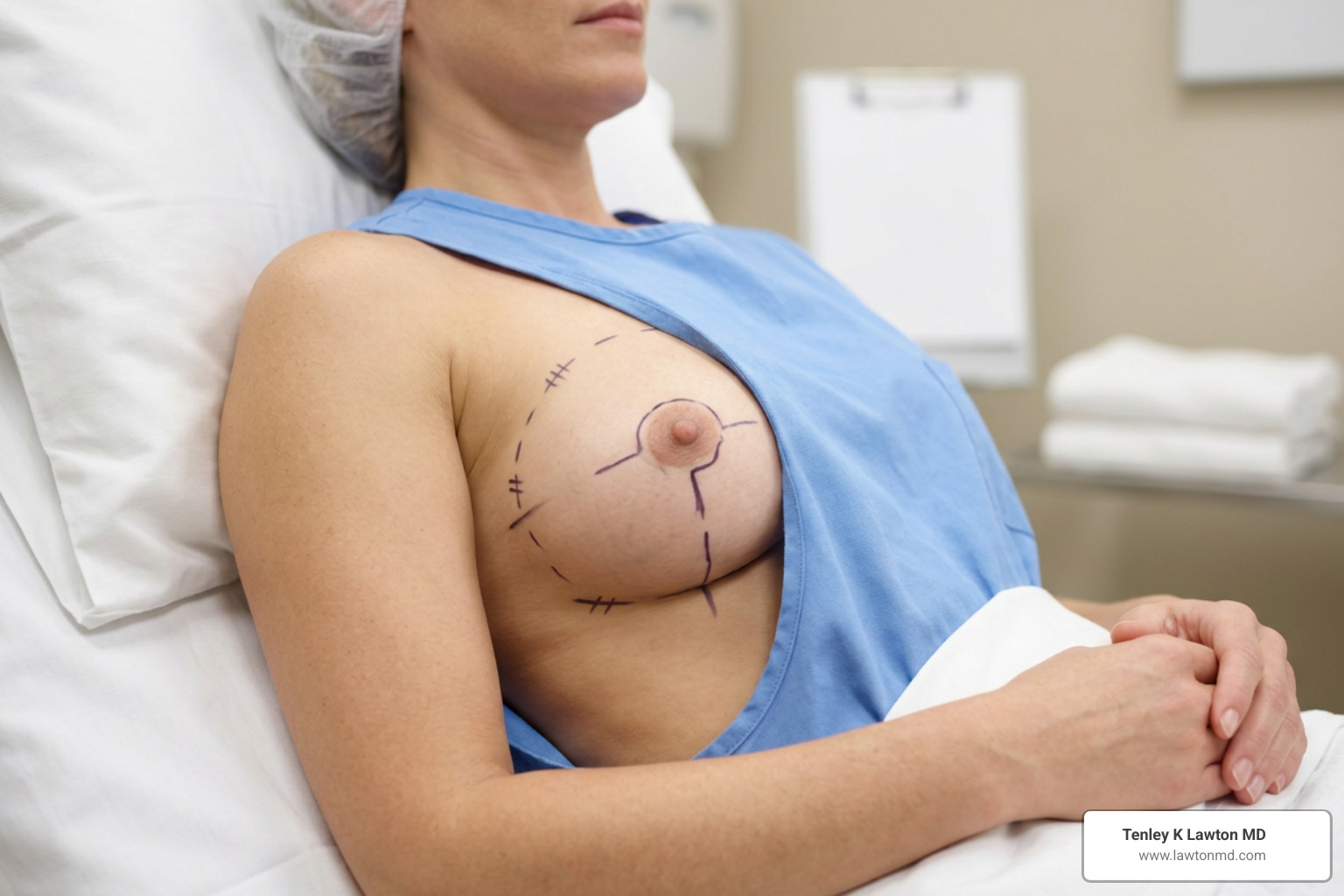
When a large implant sits in the chest for years, it continuously expands the overlying skin envelope, stretches the internal suspensory Cooper’s ligaments, and creates a large internal capsule pocket. If a surgeon simply removes a 400cc implant and inserts a 200cc implant without modifying the surrounding tissues, the result is predictable and disappointing:
- The smaller implant will slide uncontrollably within an oversized pocket.
- The excess skin envelope will deflate, causing the breast to droop (pseudoptosis).
- The nipple-areola complex may point downward, creating a deflated, aged appearance.
The Solution: Pocket Remodeling and Mastopexy
To achieve an elegant ballerina silhouette during a downsizing procedure, we perform comprehensive revision techniques:
- Capsulorrhaphy (Internal Pocket Tightening): We meticulously suture and plicate the internal capsule lining to reduce the pocket dimensions. This secures the new, smaller implant precisely over the chest wall, preventing lateral shifting or bottoming out.
- Mastopexy (Breast Lift): When there is significant excess skin or nipple ptosis, a concurrent lift is necessary to excise redundant skin, elevate the nipple-areola complex to an upright position, and reshape the native gland. To learn more about how tissue elevation works with or without volume changes, read our comparison on breast augmentation vs breast lift surgeries.
- Capsulectomy: If the original capsule has thickened or developed calcification, we may perform a partial or total capsulectomy to create a healthy tissue bed.
Managing these interconnected anatomical elements requires advanced reconstructive planning during breast implant replacement surgery, transforming a deflated, worn envelope into a firm, proportionate contour.
Who Is the Ideal Candidate for a Ballerina Breast Augmentation?
The ballerina breast aesthetic is versatile, but it is particularly suited for individuals who meet specific anatomical and lifestyle criteria:
- Athletic and Lean Builds: Women with narrow rib cages, low body fat percentages, and well-defined pectoralis musculature who want natural curves that match their fitness level.
- Petite Frames: Patients whose chest widths cannot anatomically support implants wider than 10.5–11.5 cm without lateral spillage or unnatural medial cleavage.
- Post-Pregnancy or Post-Weight-Loss Patients: Mothers or individuals who have lost weight and wish to restore lost upper-pole firmness without adding significant overall volume.
- Implant Revision and Downsizing Patients: Women seeking to replace heavy, older devices with lightweight, low-maintenance profiles.
- First-Time Augmentation Patients Seeking Discretion: Patients who want their results to look completely natural in swimwear, formal wear, and everyday clothing.
Investing in Proportion and Quality Care
Because a subtle enhancement often involves tailored surgical planning—such as dual-plane pocket creation, hybrid fat grafting, or mastopexy modifications—costs will depend on surgical complexity, operating facility standards, and anesthesia care. Understanding the comprehensive breast augmentation cost factors allows you to plan your surgical journey with confidence and clarity.
At our Newport Beach practice, Dr. Tenley K. Lawton works closely with every patient, using anatomical measurements and 3D frame assessments to design a custom surgical approach that flatters your unique proportions.
What Are the Most Common Questions About Ballerina Breast Enhancement?
How long do smaller breast implants last compared to larger implants?
While no breast implant is considered a permanent lifetime medical device, smaller implants typically experience fewer mechanical complications over time. Because small implants (185cc–285cc) place substantially less gravitational strain on surrounding tissue, rates of bottoming out, severe ptosis, rippling, and tissue thinning are notably lower than those seen with large devices.
Most high-cohesive silicone gel implants perform exceptionally well for 10 to 20 years or longer. For an in-depth breakdown of device longevity and maintenance expectations, review our guide on how long breast implants typically last.
What is the typical recovery timeline for a subtle breast augmentation?
Because smaller implants require less extensive pocket dissection and minimal muscular stretching, recovery is often faster and noticeably more comfortable than traditional large-volume augmentation:
- Days 1–3: Mild to moderate soreness, manageable with prescribed pain medication and over-the-counter anti-inflammatories. Most patients are up and walking immediately after surgery.
- Days 4–7: Discomfort subsides significantly; most patients comfortably resume non-strenuous desk work and light daily activities.
- Weeks 2–3: Bruising and swelling begin to resolve; light lower-body cardiovascular exercise (such as stationary cycling or treadmill walking) can usually be resumed with surgeon approval.
- Weeks 4–6: Implants begin settling into their final pocket position (“drop and fluff”); patients are cleared for full, unrestricted athletic training, including running, upper-body lifting, and yoga.
Can a ballerina breast result be achieved with fat transfer alone?
Yes, autologous fat transfer to the breasts (composite or standalone fat grafting) is an outstanding option for the right candidate. If you have adequate donor fat deposits (typically in the thighs, abdomen, or flanks) and desire a subtle increase of approximately one-half to one full cup size, fat transfer offers an entirely natural, implant-free solution.
It uses your own living tissue, leaves virtually no visible scarring on the breasts, and carries zero risk of implant-related complications. However, for patients who lack sufficient donor fat or who desire crisp upper-pole shape and projection, small cohesive gel implants remain the gold standard.
How Can You Choose a Proportionate Look That Endures?
Cosmetic trends come and go, but anatomical harmony never goes out of style. The “ballerina breast” has resonated so deeply across the aesthetic world because it is not merely a passing trend—it is a return to fundamental balance, tissue preservation, and timeless elegance.
When planning your breast enhancement, the most critical decision is selecting a board-certified plastic surgeon who understands the power of restraint. True surgical mastery does not lie in choosing the largest device an envelope can hold; it lies in choosing the precise volume and technique that honors your frame, protects your tissue, and enhances your confidence for years to come.
If you are ready to explore a refined, proportionate enhancement tailored specifically to your body and lifestyle, we invite you to schedule a private, in-depth consultation with Tenley K. Lawton, MD at our Newport Beach, CA office. Together, we will design an aesthetic plan that brings your ideal silhouette to life.