A mommy makeover is a personalized combination of surgical procedures designed around the areas of the body that pregnancy may change. It often includes a tummy tuck, breast surgery, and liposuction, with options such as an arm lift, thigh lift, or labiaplasty when appropriate. Your surgeon creates a plan around your goals, lifestyle, and the changes you would like to address. For some patients, combining procedures can mean one surgery and one recovery period.
Pregnancy and breastfeeding can bring meaningful changes to the body. Some people notice loose abdominal skin, changes in breast shape or volume, or areas of fullness that do not respond as they hoped to diet and exercise. These changes are common and personal.
These concerns are not a reflection of effort or fitness. Exercise can support overall health, but it cannot always address loose skin, separated abdominal muscles, or changes in breast volume after pregnancy.
What Procedures Are Typically Included in a Mommy Makeover?
Every patient experiences post-pregnancy changes differently, so understanding what procedures make up a mommy makeover begins with evaluating how different surgical techniques complement each other. The goal is a balanced, natural-looking result that reflects the patient’s individual priorities.
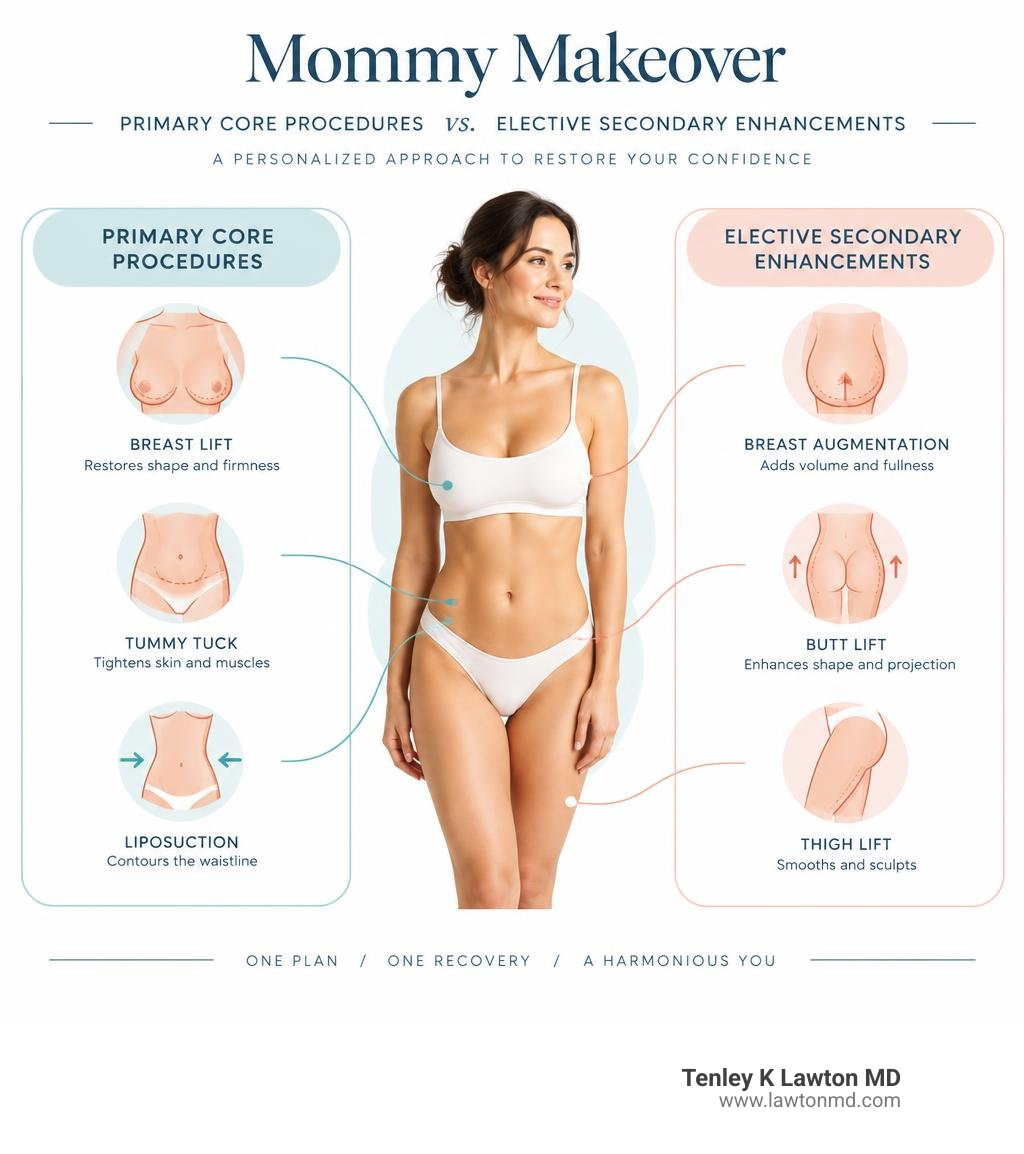
A comprehensive treatment plan draws from two main categories:
Primary Core Procedures: Abdominoplasty (tummy tuck), targeted liposuction, and breast surgery (augmentation, mastopexy lift, or reduction).
For many patients, the midsection is a central part of a mommy makeover. Pregnancy can leave loose skin and a persistent abdominal fullness caused by separated abdominal muscles. A tummy tuck can address these concerns when they are part of your goals.
During a tummy tuck, your surgeon can tighten the abdominal muscles and remove excess skin. Learning how a tummy tuck is performed can help you understand the procedure. Your surgeon will explain what can realistically be addressed, including loose lower-abdominal skin and the position of the belly button.
Some patients choose combining liposuction with a tummy tuck. A tummy tuck addresses the front of the abdomen, while liposuction may refine areas such as the waist, hips, or lower back when appropriate.
Tummy tucks and liposuction remain popular options for patients who want to address pregnancy-related changes in the midsection.
Breast Rejuvenation: Lift, Augmentation, or Reduction
Pregnancy and breastfeeding can change breast shape, volume, and position. Depending on your goals, breast surgery can be tailored with one of these approaches:
Breast Augmentation: For patients who would like more fullness, implants can restore volume and enhance the breast shape.
Mastopexy (Breast Lift): A breast lift can reshape and elevate breasts that sit lower or have lost their previous shape.
Augmentation-Mastopexy: Many postpartum women require both volume restoration and elevation. Pairing an implant with a mastopexy addresses deflation and sagging simultaneously in one surgery.
Breast Reduction: For patients whose breasts feel too heavy or uncomfortable, a reduction can create a lighter, more proportionate shape.
Optional and Secondary Enhancements
While breasts and the abdomen represent the classic pairing, total postpartum rejuvenation can extend to other areas of the body:
Brazilian Butt Lift (BBL): This option uses fat from one area of the body to add fullness and shape to the buttocks.
Brachioplasty (Arm Lift): An arm lift can remove loose upper-arm skin for a smoother contour.
Medial Thigh Lift: A thigh lift can address loose skin on the inner thighs.
Labiaplasty: Labiaplasty can address labial changes that cause discomfort or affect confidence.
What Should You Know About Mommy Makeover Costs?
A mommy makeover is customized around your goals, anatomy, and the procedures included, so the total cost varies from patient to patient. Your consultation is the best time to receive a personalized estimate and discuss the treatment plan that makes sense for you. You can also learn more about how much a mommy makeover costs when preparing for your consultation.
Costs may reflect the combination of procedures, surgical facility, anesthesia, recovery garments, and follow-up care. Rather than comparing general price ranges, focus on choosing a qualified plastic surgeon and a plan that prioritizes safety, clear expectations, and the results you want.
Planning for Your Consultation
During your consultation, ask for a clear written estimate that explains what is included in your surgical plan. The practice can also explain available payment and financing options, if offered, so you can plan with confidence.
Is It Safe to Combine Procedures or Should You Stage Them?
Some patients can combine procedures, while others may be better served by spacing them out. Your surgeon will recommend an approach that fits your health, goals, and recovery needs.
Two critical safety factors dictate whether procedures should be combined or staged:
Your Overall Health: Your surgeon reviews your medical history, current medications, recovery support, and the procedures you are considering.
The Scope of Surgery: If combining procedures would make surgery or recovery less appropriate for your needs, your surgeon may recommend a staged approach instead.
A safe treatment plan is individualized. Your surgeon will explain whether combining procedures is appropriate for you and how to prepare for a smooth recovery.
The right approach depends on your health, goals, and the procedures you are considering. A consultation gives your surgeon the information needed to recommend a plan that feels appropriate and manageable. For further safety guidelines on combining procedures from Cleveland Clinic, review their patient resource.
Consideration
Combined Surgery
Staged Surgery
Treatment Plan
Several appropriate procedures completed in one operation
Procedures completed in separate operations
Recovery
One planned recovery period
Recovery time after each procedure
Best Fit
Patients whose surgeon feels a combined plan is appropriate
Patients who may benefit from a more gradual approach
Preparing for a Safe Surgery and Recovery
A thoughtful consultation helps your surgeon determine whether a combined procedure is right for you. Be ready to discuss your health history, medications, lifestyle, and the support you will have at home during recovery.
Health and medications: Share your complete medical history and current medications so your surgical team can give you personalized pre-operative instructions.
Nicotine use: Your surgeon will explain when to stop nicotine products before and after surgery to support proper healing.
Recovery support: Arrange help with childcare, household tasks, and transportation so you can focus on healing.
What Is the Recovery Timeline and What Should You Expect?
Planning your recovery is just as important as planning the surgery itself. Knowing what to expect after a mommy makeover helps you set realistic expectations for your physical healing, emotional well-being, and daily schedule.
Early recovery often includes rest, prescribed medication, and compression garments. Your surgeon will give you clear instructions for each stage of healing. Understanding the recovery time for a mommy makeover ensures you do not rush your body’s healing process.
Week-by-Week Milestones and Childcare Planning
Healing follows a predictable timeline, though individual recovery rates vary:
Days 1 to 3 (Acute Phase): Rest is important during these first days. Your care team will explain comfortable positions and when to begin short, gentle walks around the home.
Days 4 to 7 (Drain Removal): If drains are part of your plan, your care team will tell you how to manage them and when they can be removed. Swelling and bruising usually begin to settle.
Weeks 2 to 3 (Return to Light Work): Many patients begin to feel more comfortable and may return to light daily activities or desk work, depending on their recovery plan.
Weeks 4 to 6 (Resuming Exercise): Your surgeon will let you know when it is appropriate to resume exercise and lifting.
Months 3 to 6 (Long-Term Settling): Swelling continues to improve, and your results become more settled over time.
Crucial Childcare Warning: You cannot lift anything weighing more than 10 pounds for the first four to six weeks. This means you will need dedicated, full-time adult childcare assistance for babies, toddlers, and young children during the first one to two weeks of recovery.
Frequently Asked Questions About Mommy Makeovers
How Long Should You Wait After Childbirth and Breastfeeding to Have Surgery?
Giving your body time to recover after delivery and breastfeeding is important. When considering how long to wait after childbirth to have a mommy makeover, we require patients to wait at least six months after delivery and three to six months after completely weaning from breastfeeding.
This waiting period gives your body time to recover, allows breast changes to settle after breastfeeding, and helps your surgeon plan around your more stable shape and goals.
Can You Get Pregnant Again After a Mommy Makeover?
A subsequent pregnancy will stretch the abdominal skin and re-separate the surgically repaired rectus muscles, compromising your cosmetic results. For this reason, plastic surgeons strongly recommend waiting until your family is complete before undergoing definitive post-pregnancy body contouring.
How Long Do Mommy Makeover Results Last?
A mommy makeover can provide long-lasting improvement when you maintain a stable weight and follow your surgeon’s guidance. You can see examples of these lasting results by browsing our mommy makeover before and after photo gallery.
To preserve your results for years to come:
Maintain a stable weight through balanced nutrition.
Keep a consistent core strengthening and fitness routine.
Practice good skincare, sun protection, and scar care.
Keep in mind that natural aging and changes in skin quality continue over time.
How Do You Choose the Right Plastic Surgeon for Your Transformation?
A mommy makeover is a personal decision. Choosing a surgeon you trust can help you feel informed, supported, and confident in your plan.
When researching surgeons, keep these essential standards in mind:
Board Certification by the American Board of Plastic Surgery (ABPS): Confirm that your surgeon is certified by the ABPS.
Accredited Surgical Facilities: Ask where your procedure will take place and whether the facility is accredited.
Specialization in Post-Pregnancy Restoration: Look for a surgeon who focuses specifically on female aesthetic body contouring and can demonstrate consistent, natural-looking results across a wide range of body types.
A Compassionate, Personalized Approach: Your surgeon should listen closely to your goals, perform an in-depth anatomical assessment, and design a customized surgical plan tailored to your lifestyle.
At our practice, we focus on delivering harmonious, balanced outcomes through meticulous surgical technique and individualized care. If you are ready to reclaim your pre-pregnancy shape and feel confident in your body again, we invite you to schedule a private consultation at our mommy makeover surgical care center in Newport Beach. Together, we will create a safe, personalized surgical plan designed around your unique anatomy and goals.
CONSULTATIONS AVAILABLE NOW
The first step is to schedule an in-person consultation with Dr. Lawton or one of our trusted providers at Tenley K Lawton M.D. in Neport Beach, CA. Simply fill out the form on this page and we will reach out to you promptly to schedule your appointment.
Dr. Lawton strives to provide the best experience for everyone who chooses her practice for their aesthetic needs. Read why our patients love their results & experience with Dr. Lawton and her team of expert providers.
My experience with Dr. Lawton has been exceptional. Dr. Lawton is a true professional with wonderful "bed-side" manner and looks out for the best outcome for you. The results of my surgery have exceeded my expectations. The entire staff is genuine and educated especially Erin who was very thorough and patient during my visits.
My experience with Dr. Lawton has been exceptional. Dr. Lawton is a true professional with wonderful "bed-side" manner and looks out for the best outcome for you. The results of my surgery have exceeded my expectations. The entire staff is genuine and educated especially Erin who was very thorough and patient during my visits.
I had a great experience. The folks at the surgery center were professional and caring. Dr. Lawton’s staff is equally professional and competent. Dr. Lawton was completely supportive of what I wanted and didn’t project her ideals into my vision. I was treated with respect and sensitivity. Thank You
The best mommy makeover is a plan that fits your body, goals, and health, not a set number of procedures. Start with a board-certified plastic surgeon at an accredited facility. Ask which changes a tummy tuck, breast lift or augmentation, and liposuction could address for you. Then discuss whether combining procedures or doing them in stages is the safer choice.
Pregnancy can leave loose skin, separated abdominal muscles, or changes in breast shape. A thoughtful plan aims for natural-looking results while accounting for cost, recovery time, and help you may need at home.
Dr. Tenley K. Lawton is a board-certified plastic surgeon in Newport Beach with over 22 years of experience in aesthetic, plastic, and reconstructive surgery. Patients receive personalized guidance when exploring the best mommy makeover for their goals with a focus on personal care and natural-looking results.
What Is Included in the Best Mommy Makeover?
A mommy makeover is not a one-size-fits-all package. It is a customized surgical plan tailored to address the physical changes that linger after pregnancy, childbirth, and nursing. While diet and targeted exercise build muscle tone and support health, they cannot tighten stretched skin, reposition separated abdominal muscles, or restore lost upper-pole breast volume.
The goal of a well-designed procedure plan is comprehensive body contouring that harmonizes your natural proportions, restores physical comfort, and helps you feel at home in your body again.
Customizing Your Best Mommy Makeover Menu
Because every woman’s postpartum experience is unique, each surgical plan is approached as an individualized menu. When deciding what procedures make up a mommy makeover for your specific anatomy, the consultation assesses skin elasticity, abdominal wall separation, breast tissue volume, and localized fat deposits.
According to an evidence-based mommy makeover procedure guide, customizing your surgery around distinct anatomical goals yields higher patient satisfaction and safer outcomes. In addition to core procedures, optional adjuncts can be incorporated, including:
Labiaplasty: Redraping or reducing enlarged or stretched labial tissue caused by vaginal childbirth to relieve friction and discomfort.
Thigh Lift: Removing loose, sagging skin from the inner thighs following postpartum weight fluctuations.
Arm Lift (Brachioplasty): Contouring excess tissue along the upper arms.
The Core Surgical Procedures
Most combination plans focus on the midsection and breasts, as these areas undergo the most pronounced physical shifts during pregnancy.
1. Abdominoplasty (Tummy Tuck)
Pregnancy frequently causes diastasis recti, a condition where the left and right rectus abdominis muscles separate to accommodate fetal growth. When exploring abdominoplasty techniques and muscle tightening, the underlying abdominal wall is repaired with internal internal sutures, excess skin is excised, and the navel is repositioned for a firm, contoured midsection. In some cases with minimal skin laxity, patients benefit from a modified mini-tummy tuck, which helps clarify if a full tummy tuck is necessary.
2. Breast Rejuvenation
Post-nursing involution often leaves breasts deflated, asymmetric, or sagging (ptosis). Your surgical plan may incorporate:
Mastopexy (Breast Lift): Elevates sagging breast tissue, removes excess skin, and repositions the nipple-areolar complex higher on the chest wall.
Breast Augmentation: Restores lost upper-pole fullness using silicone or saline implants.
Augmentation-Mastopexy: Combines a lift and an implant for patients who want both elevated positioning and increased volume.
Breast Reduction: Alleviates neck, back, and shoulder strain by removing excess glandular tissue.
3. Liposuction and Lipo 360
Liposuction refines areas that resist diet and exercise, such as the flanks, upper abdomen, back, and hips. Performing circumferential liposuction (Lipo 360) alongside abdominal tightening shapes the waistline and enhances curves.
These procedures remain among the most popular aesthetic surgeries in the country. In 2023, national data reported:
347,782 liposuction procedures (a 7% increase from 2022)
304,181 breast augmentations (a 2% increase)
170,110 tummy tucks (a 5% increase)
153,600 breast lifts (a 7% increase)
Candidate Selection: Who Is the Best Fit and When to Schedule?
Surgical safety and long-term aesthetic success depend on proper candidate selection. A comprehensive medical evaluation helps determine whether surgery is appropriate and supports a smooth recovery.
Key Health and Candidacy Criteria for the Best Mommy Makeover
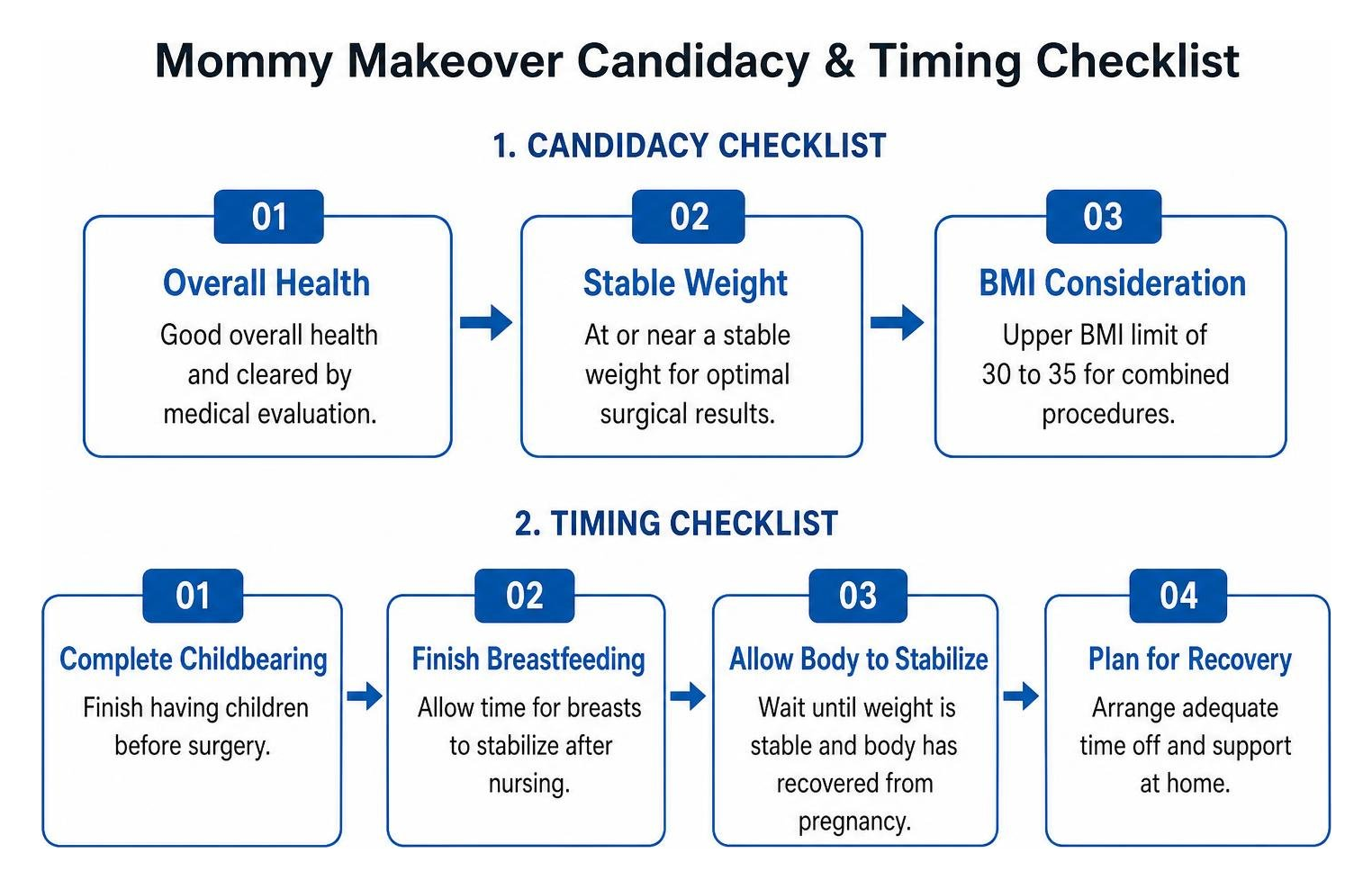
To qualify for combined body contouring, candidates must meet clear physiological criteria:
Body Mass Index (BMI): Obesity is the primary risk factor associated with surgical complications. Most plastic surgeons set an upper BMI limit of 30 to 35 for combined procedures to minimize risks such as wound healing complications, seromas, and deep vein thrombosis.
Weight Stability: Patients should be within 10 to 15 pounds of their goal weight for at least three to six months. Significant weight loss after surgery can cause new skin laxity, while weight gain can stretch repaired tissues.
Age and Health Stage: Evaluating your overall medical health, physiological baseline, and life stage is essential when assessing the ideal timing for surgery.
Non-Smoking Status: Nicotine constricts blood vessels, compromising tissue perfusion and increasing the risk of wound separation and infection. Patients must be completely nicotine-free for at least four to six weeks before and after surgery.
GLP-1 Medication Management: Patients using GLP-1 receptor agonists, such as semaglutide or tirzepatide, should follow their surgical team’s medication instructions before surgery.
Ideal Postpartum Timing and Family Planning
Rushing into surgery too soon after childbirth can compromise your results and safety. When determining when to consider surgery after having a baby, two main factors guide the decision:
Postpartum and Nursing Milestones: A safe timeline for waiting after childbirth requires waiting at least six months after delivery, and at least six months after completely stopping breastfeeding. This allows hormone levels to stabilize, breast tissue to settle into its baseline volume, and the abdominal wall to recover naturally.
Completion of Childbearing: While getting pregnant after surgery is medically safe, future pregnancies will restretch the repaired abdominal muscles and skin, reversing your aesthetic investments. Completing family planning before undergoing a mommy makeover is strongly recommended.
Surgical Safety: Single-Session Combination vs. Staging
Combining several procedures into a single operation provides the convenience of one surgery date and a consolidated recovery period. However, patient safety requires strict adherence to surgical limits.
Combined vs. Staged Procedure Matrix
For patients requiring extensive tissue removal, higher surgical durations, or those with elevated baseline risk factors, staging procedures into two separate operations spaced three to six months apart is often the safest path.
Factor
Single-Session Combined Surgery
Staged Multi-Procedure Surgery
Cumulative Recovery Time
One consolidated recovery window (4–6 weeks)
Two separate recovery periods (4–6 weeks each)
Overall Cost Efficiency
Often lower with one facility stay and recovery period
Often higher with separate surgical dates and recovery periods
Ideal Candidate
Generally healthy patients with modest treatment needs
Patients who need more extensive treatment or have health factors that call for a slower approach
Mommy Makeover Recovery Timeline and Healing Stages
Understanding the recovery process helps you arrange proper support at home and protects your surgical repairs.
Days 1–3 (Peak Discomfort): You will experience surgical soreness, swelling, and tightness. Walking slightly bent at the waist helps protect abdominal sutures. Pain medications and muscle relaxants manage discomfort effectively.
Weeks 1–2 (Initial Healing): Surgical drains (if used) are typically removed. Light walking around the house is encouraged to support healthy circulation. Most patients transition off prescription narcotics to over-the-counter pain relief.
Weeks 2–3 (Returning to Routine): Discomfort decreases and mobility improves. Desk-bound professionals often return to remote or light work.
Weeks 4–6 (Resuming Activity): Lifting restrictions ease and patients are cleared for light cardiovascular exercise. Tissue tightness continues to soften.
Months 3–6 (Final Contours): Residual swelling resolves, revealing your defined waistline and settled breast contours. Scars continue to fade and mature over 12 to 18 months.
Practical Postoperative Care and Support
Setting up thoughtful postoperative support ensures a smooth recovery. Implementing proven recovery tips and practical guidance safeguards your health and outcomes:
Arrange Dedicated Caregiving: Plan for 24-hour adult assistance for at least the first 5 to 7 days. You will need help getting out of bed, managing medications, and caring for young children.
Wear Medical Compression Garments: High-grade compression garments control swelling, support healing tissues, and reduce seroma formation. Wear them as directed, often 23 hours a day for the first month.
Strictly Observe Lifting Restrictions: Avoid lifting anything over 10 pounds (including toddlers, car seats, and groceries) for 4 to 6 weeks to protect internal abdominal wall repairs.
Total Cost and Financial Planning
A mommy makeover is an investment in your well-being. Understanding the financial components ensures clarity with no hidden fees.
Key Pricing Factors and National Averages
The total cost of a mommy makeover varies based on the procedures included, the complexity of the surgical plan, facility and clinical-support fees, and the surgeon’s experience. Reviewing a detailed cost breakdown for combination procedures can help patients prepare for a personalized consultation.
Several key variables drive the final cost:
Surgeon’s Fee: Reflects the surgeon’s training, experience, and surgical precision.
Operating Room and Facility Fees: Accredited surgical suites equipped with hospital-grade safety technology.
Clinical Support Fees: Professional support and monitoring provided during the procedure.
Implant Selection: Saline versus anatomical cohesive silicone gel implants.
Geographic Location: Metropolitan coastal areas often reflect higher facility and overhead expenses.
Many practices offer financing options, such as CareCredit or Alphaeon Credit, which may allow patients to choose a monthly payment plan.
Selecting an Accredited Facility and Surgeon
Your safety and results depend directly on the credentials of your surgical team. When vetting providers:
Verify Board Certification: Ensure your surgeon is certified by the American Board of Plastic Surgery (ABPS).
Confirm Facility Accreditation: Surgery should only be performed in state-licensed, accredited facilities, such as those certified by the AAAASF, AAAHC, or The Joint Commission.
Review Real Patient Results: Study extensive before and after mommy makeover galleries to ensure the surgeon consistently produces natural-looking contours that match your aesthetic goals.
Frequently Asked Questions About Mommy Makeovers
Can pregnancy occur after a mommy makeover?
Yes, a mommy makeover does not affect fertility or your ability to carry a child safely to term. However, pregnancy stretches the repaired abdominal muscles and skin, while nursing alters breast volume, potentially compromising your surgical results and requiring revision surgery later. Completing family planning before surgery is strongly recommended.
How long do the aesthetic results typically last?
The physical results of a mommy makeover are long-lasting. Excised skin and removed fat cells do not return, and repaired muscle walls remain intact. However, natural aging, gravity, and substantial weight changes will continue to affect your tissues over time. Maintaining a stable weight and healthy lifestyle ensures your refreshed contours last for decades. More information about long-term results and revisions is available in this educational guide.
When is it safe to lift and hold children again?
Patients must strictly avoid lifting more than 10 pounds for the first 4 to 6 weeks post-surgery. Lifting toddlers puts direct intra-abdominal strain on internal sutures, increasing the risk of wound separation, hernias, and bleeding. Starting in week two, patients may sit on a sofa or floor and cuddle children in their lap when an adult caregiver places the child gently in their arms.
Conclusion
A mommy makeover is about more than restoring your pre-pregnancy shape—it is about renewing physical comfort, repairing functional muscle separation, and building postpartum confidence. By partnering with a board-certified plastic surgeon, prioritizing surgical safety, and committing to an honest recovery plan, you can achieve beautiful, natural-looking results tailored to your lifestyle.
At Tenley K Lawton MD in Newport Beach, CA, the practice specializes in delivering personalized, compassionate care focused on empowering mothers to look and feel their best. When you are ready to take the next step, request a consultation and review the average price for a mommy makeover to begin designing your customized surgical plan.
Gynecomastia Surgery: A Personalized Approach to Chest Contouring
Gynecomastia surgery can create a flatter, more masculine chest for appropriately selected patients through careful tissue removal, contouring, and individualized aftercare. The best plan depends on the amount of glandular tissue and fat, skin quality, chest anatomy, and overall health.
Gynecomastia is a common condition involving excess breast tissue in males. It may develop during puberty, with weight changes, from certain medications, or for other medical reasons. A consultation helps determine whether surgery is appropriate and which approach is most likely to produce a natural-looking contour.
Recovery also plays an important role in the final result. Compression, temporary activity limits, and follow-up visits help support healing and allow the surgical team to monitor progress.
How Gynecomastia Surgery Has Evolved
Gynecomastia surgery has become more precise as surgeons have refined liposuction, glandular excision, incision placement, and bleeding control. The goal is to remove excess tissue while preserving a smooth chest contour and minimizing visible scarring.
Today, treatment can be tailored to the patient. Some procedures focus primarily on fatty tissue, while others combine liposuction with direct removal of firm glandular tissue beneath the nipple. Patients with more extensive skin laxity may need a different approach to achieve a proportionate result.
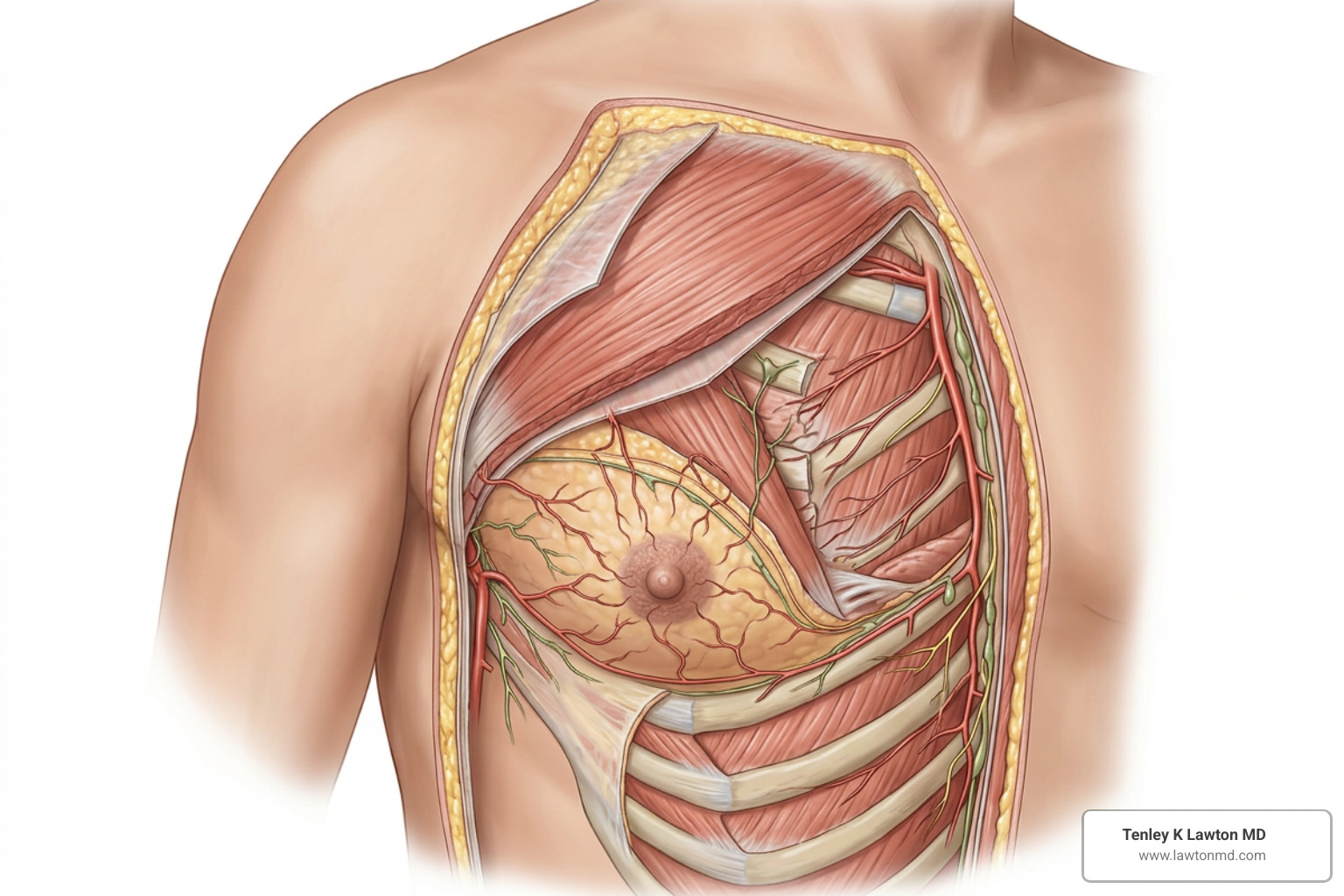
Patients exploring male breast reduction options benefit from a plan that protects the blood supply and sensation of the nipple-areolar complex. Careful dissection and conservative tissue removal can help balance contour improvement with tissue preservation.
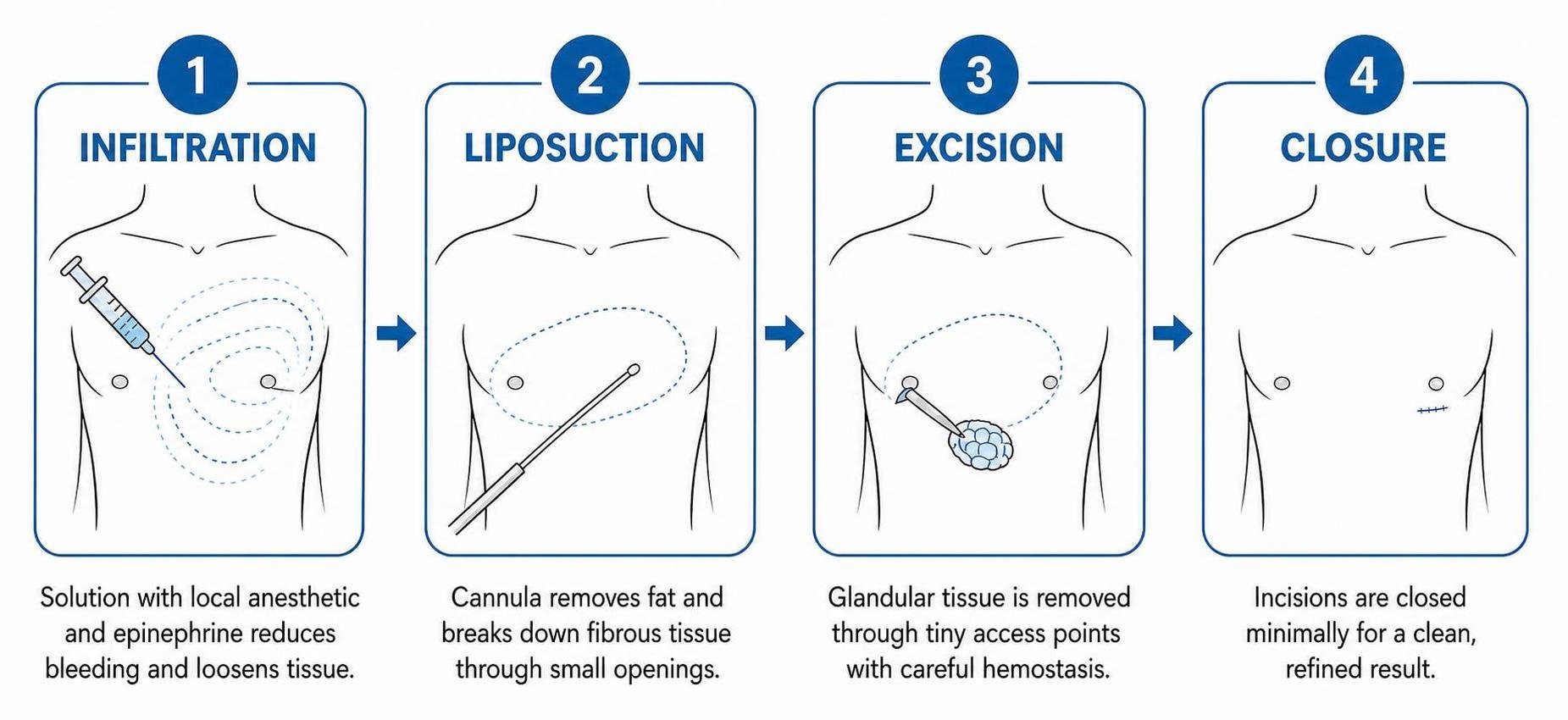
A surgical plan may include one or more of the following techniques:
Tumescent infiltration: A solution containing saline, local anesthetic, and epinephrine is used to prepare the treatment area and reduce bleeding.
Liposuction: Specialized cannulas remove excess fatty tissue and help blend the chest contour.
Direct glandular excision: Firm breast tissue can be removed through a carefully placed incision when liposuction alone is unlikely to achieve an adequate contour. A single-incision gland resection study of 30 patients used a 1-cm inferolateral areolar incision; Abdelmaksoud et al., 2025 reported a mean operative time of 35.7 minutes and a 3.3% hematoma rate.
Skin management: When excess skin is significant, skin-tightening or excisional techniques may be considered.
Minimally Invasive and Endoscopic Innovations
Smaller-incision and endoscopic approaches may be appropriate for selected patients. A refined anatomy endoscopic research series included 786 patients and described endoscopic access designed to support visualization and contour symmetry. These techniques can improve visualization and allow surgeons to work through strategically placed access points while focusing on contour symmetry.
The right technique is not the same for every patient. Gynecomastia grade, skin elasticity, tissue density, prior weight changes, and aesthetic goals should all be reviewed during a consultation.
Benefits of Gynecomastia Surgery
Gynecomastia surgery can address chest fullness that does not improve with exercise or weight management alone. For many patients, the benefits of male chest surgery extend beyond a flatter chest contour and may include greater comfort in fitted clothing and improved confidence in social settings.
A more defined chest contour: Removing excess fatty and glandular tissue can help create a firmer, more proportionate chest.
Improved clothing fit: Patients often find that T-shirts, dress shirts, and swimwear fit more comfortably after healing.
A tailored surgical plan: The procedure can be adapted to the amount and type of tissue present, skin quality, and desired contour.
Long-lasting results: When the factors contributing to gynecomastia are stable, surgical results can be durable.
Treatment Consideration
What It Means for Your Plan
Amount of fatty tissue
May influence whether liposuction is recommended.
Amount of firm glandular tissue
May require direct excision for a smoother result.
Skin elasticity
Helps determine whether the skin can redrape after tissue removal.
Chest asymmetry
May require individualized contouring on each side.
Health history and medications
Helps the surgeon identify potential causes and plan safely.
Who Is a Candidate for Gynecomastia Surgery?
Candidates often have persistent chest fullness caused by glandular tissue, excess fat, or a combination of both. A consultation can help distinguish gynecomastia from isolated chest fat and identify any medical factors that should be addressed before surgery.
Patients are commonly evaluated for several factors. In one pediatric outpatient study, 21 boys with a median age of 14.5 years had surgery and were discharged the same day; two developed mild seromas that resolved with external compression.
Stable weight: Significant future weight changes can affect the chest contour.
Good skin elasticity: Skin that can redrape smoothly may support a more refined result.
Realistic expectations: Surgery can improve the chest contour, but it cannot create perfect symmetry.
A commitment to recovery instructions: Following activity restrictions and follow-up guidance supports safe healing.
Patients with more severe skin laxity or substantial chest enlargement may need a more extensive procedure. The appropriate approach is determined individually during consultation.
Gynecomastia Surgery Recovery
Recovery after gynecomastia surgery varies with the extent of treatment, the techniques used, and the patient’s overall health. Your surgeon will provide a personalized plan for compression, wound care, activity, and follow-up appointments. Understanding how long recovery takes after gynecomastia can help set realistic expectations.
The Compression Garment
A medical compression vest can provide gentle, continuous pressure over the chest during early healing. It helps support the treated area and is typically worn according to the surgeon’s instructions.
Activity Milestones
Days 1–3: Light walking around the house is generally encouraged. Avoid heavy lifting and strenuous upper-body activity.
Weeks 1–2: Many patients can return to desk-based work and routine daily activities, depending on comfort and the surgical plan.
Weeks 3–4: Light cardiovascular exercise may be reintroduced with the surgeon’s approval.
Weeks 4–6: Upper-body strength training, running, and contact sports may be resumed only after clearance at a follow-up visit.
Frequently Asked Questions About Gynecomastia Surgery
Gynecomastia surgery is generally safe when performed by a qualified plastic surgeon for an appropriate candidate. Every procedure carries risks, including bleeding, infection, contour irregularity, changes in sensation, scarring, and the possibility of revision surgery. A consultation is the right time to review personal risk factors and expected benefits.
Will gynecomastia return after surgery?
Results are often long-lasting when the underlying cause is stable. However, chest fullness can recur if hormonal factors, medications, significant weight changes, or other contributors are not addressed. Your surgeon may recommend discussing persistent or unexplained gynecomastia with a primary care physician or specialist.
When can I return to normal workouts after surgery?
Most patients begin light walking shortly after surgery. Light cardio may be possible after several weeks, while chest-focused exercise and heavy lifting usually require clearance at a follow-up appointment. The exact timeline depends on the extent of surgery and how healing is progressing.
Conclusion
Gynecomastia surgery can be an effective option for men who want a flatter, more defined chest after non-surgical efforts have not addressed persistent tissue fullness. Careful evaluation, an individualized surgical plan, and attentive recovery guidance are central to achieving a natural-looking result.
At Tenley K Lawton MD in Newport Beach, CA, we provide personalized male chest contouring based on each patient’s anatomy and goals. To discuss your options, schedule a male chest contouring consultation with our board-certified team.
References
Abdelmaksoud SM, Omran A, Elagamy KMM, Elhendawy MA, Mahmoud BA. “Cross-chest liposuction plus gland resection through single minimal incision for management of grade I/II gynecomastia.” BMC Surgery, 2025. PMCID PMC12224700. Read the BMC Surgery article.
Adhikari S. “Minimal Incision Technique for Gynecomastia.” Journal of Cutaneous and Aesthetic Surgery, 2021. PMCID PMC8611696.
Carlos Delgado-Miguel, Ennio Fuentes, Pablo Aguado, Ricardo Díez. Children, 2025. Related gynecomastia study.