Either breast reduction or a breast lift can help the appearance of larger, sagging breasts. However, choosing which breast procedure is best for you can depend on how much you want to transform your breasts.




Facial plastic surgery for men encompasses customized structural procedures—such as blepharoplasty, rhinoplasty, neck lifts, and deep plane facelifts—designed to preserve masculine anatomy and deliver discreet rejuvenation. These procedures address heavy upper eyelid hooding, nasal irregularities, jowls, and neck laxity while maintaining strong, natural male features.
Several key cultural and professional factors explain why more men are exploring facial plastic surgery:
Men approach aesthetic surgery with very specific expectations. They rarely want dramatic reinvention; instead, their priority is discretion. A successful male procedure delivers results where colleagues and friends comment that they look exceptionally well-rested or fit, without ever suspecting surgery took place.
Achieving an undetectable result in male facial surgery requires a profound understanding of male facial anatomy. Men do not age in the same way women do, and applying female surgical techniques to a man’s face is the single most common cause of feminized or unnatural outcomes.
Male skin is approximately 25% thicker than female skin due to higher collagen density and testosterone-driven dermal architecture. Men also have a richer blood supply (increased vascularity) and more active sebaceous glands. While this gives men better skin elasticity in their younger years, it means that when facial tissues eventually descend, they do so with greater weight. This produces heavier jowls, deeper nasolabial folds, and more pronounced platysmal neck banding.
Male facial skeletons feature distinct structural markers: prominent supraorbital ridges (brow bones), lower and flatter eyebrow positions, wider cheekbones, and square, well-defined chins. Softening these angles or over-elevating the brows inevitably creates a feminized appearance. Furthermore, male pattern baldness, thinning hair, and beard-bearing skin dictate that surgical incisions must be planned with surgical artistry to remain completely invisible.
| Anatomical Feature | Male Facial Characteristics | Female Facial Characteristics | Surgical Design Implication for Men |
|---|---|---|---|
| Dermis & Subcutaneous Tissue | Thicker, denser collagen, higher vascularity | Thinner, softer dermal architecture | Requires meticulous blood pressure control and robust deep-layer structural support |
| Brow & Upper Orbital Rim | Heavy brow bone; low, horizontal eyebrow | Arched, higher eyebrow above orbital rim | Brow lifts must avoid high arches; blepharoplasty must preserve natural brow fullness |
| Lower Face & Jawline | Wide mandibular angle, square chin contour | Softer, tapered, heart-shaped jawline | Deep-plane vectors must restore sharp, angular jaw borders rather than narrow contours |
| Hair & Beard Distribution | Sideburns, neck beard, potential crown balding | Stable hairline, finer hair follicles | Incisions must be designed to avoid pulling beard hair into the ear canal or leaving visible scars |
| Neck Laxity Patterns | Heavy platysma bands, thick subplatysmal fat | Thinner skin, superficial fat accumulation | Demands comprehensive subplatysmal sculpting and muscular redraping |
Men seeking facial plastic surgery have distinct aesthetic goals that require customized techniques. In our practice, we focus on identifying the specific structural changes contributing to a tired or aged appearance. Men frequently choose from the top cosmetic procedures for men to achieve balanced, long-lasting facial harmony.
The eyes are typically the first area to show fatigue and age. In men, excess upper eyelid skin can cause heavy “hooding” that obscures the eye, impairs peripheral vision, and imparts a stern, exhausted look. In the lower eyelids, weakening tissue allows orbital fat pads to herniate forward, creating chronic dark circles and puffy under-eye bags.
Male blepharoplasty differs substantially from eyelid surgery for women:
A man’s nose anchors his entire facial profile. Men seeking rhinoplasty surgery often want to correct a prominent dorsal hump, repair structural asymmetry caused by sports injuries, or refine a bulbous tip, all while preserving strength and character.
Male rhinoplasty requires preserving a straight, strong nasal dorsum with a well-defined tip that forms an approximate 90-to-95-degree angle with the upper lip. Narrowing the bridge excessively, scooping the profile, or creating an upturned nasal tip produces an unnatural, operate-on look. In many cases, we combine cosmetic refinement with functional septoplasty to open obstructed airways and improve breathing.
A defined jawline is the universal hallmark of male facial vitality. As tissue laxity progresses, the descent of facial fat pads and the loosening of the platysma muscle lead to jowling, submental fullness (“double chin”), and vertical “turkey neck” bands that obscure the mandibular border.
A dedicated neck lift surgery restores an acute, sharp cervicomental angle (the transition between the chin and the neck). Through a hidden incision beneath the chin and behind the ears, we:
A weak or receding chin (microgenia or retrognathia) disrupts overall facial proportion, making the nose appear disproportionately large and worsening the appearance of neck laxity.
When evaluating options, men often weigh chin implants versus dermal fillers to determine the right path. While temporary dermal fillers provide a non-surgical preview of added projection, a custom anatomical silicone chin implant offers a permanent, structural solution that widens and projects the lower face.
For men who have experienced volume loss across the temples, midface, or tear troughs, we utilize micro-droplet facial fat grafting. By harvesting a small amount of unwanted fat from the abdomen or flanks, purifying it, and meticulously injecting it into deep structural planes, we restore youthful facial architecture without the puffiness sometimes associated with large volumes of synthetic filler.
For men not yet ready for surgery, non-invasive treatments provide significant preventative and restorative benefits. Neuromodulator treatments—popularly dubbed “Brotox”—are tailored specifically for male muscle dynamics.
Because men have substantially larger, stronger facial muscle mass than women, they require specialized dosing strategies. When performing wrinkle correction treatments for men, our injection placement focuses on relaxing deep dynamic furrows between the brows (glabella) and across the forehead while leaving enough subtle movement to preserve natural expressions.
Complementary medical-grade skin rejuvenation for men is equally vital to address environmental damage:
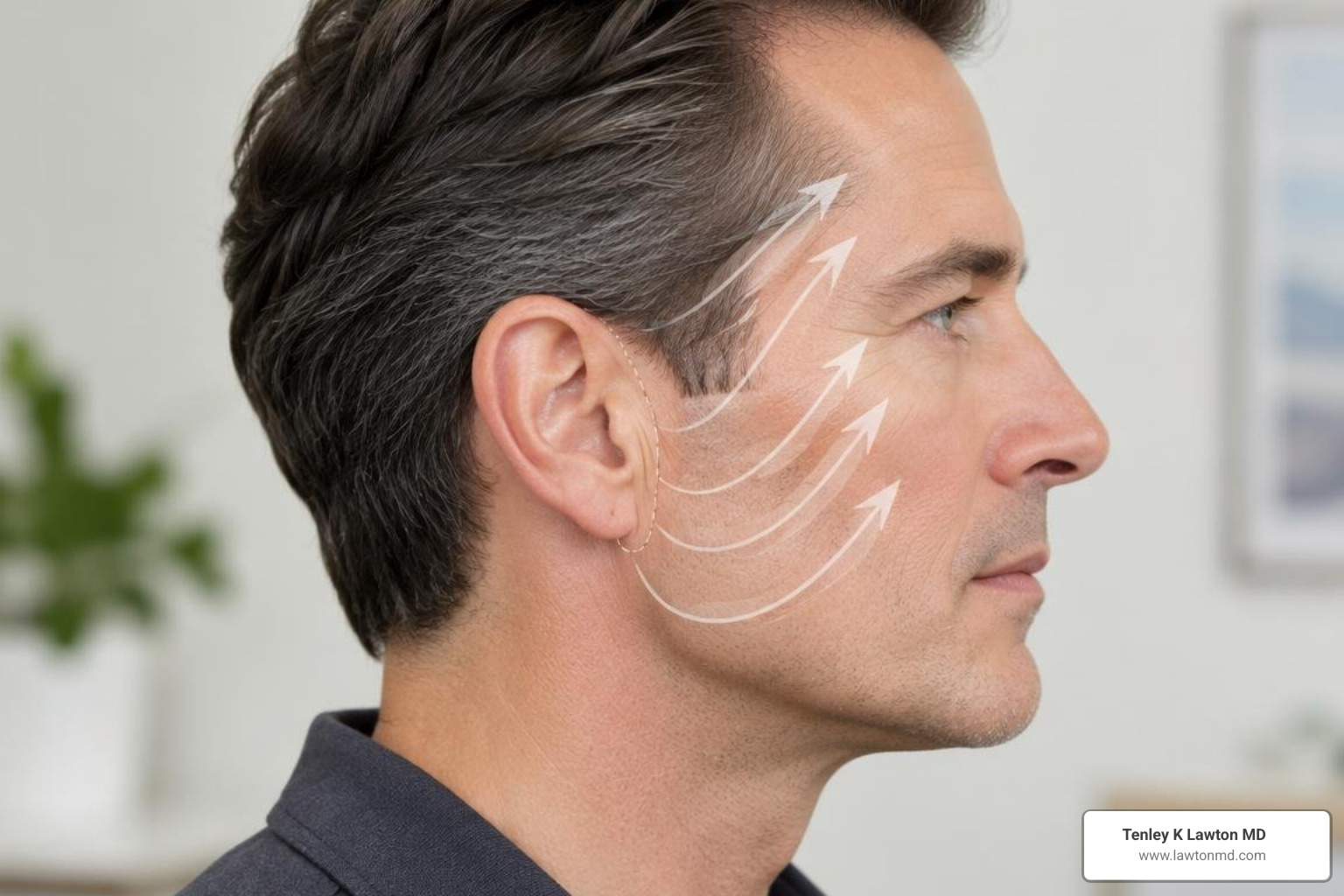
A traditional facelift technique that relies heavily on pulling and trimming surface skin can be disastrous for a male patient. Pulling skin too tightly flattens natural facial contours, distorts the earlobes (creating a “pixie ear” deformity), and shifts sideburns unnaturally backward.
According to an analysis on male aesthetic procedures by the American Society of Plastic Surgeons, the surgical philosophy for men must prioritize deep anatomical support rather than surface tension Beyond the facelift: How facial plastic surgery is changing for men.
The gold standard in male facial rejuvenation is the deep plane facelift. Rather than separating the skin from the underlying tissue and pulling the skin taut, the deep plane technique enters the anatomical space beneath the Superficial Musculoaponeurotic System (SMAS).
In this deep anatomical plane, the surgeon directly releases the true facial retaining ligaments (the zygomatic, masseteric, and mandibular ligaments) that tether aging tissues down. Once these ligaments are released, the deep muscular structure, fallen cheek fat compartments, and heavy jowls can be elevated vertically and repositioned without placing any tension on the surface skin.
For men, the deep plane technique provides profound advantages:
Incision placement in male facelifts requires exceptional precision due to hair-bearing skin and shorter hairstyles.
Understanding the recovery timeline helps men plan their procedure discreetly around professional and personal commitments.
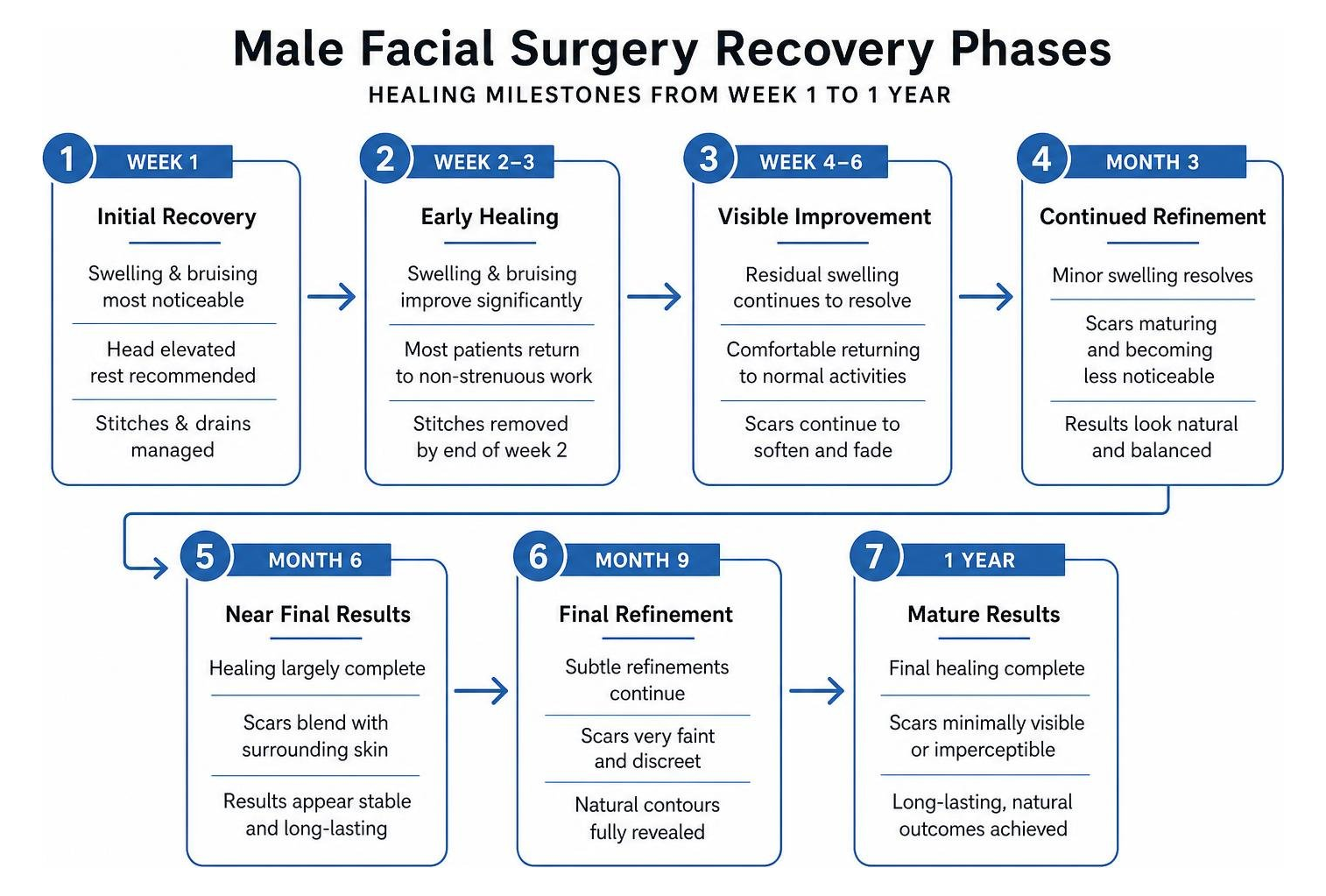
Following surgery, a light supportive head wrap is applied. Some patients may have small, temporary surgical drains placed behind the ears to prevent fluid accumulation, which are typically removed within 24 to 48 hours.
Because men have higher baseline vascularity and blood pressure, strict blood pressure control is paramount during the first 72 hours to minimize bruising and eliminate the risk of a hematoma (a localized collection of blood beneath the skin). We provide detailed medications and protocols to ensure pain management, low resting blood pressure, and effortless recovery in a head-elevated position.
Discomfort is typically modest and managed easily with prescribed medication for the first few days, quickly transitioning to over-the-counter options. Swelling peaks around day three and begins subsiding. Most sutures are removed between days six and eight. Patients are encouraged to take light walks around the house to promote circulation, though bending over, straining, and heavy lifting are strictly prohibited.
By day 10 to 14, the vast majority of visible bruising has faded, and residual swelling is generally subtle enough that casual observers will not notice it. Most men working in executive, desk-based, or remote roles comfortably return to work at the two-week mark. If needed, subtle mineral-based camouflage can neutralize any residual yellowing skin tones.
By week four, tissues have stabilized significantly. Light cardiovascular workouts (stationary cycling, walking on an incline) can resume. By weeks five to six, men receive full clearance to return to intense weight training, running, golf, tennis, and contact sports.
While patients look refreshed and public-ready by week three, subtle internal healing continues. Residual micro-swelling around the jawline and neck fully resolves over three to six months, revealing crisp, sharp mandibular contours. Incision lines gradually mature from faint pink marks into soft, pale lines that blend invisibly into natural skin creases.
There is no single “right” age for facial rejuvenation; candidacy is determined by anatomical changes rather than chronological age:
When performed by a board-certified plastic surgeon experienced in male aesthetic architecture, the answer is an emphatic no. The “windswept,” over-tightened, or feminine look occurs only when an inexperienced surgeon relies on outdated superficial skin-pulling techniques or applies female aesthetic vectors to a male face.
By restoring the deep structural SMAS layer, releasing retaining ligaments, and redraping the skin tension-free, a modern male facelift restores the crisp angles of youth while preserving every ounce of rugged, masculine character.
A deep plane facelift and neck lift resets the anatomical clock by approximately 10 to 15 years. While surgery does not stop the natural biological aging process, you will always look significantly younger and more rested than you would have without the procedure.
To maximize the longevity of your results:
Choosing the right plastic surgeon is the single most critical decision you will make in your aesthetic journey. Because male facial surgery demands a fundamentally different approach than female surgery, you should seek a surgeon who demonstrates a nuanced command of male anatomy and aesthetics.
When vetting plastic surgeons:
At Tenley K Lawton MD in Newport Beach, California, we believe that exceptional plastic surgery should never announce itself. Our practice is built on the pillars of personalized compassionate care, anatomical precision, and patient empowerment. We understand the discretion and subtlety required by our male patients, tailoring every surgical and non-surgical treatment to deliver sharp, rested, and completely natural results.
If you are ready to explore how modern facial plastic surgery can restore your jawline, refresh your eyes, and enhance your confidence, we invite you to schedule a private consultation with our team.
When you reach the 12-month post-operative mark, your body has completed the vast majority of its structural and dermal healing. At one year, what you see in the mirror is no longer a surgical work in progress—it is your mature, lasting aesthetic outcome.
The primary difference between early recovery and the one-year milestone lies in four physiological factors:
A customized surgical plan addresses multiple areas affected by pregnancy and nursing. When considering what procedures make up a mommy makeover, the core foundation typically pairs abdominal restoration (such as a full or extended abdominoplasty) with breast rejuvenation (breast augmentation, a mastopexy, or both). Combining these procedures creates a balanced silhouette where the proportions of the upper torso, waistline, and hips complement each other.
By month 12, the initial stiffness of surgical repair is replaced by natural elasticity. You can twist, stretch, bend, and engage in high-intensity exercise without the tight pulling sensation common in the first few months.
Realistic expectations at one year also account for normal human anatomy: subtle natural asymmetries between breasts or across the hips often remain, as no body is perfectly symmetrical. However, the overall contour is firmer, proportionate, and aligned with your body frame.
Many clinical before-and-after photo galleries show patients at the 6-week mark. While these photos capture significant improvements in contour and skin removal, they represent only the beginning of tissue remodeling.
To illustrate the evolutionary gap between 6 weeks and 12 months, consider a representative case of a woman in the 41–50 age range who underwent a comprehensive transformation:
Understanding the timeline of recovering from a tummy tuck helps prevent premature anxiety during the first 6 months.
| Healing Indicator | 6 Weeks Post-Operative | 1 Year Post-Operative (Final Result) |
|---|---|---|
| Breast Implant Position | High on chest wall; upper-pole fullness appears exaggerated | Settled (“dropped and fluffed”) with natural slope and soft lower pole |
| Breast Tissue Pliability | Firm, tight, resists natural lateral movement | Soft, pliable, moves and shifts naturally with body posture |
| Abdominal Swelling (Edema) | Moderate fluid retention, especially in lower abdomen above incision | 100% resolved; skin lies flat against the repaired muscle wall |
| Core Sensation & Mobility | Hypoesthesia (numbness), tightness during backward extension | Nerve sensation largely regenerated; full abdominal flexibility |
| Incision Appearance | Pink, red, or purple; slightly raised or firm to touch | Flat, pale, soft, and flush with surrounding skin |
| Muscular Strength | Modified light duty; limited core engagement | Fully restored core stability; unrestricted weightlifting and athletics |
The extended abdominoplasty addresses two distinct anatomical layers: the superficial skin/fat envelope and the deep rectus abdominis muscle sheath. During pregnancy, the connective tissue line between these muscles stretches, creating diastasis recti. We repair this separation with internal permanent sutures (plication), acting as an internal corset.
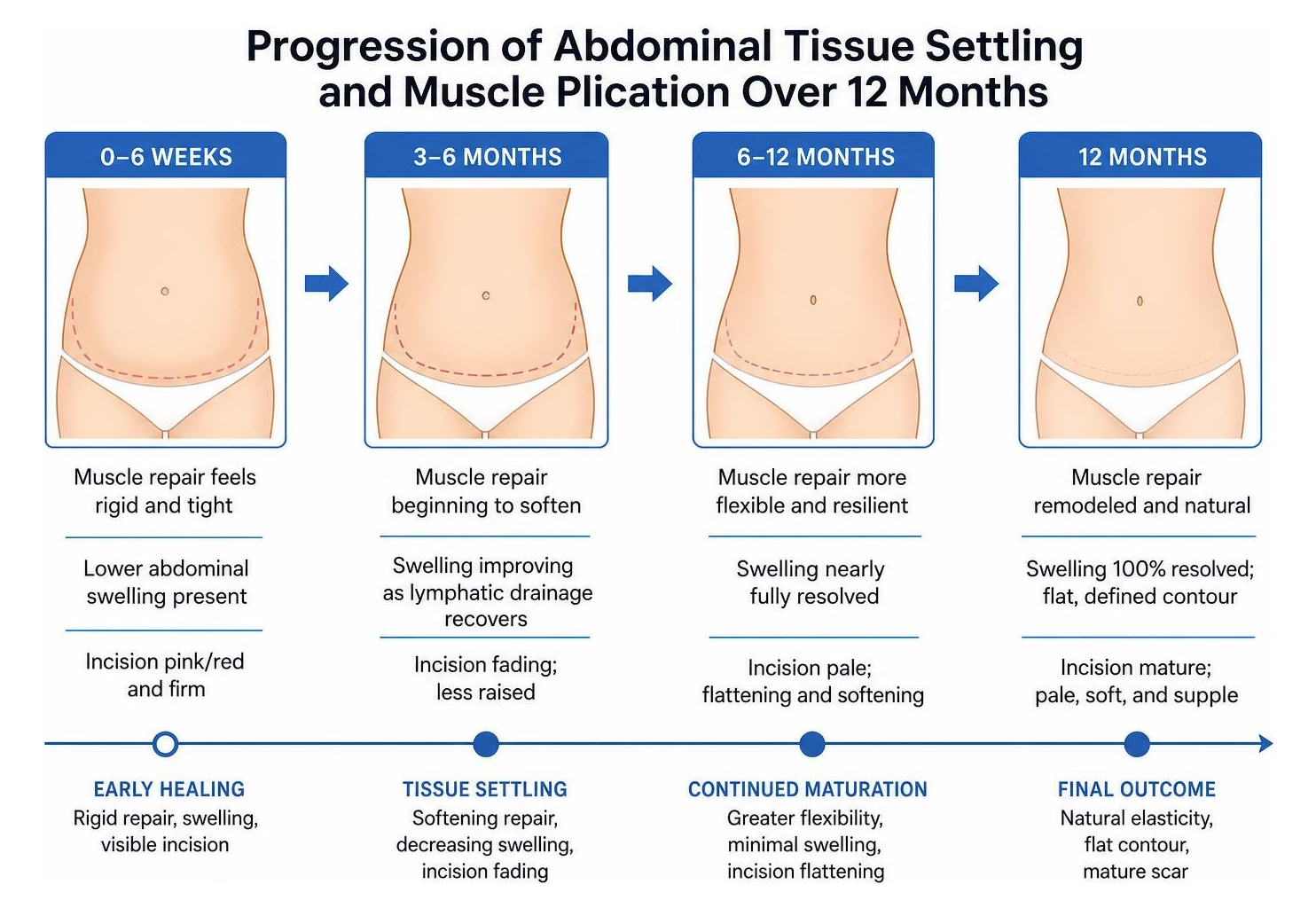
During the first 3 to 6 months, this muscle repair feels rigid. By month 12, the internal collagen matrix has remodeled around the plication sutures. The abdominal wall regains dynamic elasticity, allowing for effortless deep breathing, core engagement, and torso rotation.
Furthermore, lower abdominal swelling resolves at an uneven rate because the surgery temporarily disrupts superficial lymphatic channels. These microscopic vessels rebuild their drainage pathways across the scar line between months 6 and 12.
When targeted liposuction is included in a mommy makeover, it removes stubborn fat deposits from the flanks, love handles, and back. At one year, the skin over these liposuctioned zones contracts over the newly sculpted muscular contours, creating an hourglass waistline taper that is not visible during the early, swollen phases.
Combining an implant placement with a mastopexy (breast lift) requires dual-plane tissue remodeling. When high-profile cohesive silicone gel implants (such as the 355cc implants in the case study) are placed under the pectoralis major muscle, the muscle exerts continuous downward tension on the top of the implant.
Over the first 3 to 9 months, the lower breast skin stretches slightly to accommodate the implant volume, while the tight pectoralis muscle gradually relaxes. This dual action is clinically referred to as “drop and fluff”:
Modern cohesive silicone implants mimic the tactile feel of natural glandular tissue once internal capsular contracture risks are minimized through proper surgical technique and pocket dissection. At one year, your breasts feel soft to the touch and compress naturally when sleeping or wearing support garments, which is a key advantage of modern breast augmentation.
For patients who also undergo a breast lift, incisions placed around the areola (periareolar), vertically down the lower pole (lollipop), or along the inframammary crease (anchor pattern) undergo significant sensory and aesthetic maturation.
Microscopic sensory nerve endings (cutaneous branches of the intercostal nerves) regenerate at a rate of roughly 1 millimeter per day. By month 12, temporary numbness or hypersensitivity in the nipple-areola complex resolves for most patients, returning to baseline sensation.
Surgical scars progress through defined biological phases:
In mature skin (particularly in patients aged 40 and older), melanin production can sometimes react irregularly to inflammation, creating a risk of post-inflammatory hyperpigmentation. Consistent scar care—including daily application of medical-grade silicone gel sheets, light scar massage, and strict avoidance of UV light—ensures that by 12 months, incisions remain flat and discreet.
While surgical execution establishes the structural foundation, individual patient factors dictate how well your one-year results are preserved over the following decade.
In patients aged 41 to 50, the skin’s dermal layer naturally contains lower concentrations of elastin and active collagen compared to younger patients. While an extended abdominoplasty excises loose, stretched skin, the remaining skin’s ability to stay taut depends on baseline elasticity. Mature skin benefits from focused hydration, medical-grade skin care, and sun protection to maintain its snap and avoid premature crepey-ness.
Significant weight fluctuations after surgery directly compromise your outcome:
Maintaining a stable weight within 5 to 10 pounds of your surgery-day weight preserves the precise contours achieved in the operating room. An in-depth medical evaluation helps confirm whether you are a candidate for a mommy makeover or should first stabilize your weight before scheduling surgery.
A mommy makeover is best performed when your family planning is complete. While carrying a pregnancy after a tummy tuck is physically safe, the expanding uterus will re-stretch the repaired rectus muscles and the redraped skin, undoing the structural tightening.
To keep your results looking their best beyond month 12:
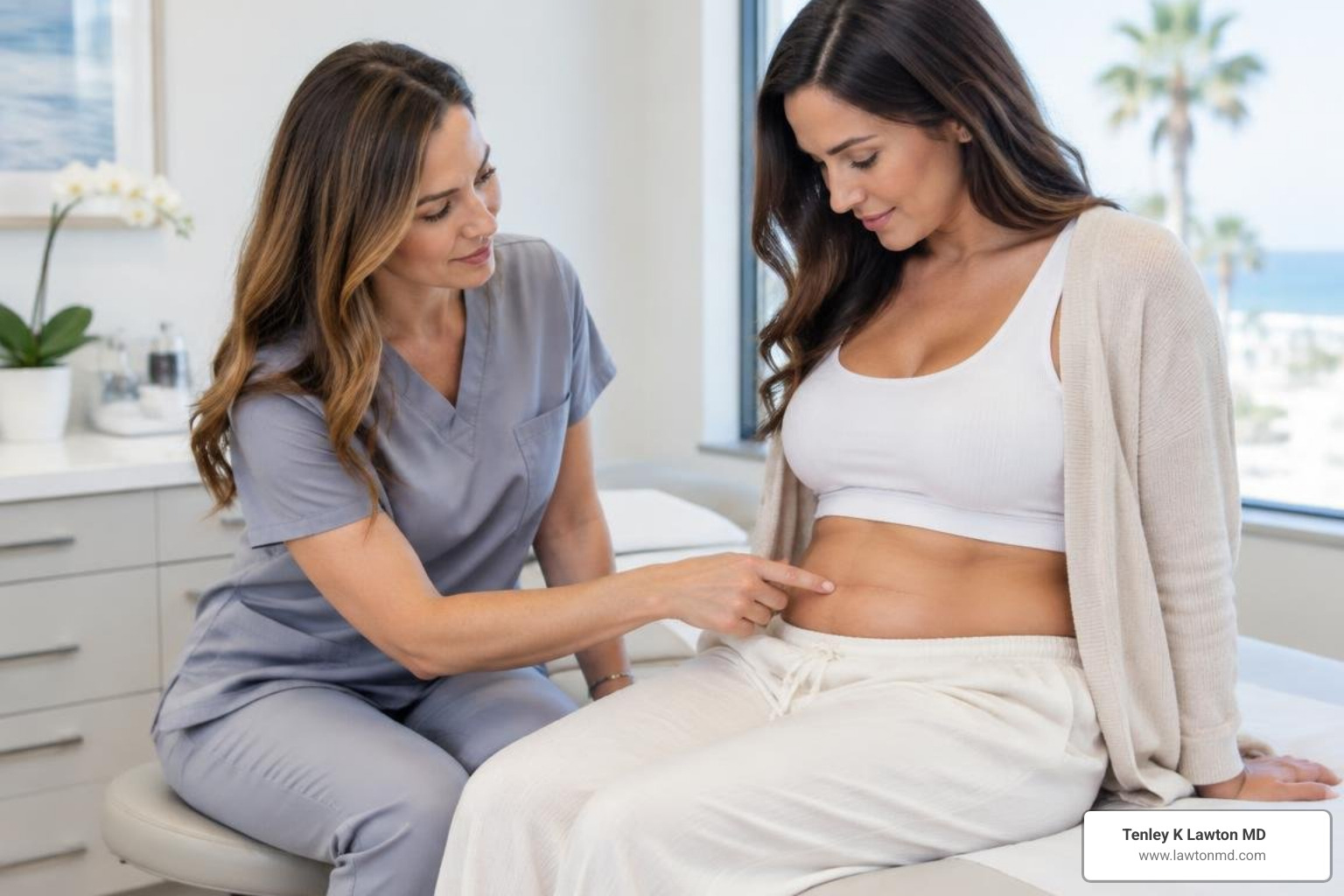
At the one-year mark, your surgical foundation is stable. This is the ideal time to incorporate targeted, non-surgical medical aesthetic treatments to refine superficial skin texture, address minor pigment variations, and maximize scar blending.
While surgery repositions underlying tissue and removes excess volume, it does not change the cellular quality of sun-damaged or stretched superficial skin. Non-ablative or fractional CO2 laser treatments applied to mature scars vaporize microscopic columns of scar tissue, stimulating fresh collagen production that smooths uneven textures and blends the scar seamlessly with the adjacent skin.
Platelet-rich plasma (PRP) and platelet-rich fibrin (PRF) harness your body’s concentrated growth factors. When combined with microneedling over mature abdominoplasty or mastopexy scars, PRF promotes rapid cellular renewal, reduces trace hyperpigmentation, and restores suppleness to mature dermal tissue.
Physical restoration often brings a meaningful mental shift. Seeing your body restored at the one-year mark—free from the physical discomfort of separated abdominal muscles, back strain, and deflated breast tissue—often renews personal confidence.
Patients frequently note a renewed enthusiasm for fitness, greater comfort in clothing, and enhanced self-assurance in everyday life. For many women, learning how a mommy makeover gives mothers more confidence reflects this emotional and physical milestone.
Yes, surgical incisions create permanent scars, but by month 12 they should be mature, thin, flat, and faded to a pale white or light skin tone.
We place incisions carefully within anatomical boundaries—positioning the lower abdominoplasty scar well below the hip bones so it remains hidden beneath low-rise bikini bottoms and underwear, and aligning breast lift incisions along the natural inframammary fold and areolar borders.
In some patients with darker skin tones or specific genetic predispositions, complete scar fading can take 18 months.
At 3 months post-op, the surrounding pectoralis muscle fibers are still tight, and the biological capsule forming around the implant is actively remodeling, which creates a firmer feel.
By 12 months, the pectoralis muscle has adapted to the implant’s presence, post-surgical inflammation inside the breast pocket has resolved, and the natural collagen capsule has settled into a soft, flexible envelope. This allows cohesive silicone gel implants to move freely and mimic natural breast softness.
First, consult with your plastic surgeon to assess the nature of the asymmetry. Every person possesses natural baseline asymmetries prior to surgery, including subtle variations in rib cage projection, shoulder height, nipple position, and hip width.
At one year, all post-operative swelling has cleared, allowing us to determine whether what you see is your natural anatomical asymmetry or an issue that could benefit from a minor in-office refinement, such as localized micro-liposuction or non-surgical skin tightening.
Achieving natural, long-lasting results from a mommy makeover requires surgical precision, a deep understanding of female anatomy, and an artistic eye for proportion. Rushing the process or expecting final results at 6 weeks can lead to unnecessary worry during what is naturally a 12-month healing journey.
At Tenley K Lawton MD in Newport Beach, CA, we specialize in delivering personalized, natural-looking breast and body transformations. We partner with you through every step of your recovery, providing compassionate, patient-empowered care from your initial consultation through your one-year post-operative evaluation and beyond.
Schedule a consultation with Dr. Tenley Lawton to design a customized mommy makeover tailored to your lifestyle and long-term aesthetic goals.
A lower body lift (frequently called a belt lipectomy) is a 360-degree contouring surgery that removes excess skin and lifts the abdomen, flanks, buttocks, and outer thighs. It is designed for weight-stable post-weight-loss patients with circumferential loose skin. When you experience massive weight loss, your skin stretches to accommodate the prior volume. Over months or years, the skin loses its underlying elasticity—specifically the collagen and elastin fibers that allow it to retract. Once the fat cells shrink, the structural scaffolding of the dermis cannot bounce back. The result is a circumferential band of deflated, hanging tissue that wraps around the entire waistline.
A belt lipectomy is engineered specifically for this anatomical reality. While anterior procedures focus exclusively on the front, a belt lipectomy treats the lower third of the torso as a single connected unit.
Understanding how this surgery compares to traditional anterior procedures helps clarify why it represents a distinct category of body contouring:
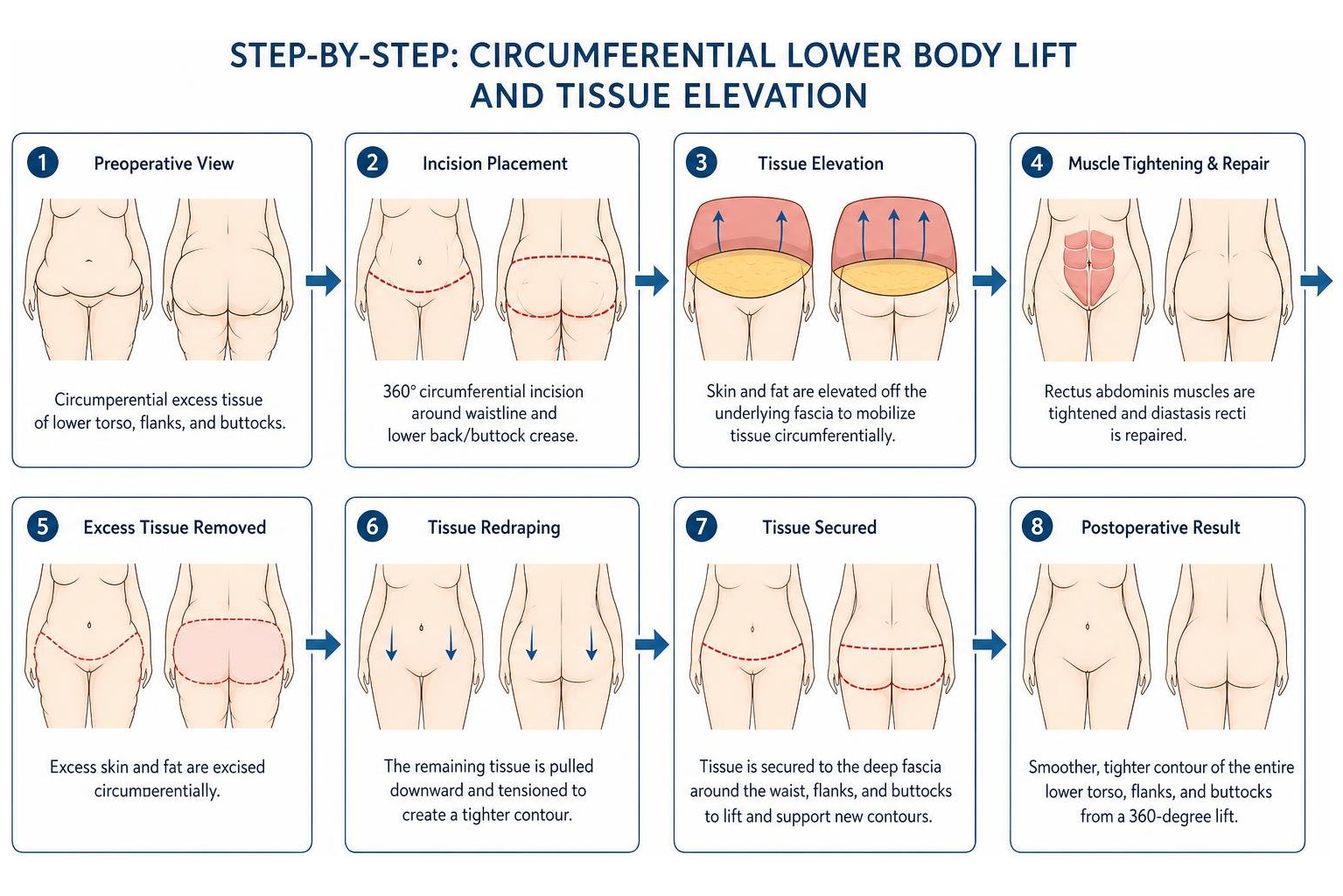
Because a lower body lift reshapes the entire lower midsection, it is a complex, meticulously orchestrated operation that typically takes between 4 and 7 hours under general anesthesia.
During the procedure, our surgical team carefully repositions you on the operating table to address both the anterior and posterior planes safely:
| Feature | Lower Body Lift (Belt Lipectomy) | Standard Tummy Tuck | Functional Panniculectomy |
|---|---|---|---|
| Anatomical Scope | 360° Circumferential (Abdomen, Flanks, Lower Back, Buttocks, Outer Thighs) | Anterior Torso (Abdomen and Mons Pubis only) | Lower Abdominal Overhang (Pannus only) |
| Muscle Repair | Yes (Rectus abdominis plication) | Yes (Rectus abdominis plication) | No |
| Buttock & Thigh Elevation | Yes (Suspends gluteal and lateral thigh tissue) | No | No |
| Incision Extent | Continuous circle around the entire waistline | Hip bone to hip bone along lower abdomen | Transverse lower abdominal incision |
| Surgical Duration | 4 to 7 hours | 2 to 3.5 hours | 1.5 to 3 hours |
| Anesthesia | General anesthesia | General anesthesia | General anesthesia |
| Average Recovery to Desk Work | 3 to 4 weeks | 2 weeks | 1 to 2 weeks |
Careful surgical marking and precise anatomical planning ensure that each zone is addressed seamlessly to achieve a harmonious, balanced silhouette.
The defining hallmark of a lower body lift is its continuous, 360-degree incision line. Before surgery, we mark your incision lines while you are standing upright. This allows us to plan the placement precisely where your natural clothing, underwear, and swimwear sit.
The incision travels low across the suprapubic area, dips across the natural crease of the hips, and extends across the upper curve of the buttocks and lower back. Although the scar encircles the waist, it is designed to be completely concealed beneath standard-cut bikini bottoms or low-rise underwear.
Scars go through an active maturation process. In the first 6 to 12 weeks, the incision line will appear pink and slightly raised. Over the course of 12 to 18 months, with consistent sun protection and topical scar therapy, the incision flattens and softens into a faint, pale line. For massive-weight-loss patients, trading loose, chafing folds of skin for a well-placed, flat scar is almost universally considered an empowering and worthwhile exchange.
Undergoing a circumferential body lift is a significant physical commitment. Because of the sheer volume of tissue removed and the tension required to sculpt a firm contour, candidacy criteria are rigorous. Plastic surgeons enforce strict safety thresholds to minimize complications and ensure long-lasting results.
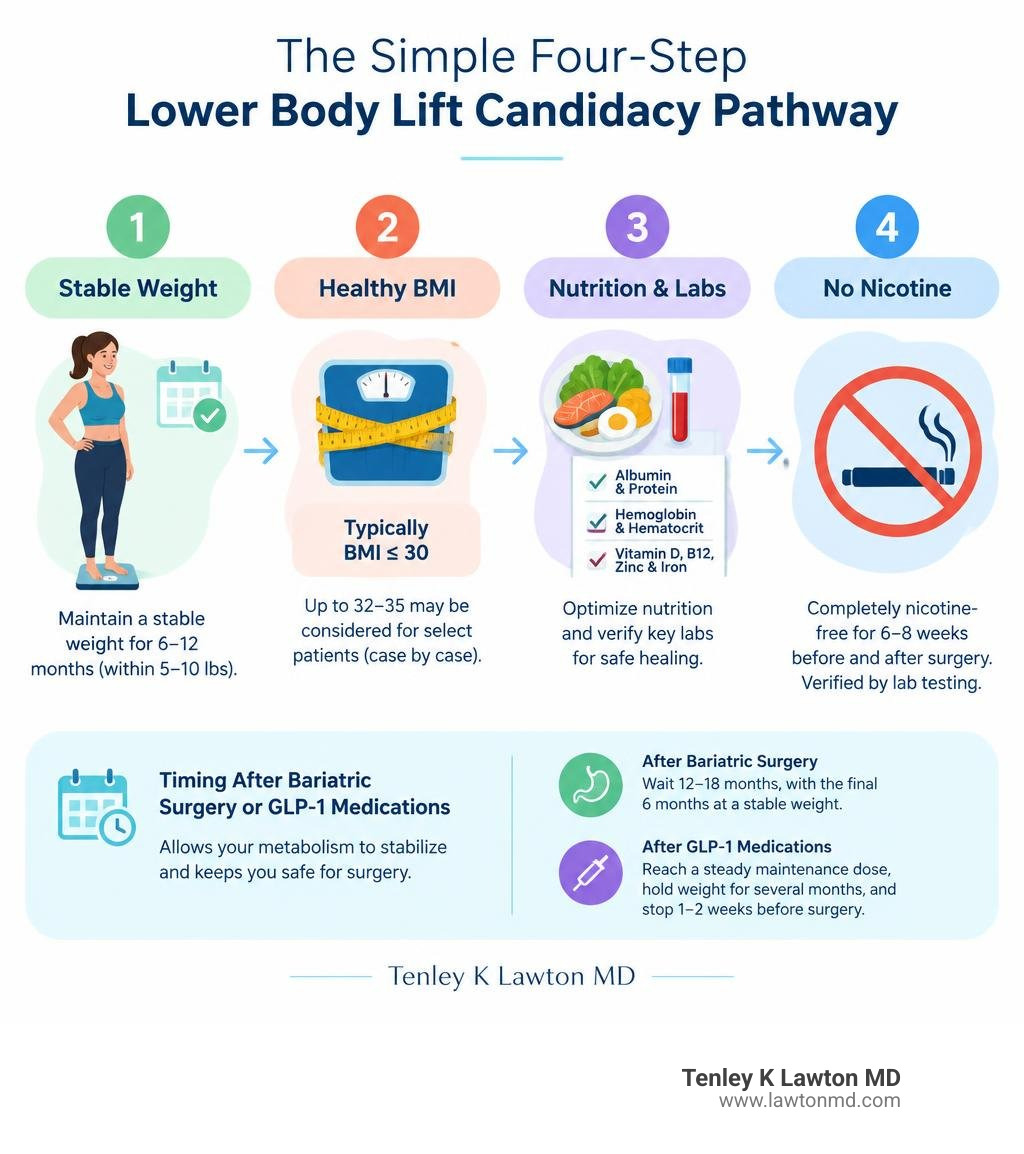
When we evaluate patients to decide which body procedures address loose skin after weight loss, we assess several critical health pillars:
You must maintain a stable weight—typically within a window of 5 to 10 pounds—for a minimum of 6 to 12 consecutive months before surgery. Undergoing major body contouring while your weight is still fluctuating leads to poor outcomes:
Safety data indicates that higher BMI levels directly correlate with higher rates of wound separation, seromas, and anesthesia risks. Most board-certified plastic surgeons require a BMI of 30 or below before scheduling a lower body lift. For select patients with dense, heavy pannus tissue contributing to their baseline weight, a BMI up to 32–35 may be considered on a case-by-case basis. Achieving a healthy BMI ensures that internal visceral fat (the deep fat around organs) is minimized, allowing the abdominal wall to be tightened safely without excessive intra-abdominal pressure.
Massive weight loss—especially following malabsorptive bariatric procedures like gastric bypass or duodenal switch—frequently leads to subclinical nutritional deficiencies. Your body requires high reserves of protein and micronutrients to heal a 360-degree incision.
Before surgery, comprehensive blood work must verify:
Smoking, vaping, nicotine patches, and nicotine gum are absolute contraindications to lower body lift surgery. Nicotine is a potent vasoconstrictor that starves the large, mobilized skin flaps of essential capillary blood flow. Patients who use nicotine face severe risks of skin necrosis (tissue death), massive wound breakdown, and severe infection. You must be completely nicotine-free for at least 6 to 8 weeks before and after surgery, verified by laboratory cotinine screening.
For a detailed review of medical guidelines and surgical indications, refer to the Cleveland Clinic’s guide to belt lipectomy surgery.
The timeline between weight loss and surgical contouring is critical for your safety.
Because a lower body lift involves an incision that circles your entire core, recovery demands patience and strict adherence to postoperative restrictions. Every time you bend, twist, sit, or stand, you engage the muscles and skin of your midsection.

Depending on the surgical duration and individual health profile, patients spend either one night in an accredited surgical observation suite or return home under the care of a dedicated caregiver.
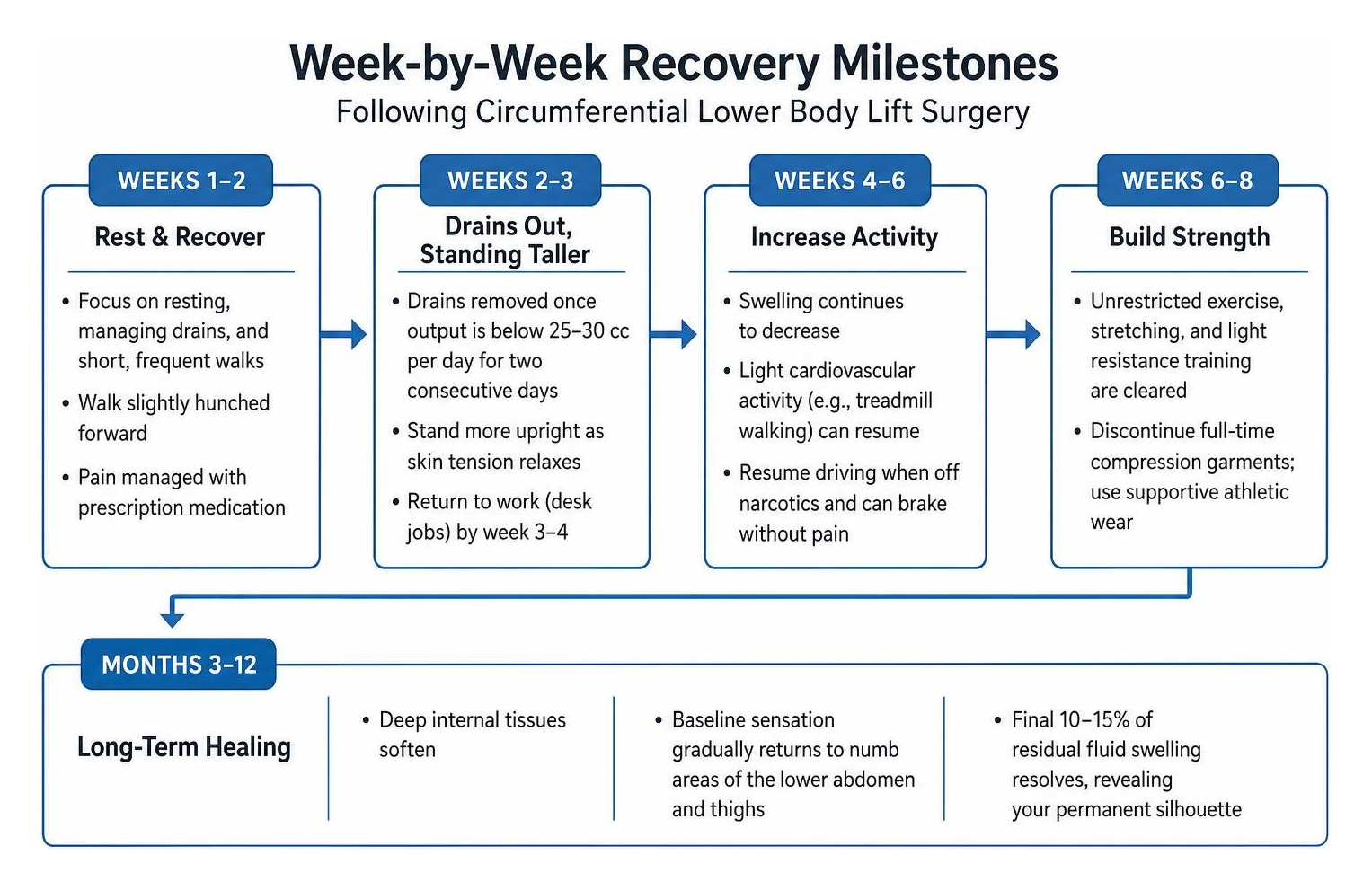
At our Newport Beach practice, Dr. Tenley K. Lawton oversees a structured, compassionate postoperative protocol. We monitor your incision healing, drain management, and scar maturation closely to make certain your physical recovery matches your aesthetic goals.
A lower body lift is among the most comprehensive and technically demanding operations in aesthetic surgery. As a result, it carries a higher price point than localized procedures like an isolated tummy tuck or liposuction.
In 2026, national data from the American Society of Plastic Surgeons (ASPS) lists the average surgeon fee alone at $11,397 (with a standard range between $10,000 and $16,500). However, the surgeon’s fee is only one component of your total investment.
The realistic, all-in out-of-pocket cost typically ranges from $15,000 to $25,000+, with extensive cases requiring prolonged operative time or specialized aftercare reaching up to $34,500.
When budgeting for surgery, ensure your comprehensive quote includes every element of your surgical journey:
In almost every circumstance, health insurance policies classify a lower body lift as an elective cosmetic procedure and will not cover it.
There is an important distinction between a cosmetic belt lipectomy and a medically necessary functional surgery:
Most plastic surgery practices offer medical financing plans (such as CareCredit or specialized healthcare lending) to allow patients to break their procedural costs into manageable monthly installments.
The results of a lower body lift are long-lasting and, in many respects, permanent. The fat cells and excess skin excised during surgery are gone forever. If you maintain a steady weight, adhere to a balanced diet, and engage in regular strength and cardiovascular exercise, your new contour will remain firm and proportional for decades.
That said, surgery cannot stop the natural biological aging process. Over the years, your skin will gradually lose some elasticity, and gravity will continue to exert force. However, your lower body will always appear significantly firmer, tighter, and more contoured than it would have without the procedure.
While it is technically possible to perform minor adjunctive contouring during a belt lipectomy, safety parameters strictly govern total operative time. Because a lower body lift already takes 4 to 7 hours, adding extensive additional procedures in the same operating room session increases anesthesia risks, hypothermia, blood loss, and deep vein thrombosis.
Most post-massive-weight-loss transformations are safely staged over two or three procedures spaced 3 to 6 months apart:
Massive weight loss frequently leaves the buttocks looking deflated, flattened, and severely sagging, often causing the gluteal crease to drop significantly down the back of the leg.
A lower body lift improves the buttock complex through two primary mechanisms:
Losing a substantial amount of weight, whether 50 pounds or 150 pounds, is a life-changing accomplishment that demands incredible discipline and perseverance. Yet, living with heavy, redundant folds of stretched skin can prevent you from fully enjoying your health, restrict your physical mobility, cause persistent skin irritation, and obscure your true figure beneath oversized clothing.
A circumferential lower body lift represents the definitive final step of a weight loss journey. By addressing the entire lower torso in 360 degrees, it eliminates painful chafing, restores balanced body proportions, and allows your clothes to fit comfortably and naturally.
When planning your procedure, choosing a board-certified plastic surgeon with deep expertise in post-bariatric body contouring is essential. During a one-on-one consultation, we assess your anatomical skin laxity, evaluate your metabolic and nutritional readiness, discuss scar placement in detail, and build a tailored surgical plan designed around your life.
If you are ready to explore whether a lower body lift is the right procedure to complete your physical transformation, we invite you to connect with our team. Schedule a private consultation with Tenley K. Lawton, MD in Newport Beach, CA, to receive clear guidance, honest recommendations, and compassionate, individualized care.
Non-surgical skin tightening uses energy-based devices to heat the dermis and stimulate new collagen, making it best for mild-to-moderate laxity and early skin crepiness. Surgical skin tightening physically repositions deeper facial or body structures and removes excess skin, making it the appropriate choice for advanced sagging, prominent jowls, or significant tissue redundancy. The key distinction is that non-surgical treatments remodel skin from within, while surgery corrects structural laxity by lifting and excising tissue.
Skin laxity is an inevitable part of the biological aging process. As we age, our bodies produce less collagen and elastin—the structural proteins responsible for keeping skin firm, supple, and resilient. Environmental stressors like ultraviolet (UV) radiation, oxidative damage, natural fluctuations in body weight, and genetic predisposition accelerate this breakdown. Over time, the supportive dermal framework thins, subcutaneous fat pads shift or diminish, and the underlying muscular foundation loses its youthful tension.
When evaluating how to address sagging skin, treatments fall into two distinct clinical categories: non-surgical collagen stimulation and surgical structural correction.
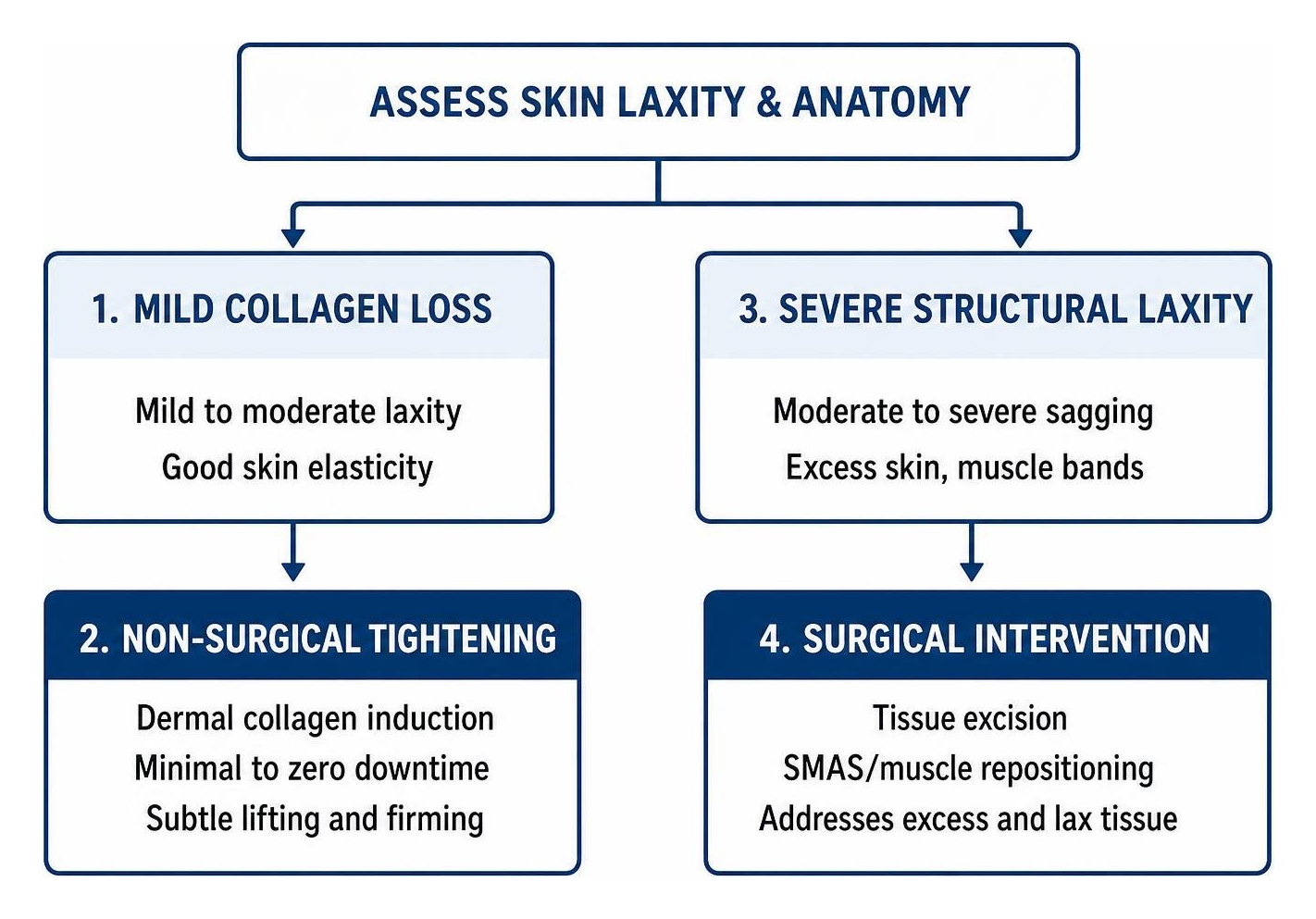
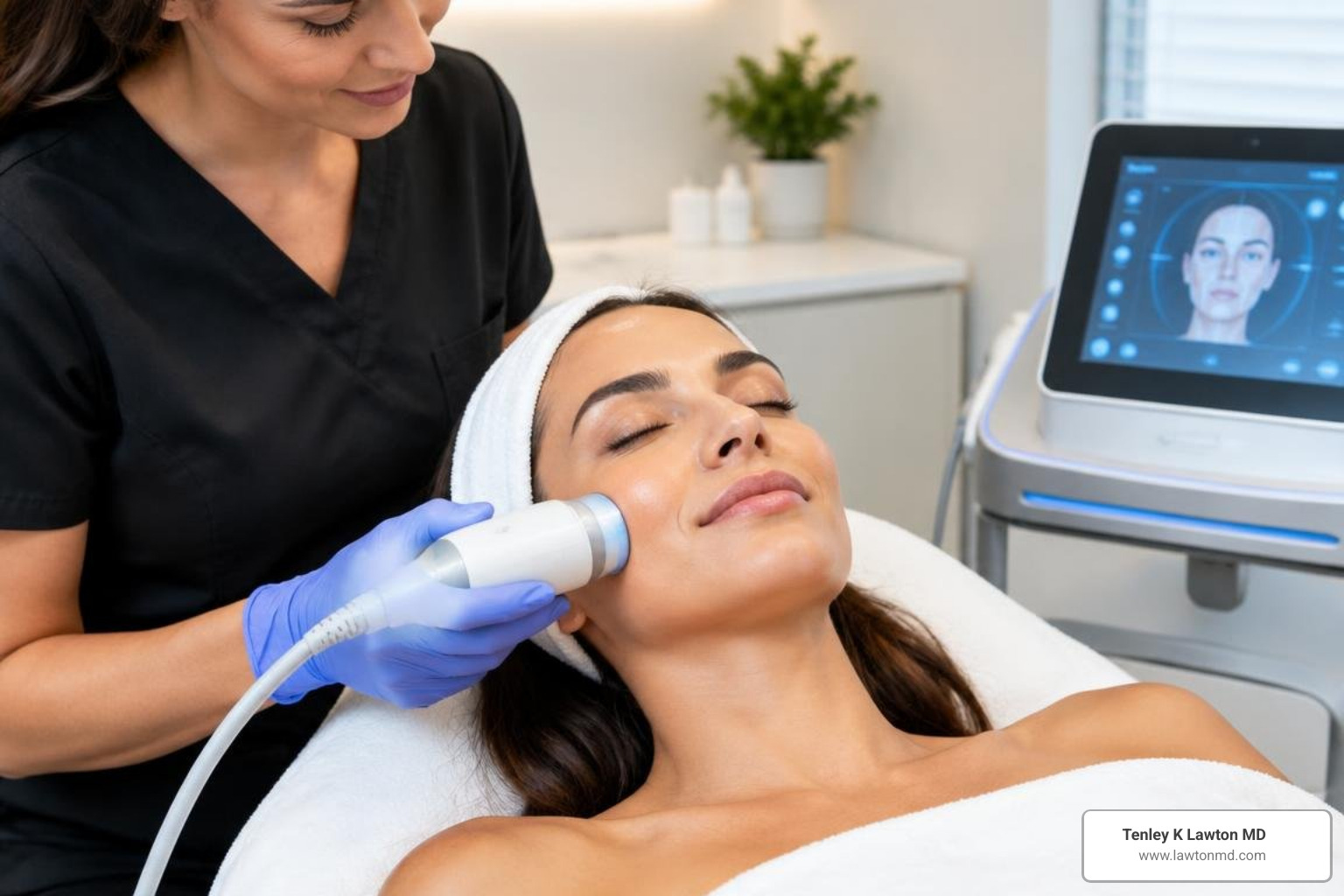
Non-surgical skin tightening relies on advanced energy-based modalities to deliver controlled thermal energy directly into the dermis and subdermal tissue. This controlled heat creates micro-injuries that trigger the body’s wound-healing cascade, stimulating fibroblasts to generate fresh collagen fibers and remodel the existing extracellular matrix. The primary objective is to improve tissue density, firm skin texture, and provide subtle lifting without incisions or mechanical alterations.
In contrast, surgical skin tightening directly addresses the deeper anatomical foundations of the face and body. Rather than relying on cellular repair to contract tissue, surgery physically repositions displaced fat compartments, tightens the superficial muscular aponeurotic system (SMAS) or underlying muscle layers, and surgically excises redundant, stretched skin.
Understanding the fundamental mechanical distinction helps set realistic clinical expectations: non-surgical devices remodel skin from within, whereas surgical procedures physically reposition and reduce excess anatomical tissue.
Energy-based non-surgical devices operate on the principle of neocollagenesis. By applying targeted energy in the form of radiofrequency (RF), focused ultrasound, or laser energy, these systems heat deeper dermal layers to a precise therapeutic temperature (typically between 40°C and 65°C). This thermal exposure instantly contracts existing collagen fibers while signaling the body to produce new structural proteins over the following three to six months.
Modern aesthetic medicine uses combined modalities for enhanced depth control and cellular response. For instance, advanced treatments like Morpheus8 radiofrequency microneedling deliver fractional RF energy through micro-pins directly into the subdermal tissue. This allows us to target both deep dermal remodeling and superficial skin tightening simultaneously, smoothing fine lines and contracting mild laxity along the lower face, neck, and body.
To optimize overall skin tone, cellular turnover, and surface clarity, we frequently integrate complementary modalities such as SkinPen microneedling. These collagen-induction treatments refine epidermal texture and superficial elasticity, serving as an ideal complement to deeper energy-based tightening.
While non-surgical treatments work within the skin’s biological capacity to regenerate, surgery changes structural architecture. Over decades of movement, gravity, and tissue elongation, the SMAS layer and platysma muscles in the neck loosen, and the skin envelope stretches past its elastic limit.
During a surgical procedure, we make discreet incisions along natural anatomical contours. We elevate and reposition the underlying muscle and connective tissue matrices back to their youthful positions, redrape the overlying skin tension-free, and meticulously excise the surplus cutaneous tissue.
This mechanical repositioning provides structural support that energy devices cannot replicate. Whether performing a facial rejuvenation procedure or body contouring operations like abdominoplasty or arm lifts, surgery permanently removes excess tissue volume, eliminating sagging folds and restoring defined contours.
Non-surgical skin tightening produces the best clinical outcomes in patients with mild-to-moderate skin laxity who maintain reasonable tissue elasticity. These individuals are typically beginning to notice early biological changes but have not yet developed significant structural sagging or deep tissue displacement.
The ideal candidate for non-invasive tightening generally exhibits:
When evaluating non-surgical skin tightening options, we assess individual skin thickness, tissue compliance, and patient lifestyle. Non-invasive tightening is also an excellent option for patients who cannot undergo surgery due to medical contraindications or those who cannot accommodate surgical downtime.
Despite marketing claims that suggest energy devices can “replace a facelift,” non-surgical technology has clear anatomical boundaries.
Energy-based devices cannot:
Attempting to treat advanced skin laxity with repeated non-surgical treatments often leads to “treatment fatigue,” unnecessary expense, and disappointment. When tissue redundancy has progressed beyond a mild threshold, continued non-surgical heating delivers diminishing returns.
Knowing when you need surgical intervention comes down to evaluating whether your aesthetic concerns are dermal (skin quality) or structural (tissue redundancy and muscle laxity). When structural descent and surplus skin are present, surgery becomes the necessary, predictable path to rejuvenation.
Clinical signs indicating it is time for a surgical approach include:
If you are evaluating whether you are a facelift candidate, our comprehensive anatomical evaluation will assess whether your concerns stem from surface skin changes or deep tissue descent.
Similarly, patients seeking guidance on tightening skin after substantial weight loss learn that significant skin folds require surgical body contouring—such as a tummy tuck or body lift—because the elastic fibers within the dermis have fractured permanently.
Modern aesthetic surgery focuses on individualized, anatomically based plans that avoid the unnatural, overly tightened appearances of past decades. Rather than pulling the skin tight across the face, contemporary surgical techniques reposition the deeper structural framework.
By utilizing customized facelift procedures, such as SMAS plication, SMASectomy, or deep-plane lifting, we elevate the underlying facial tissues vertically against gravity. Once the deep structures are secure, the skin is redraped naturally over the restored contours, and the excess is trimmed away without tension on the incision lines.
The primary benefits of a surgical facelift include restoring crisp mandibular definition, smoothing the neck angle, and providing comprehensive facial harmony that lasts for years. When addressing body laxity, surgical excisions (such as abdominoplasty, brachioplasty, or medial thigh lifts) physically eliminate hanging skin folds, creating smooth contours that no device can achieve.
Recovery expectations, longevity of results, and overall transformation differ significantly between non-surgical and surgical modalities. Choosing the right path requires balancing your personal schedule, comfort level with downtime, and long-term aesthetic goals.
Non-surgical treatments provide immediate convenience. Most patients experience only mild erythema (redness) and localized swelling that resolves within a few days. Because these devices stimulate internal biological repair, results appear gradually over several months. However, because natural aging continues, non-surgical outcomes generally last one to two years, requiring annual maintenance sessions to sustain collagen density.
Surgical recovery is a more involved physical investment. Patients typically plan for 10 to 14 days away from work and social obligations to manage swelling and bruising. Strenuous physical activity is restricted for four to six weeks to ensure proper wound healing.
However, surgery delivers profound, lasting rejuvenation. By removing excess tissue and anchoring the deeper anatomy, a well-executed surgical procedure resets your baseline appearance by a decade or more. According to data from the American Society of Plastic Surgeons, structural surgical repositioning addresses laxity across deeper anatomical layers that surface treatments cannot reach. While your skin will continue to age naturally, you will consistently look years younger than if you had never undergone the procedure.
Aesthetic medicine is not an “either-or” decision. In practice, non-surgical and surgical treatments complement each other, working synergistically across different tissue depths.
Surgery repositions deeper muscles, tightens the SMAS, and removes loose skin folds, but it does not alter the cellular quality or pigmentation of the epidermis. A surgical lift cannot erase sunspots, repair broken capillaries, or restore lost surface elasticity.
To maintain optimal aesthetic health, we frequently combine structural surgery with non-surgical skin therapies:
By viewing aesthetic care as a long-term continuum, you can use surgery to restore your structural foundation and non-surgical modalities to preserve radiant skin quality over time.
Non-surgical skin tightening cannot completely replace surgery when there is significant excess skin or deeper muscle laxity. Energy-based devices work by inducing micro-thermal injury to stimulate collagen remodeling, which can contract mild laxity and improve dermal thickness.
However, they cannot physically trim redundant skin folds, elevate descended facial fat pads, or repair separated neck muscles. While non-surgical treatments can delay the need for surgery in younger patients, they cannot replicate the comprehensive structural restoration achieved through surgical intervention.
Both non-surgical and surgical procedures have strong safety profiles when performed by qualified, experienced medical providers. Non-surgical options carry lower systemic risks because they do not require general anesthesia, deep incisions, or extensive healing periods.
However, energy devices can still cause complications—such as burns, fat necrosis, hyperpigmentation, or scarring—if operated incorrectly. Surgical safety depends on thorough preoperative screening, board certification, accredited surgical facilities, and skilled surgical technique. Matching the right procedure to the right candidate is the most critical safety factor for both approaches.
Modern surgical techniques are specifically designed to preserve natural facial mobility and avoid an artificial, “windswept” appearance. The unnatural results associated with older facelifts occurred because surgeons pulled the skin layer itself tight across underlying facial structures.
Today, we reposition the deeper SMAS muscle layer to support facial volume naturally. The skin is then gently redraped over this restored framework without tension. Surgical incisions are placed discreetly inside the ear canal, around the earlobe, and within the hairline, where they heal into nearly invisible, inconspicuous lines.
Choosing between non-surgical and surgical skin tightening requires a thorough, objective assessment of your anatomy, tissue health, and personal aesthetic goals.
During your private consultation at our Newport Beach practice, Dr. Tenley Lawton conducts a detailed anatomical evaluation to assess:
As a board-certified plastic surgeon, Dr. Lawton offers both advanced non-surgical modalities and surgical procedures. This breadth of expertise ensures you receive an unbiased, transparent recommendation tailored strictly to what will deliver the safest, most natural-looking, and longest-lasting outcome for your unique anatomy.
If you are ready to evaluate your skin tightening options and design a personalized aesthetic plan, contact our team to schedule your consultation at Tenley K. Lawton, M.D. today.
The “ballerina breast” is a refined, natural-looking breast enhancement defined by anatomical balance, a gentle upper-pole slope, and subtle, proportionate volume that harmonizes with a lean or athletic frame. Women are choosing this aesthetic because it prioritizes effortless mobility, long-term tissue health, and understated elegance over heavy projection or dramatic upper-pole fullness.
Aesthetic medicine is experiencing a profound cultural correction. For decades, breast augmentation was frequently equated with dramatic volume, pronounced upper-pole fullness, and unmistakable projection. Today, that paradigm has shifted entirely. Women are increasingly seeking an understated, sculpted contour that prioritizes anatomical harmony, soft slopes, and effortless mobility over sheer size.
At our Newport Beach practice, we see this transformation every day. Patients are no longer walking through our doors asking for maximum cup size; they are asking for balance. The ballerina breast aesthetic is inspired by the lithe, toned physique of classical dancers: athletic, graceful, and proportioned so seamlessly that enhancement remains an undetectable secret.
This movement aligns directly with the broader cultural embrace of “quiet luxury” and wellness-focused beauty. Rather than viewing breast surgery as an overt fashion statement, women now approach it as a structural refinement. They want an enhancement that complements tailored blazers, sits comfortably under athletic wear without requiring high-impact compression bras, and ages gracefully alongside their natural tissues. By trading heavy projection for anatomical restraint, patients achieve a silhouette that enhances their natural frame without dominating it.
The ballerina breast is defined by specific anatomical characteristics rather than a single cup size or implant volume. It is an aesthetic philosophy rooted in anatomical proportion, subtle transitions, and tissue preservation.
This aesthetic evolution is clearly supported by industry data. While breast augmentation remained the #1 most requested cosmetic surgical procedure according to plastic surgery trend reports on in-demand procedures, average implant volumes have fallen significantly from historical averages of 300–400cc down to a refined range of 185–285cc.
When you explore our breast augmentation before and after photos, the difference is immediately noticeable. The results do not draw immediate attention to the surgery itself; instead, they bring the entire body into visual equilibrium, accentuating a narrow waistline and framing athletic shoulders.
The widespread adoption of the ballerina breast is not an accident—it is the direct outcome of evolving lifestyle demands, clinical safety considerations, and shifting body standards.
Today’s aesthetic patient often maintains a rigorous fitness regimen—incorporating Pilates, distance running, weight training, swimming, or yoga. Heavy, oversized breast implants can quickly become a physical hindrance during high-impact exercise. Larger devices bounce excessively, place strain on sports bras, restrict range of motion during chest and shoulder exercises, and can cause chronic chafing or muscle discomfort. A modest, low-to-moderate profile implant allows women to train, run, and move completely uninhibited.
From a surgical standpoint, the laws of physics are absolute: greater implant mass exerts sustained downward gravitational force on the chest wall. Over five, ten, or fifteen years, heavy implants can cause:
Smaller volumes safeguard the health of your native breast tissue, ensuring your results maintain their integrity and position decades after surgery.
The recent rise in metabolic and medical weight-loss solutions has completely changed patient anatomy. According to recent RealSelf trend reports on evolving surgical preferences, traffic to GLP-1 related aesthetic content surged by over 2,080%, driving massive demand for targeted body contouring and skin tightening.
Rapid weight reduction often deflates glandular breast tissue while leaving behind loose skin. However, patients who have worked hard to achieve a lean, sculpted frame rarely want to replace lost body fat with oversized implants. Instead, they seek tailored procedures that restore youthful firmness, reposition the nipple-areola complex, and add modest, proportionate volume. When considering surgery, understanding what cup size can be achieved based on your post-weight-loss frame is essential for maintaining natural body harmony.
| Factor | Traditional High-Volume Augmentation (325cc – 500cc+) | The Ballerina Breast Approach (185cc – 285cc) |
|---|---|---|
| Aesthetic Goal | Obvious projection, high upper-pole fullness, cleavagedominant | Balanced upper slope, anatomical teardrop shape, frame-enhancing |
| Physical Activity | May require heavy compression; limits high-impact sports | Seamless integration with running, yoga, and athletic training |
| Tissue Stress | Accelerated skin stretching, tissue thinning, earlier revision | Minimal tissue atrophy; preserves skin elasticity and fold support |
| Musculoskeletal Impact | Potential neck, shoulder, and middle-back strain | Negligible strain on postural muscles and spine |
| Post-Op Recovery | Slower; greater muscle and tissue pocket stretching | Faster; minimal tissue dissection and reduced muscular trauma |
| Longevity | Higher likelihood of secondary lift/downsizing within 10 years | Enhanced structural stability and enduring natural shape |
Creating a subtle, elegant breast shape requires exceptional surgical precision. When placing a large implant, the implant itself dictates the shape of the breast. When creating a ballerina breast, however, the surgeon must masterfully shape, position, and blend the device with the patient’s existing anatomy.
The development of modern smooth-surface cohesive silicone gels has revolutionized subtle augmentation. Advanced devices like Motiva breast implants are engineered with responsive rheology. When a patient stands upright, the gel shifts naturally into an anatomical teardrop contour; when she lies flat, it disperses gently across the chest wall, mimicking the fluid dynamics of natural breast tissue. Because these gels maintain uniform internal cohesion without requiring aggressive projection, we can use lower-profile implants that blend invisibly beneath the skin.
The anatomical pocket selected for the implant determines how seamlessly the upper pole transitions:
For petite or lean patients with thin subcutaneous fat covering the upper chest, even a small implant might present visible transitions along the medial cleavage or upper edge. In these instances, we frequently utilize hybrid breast augmentation.
During this procedure, we combine a modest cohesive gel implant with autologous fat transfer. We harvest a small amount of fat via gentle liposuction from the abdomen, flanks, or inner thighs, purify the fat cells, and strategically inject micro-droplets into the subcutaneous layer overlying the implant. This creates an organic cushion that completely conceals implant margins, smooths the transition, and refines cleavage symmetry.
Every customized surgical plan begins with the foundational principles detailed in our comprehensive guide to breast augmentation fundamentals.
A significant portion of the demand for the ballerina aesthetic comes from women who received 350cc to 500cc implants a decade or more ago. Today, their priorities have evolved: they may have had children, advanced in their careers, or embraced an active outdoor lifestyle. They want smaller, lighter breasts that align with their current stage of life.
However, downsizing is rarely as simple as exchanging a large implant for a smaller one.
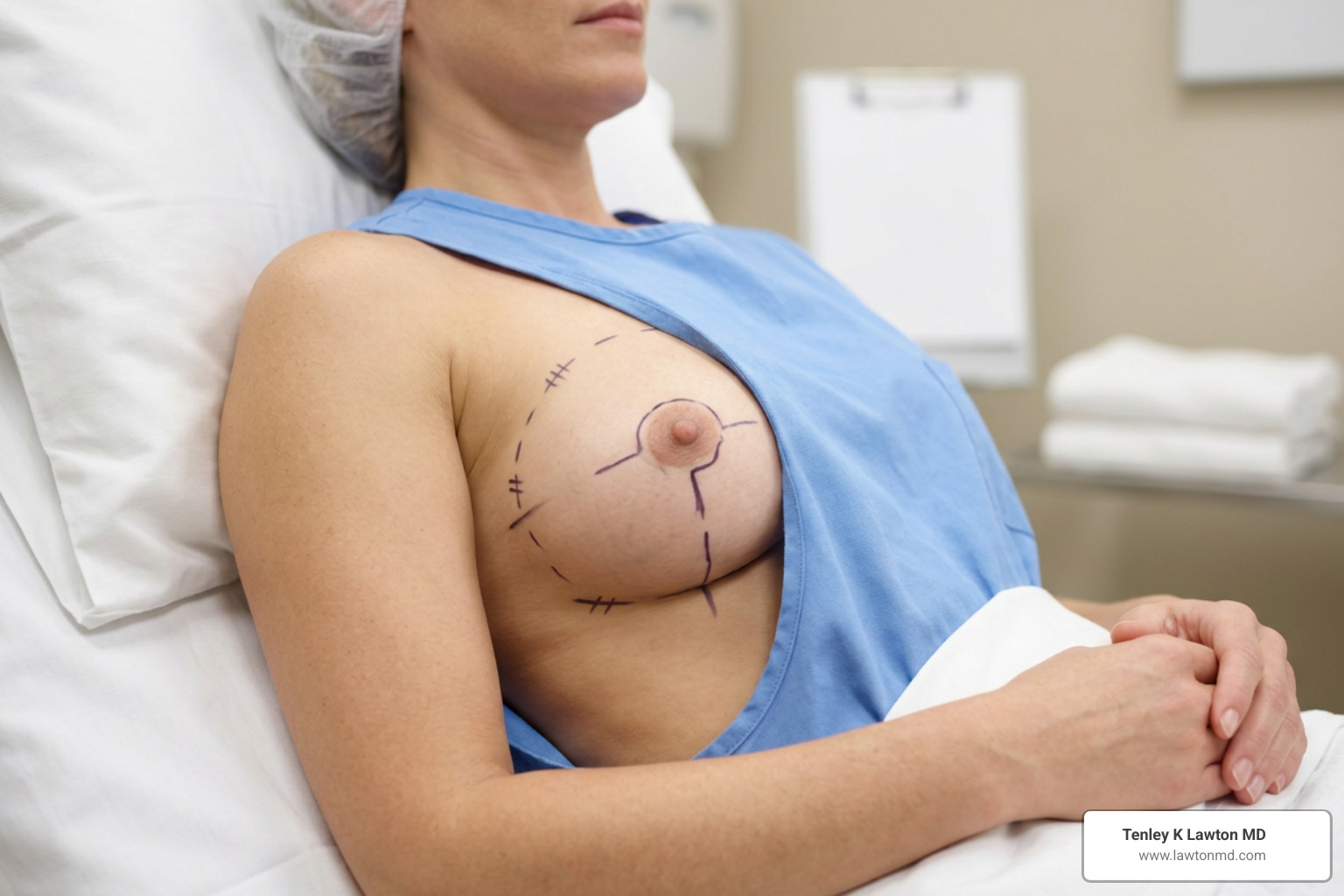
When a large implant sits in the chest for years, it continuously expands the overlying skin envelope, stretches the internal suspensory Cooper’s ligaments, and creates a large internal capsule pocket. If a surgeon simply removes a 400cc implant and inserts a 200cc implant without modifying the surrounding tissues, the result is predictable and disappointing:
To achieve an elegant ballerina silhouette during a downsizing procedure, we perform comprehensive revision techniques:
Managing these interconnected anatomical elements requires advanced reconstructive planning during breast implant replacement surgery, transforming a deflated, worn envelope into a firm, proportionate contour.
The ballerina breast aesthetic is versatile, but it is particularly suited for individuals who meet specific anatomical and lifestyle criteria:
Because a subtle enhancement often involves tailored surgical planning—such as dual-plane pocket creation, hybrid fat grafting, or mastopexy modifications—costs will depend on surgical complexity, operating facility standards, and anesthesia care. Understanding the comprehensive breast augmentation cost factors allows you to plan your surgical journey with confidence and clarity.
At our Newport Beach practice, Dr. Tenley K. Lawton works closely with every patient, using anatomical measurements and 3D frame assessments to design a custom surgical approach that flatters your unique proportions.
While no breast implant is considered a permanent lifetime medical device, smaller implants typically experience fewer mechanical complications over time. Because small implants (185cc–285cc) place substantially less gravitational strain on surrounding tissue, rates of bottoming out, severe ptosis, rippling, and tissue thinning are notably lower than those seen with large devices.
Most high-cohesive silicone gel implants perform exceptionally well for 10 to 20 years or longer. For an in-depth breakdown of device longevity and maintenance expectations, review our guide on how long breast implants typically last.
Because smaller implants require less extensive pocket dissection and minimal muscular stretching, recovery is often faster and noticeably more comfortable than traditional large-volume augmentation:
Yes, autologous fat transfer to the breasts (composite or standalone fat grafting) is an outstanding option for the right candidate. If you have adequate donor fat deposits (typically in the thighs, abdomen, or flanks) and desire a subtle increase of approximately one-half to one full cup size, fat transfer offers an entirely natural, implant-free solution.
It uses your own living tissue, leaves virtually no visible scarring on the breasts, and carries zero risk of implant-related complications. However, for patients who lack sufficient donor fat or who desire crisp upper-pole shape and projection, small cohesive gel implants remain the gold standard.
Cosmetic trends come and go, but anatomical harmony never goes out of style. The “ballerina breast” has resonated so deeply across the aesthetic world because it is not merely a passing trend—it is a return to fundamental balance, tissue preservation, and timeless elegance.
When planning your breast enhancement, the most critical decision is selecting a board-certified plastic surgeon who understands the power of restraint. True surgical mastery does not lie in choosing the largest device an envelope can hold; it lies in choosing the precise volume and technique that honors your frame, protects your tissue, and enhances your confidence for years to come.
If you are ready to explore a refined, proportionate enhancement tailored specifically to your body and lifestyle, we invite you to schedule a private, in-depth consultation with Tenley K. Lawton, MD at our Newport Beach, CA office. Together, we will design an aesthetic plan that brings your ideal silhouette to life.